

Welcome back to The Honest Broker interview series —also available on our new YouTube channel. You can also find it on Apple Podcasts and other podcasting platforms.
Today, I’m pleased to share my conversation with Ted Gioia.
Please support The Honest Broker by taking out a premium subscription (just $6 per month).
Ted needs no introduction here—The Honest Broker is his newsletter, after all. But I want to tell you a little bit about how Ted and I started this project.
I received a message on Substack last year, and when I saw it was from Ted, I assumed it was fake. But it turns out it was real, and Ted asked me if I wanted to get lunch. After talking for a few hours about books, Substack, and new media, Ted asked if I wanted to launch a podcast on The Honest Broker. His only rule: I needed to find the most interesting people as guests.
Well, this meant that eventually I had to interview Ted. We sat down to talk about media consolidation, building alternative institutions, and human creativity.
Below is a transcript of part of our conversation. For the full interview, check out the video at the top of the page.
I know you’ll enjoy this.
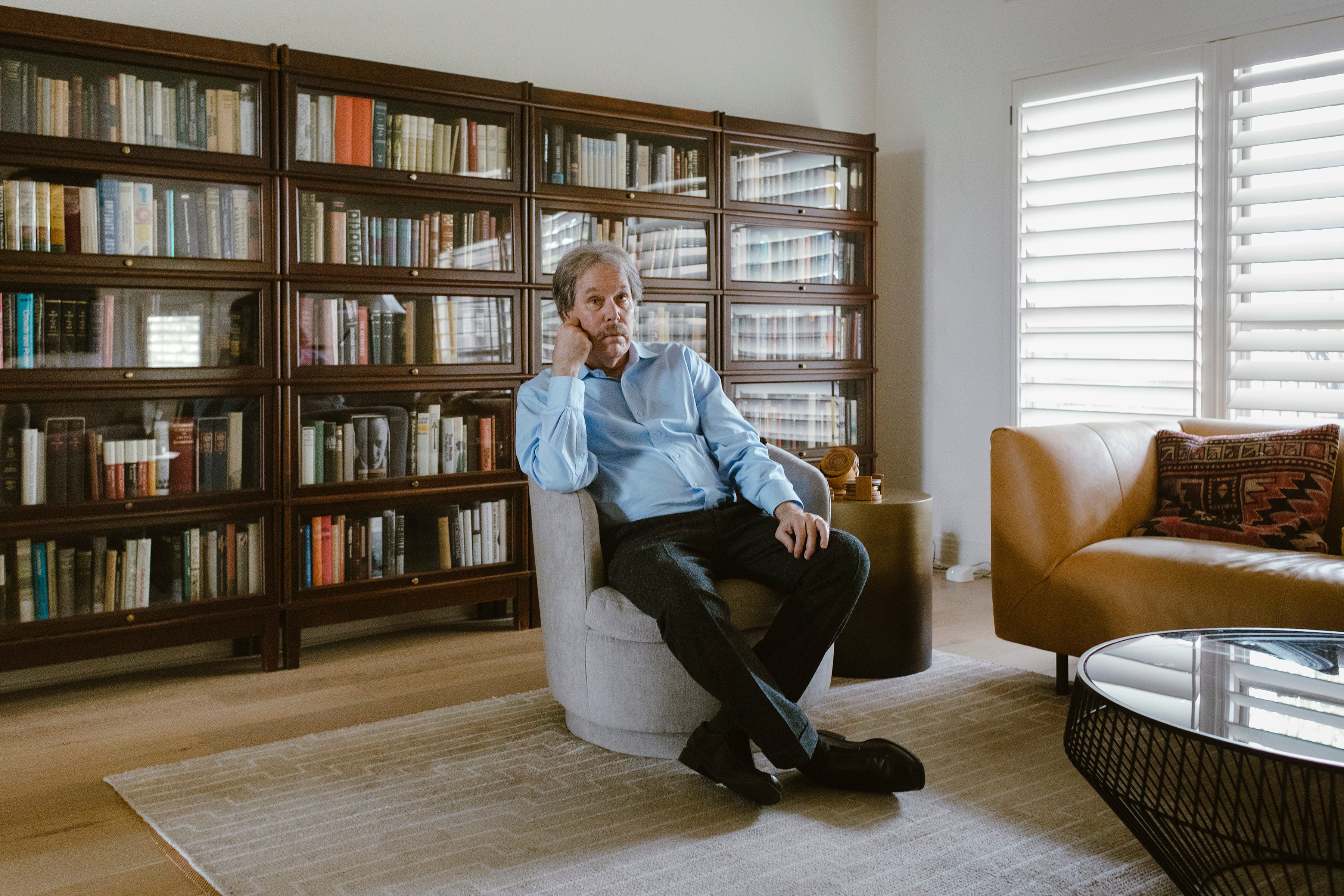
A CONVERSATION WITH TED GIOIA
JARED: Ted Gioia, thank you for joining me.
TED: Well, thank you for having me. This is something we’ve long awaited.
JARED: I want to start off with a big question. I think it’s fair to say that we’re living in a time of it institutional collapse. We had these prestige institutions that we used to rely on: The New York Times, The New Yorker, academia. And people could rely on them to vet new writers, vet ideas, and movements, and they just did a lot of credibility building for us. It took a lot of the work out of our hands. I think we just don’t have that same trust in those institutions anymore, and people don’t rely on them in the same way anymore. And things are increasingly more decentralized.
Now, part of me finds this really exciting because it means for people who operate outside of those systems—I think you and I would be two examples—it means there’s more opportunity. But it also raises the question of whether or not we need to start building new institutions.
TED: Well, there’s been a great promise that the internet would open up everything to us. All of a sudden, if I’m a writer, a musician, a visual artist, a videographer, all of a sudden, I could reach my audience directly with the internet. And we thought this was going to lead to an enormous blossoming of culture where everyone had this freedom and a thousand flowers blossomed.
But that hasn’t happened, really. And in fact, what you see is that the institutions have become more consolidated and stagnant over time.
Let me give you a few figures. Right now, most of the movies made come out of four Hollywood studios. They control it. Most of the movie distribution into the home comes from just four streaming platforms. In fact, in many instances, it’s the same company doing the movie-making as the streaming.
That was illegal until very recently. In 1948, the Supreme Court said that a movie studio could not own distribution. And that allowed a lot of freedom. After that, there was a real flourishing of indie movies in the United States and overseas. But now we’ve stagnated to the point where there are just four streaming platforms, four movie studios.
In music, it’s even worse. There are just three companies that control most of the hit songs. If you look at publishing, five companies control 80% of the books out there. It’s just ridiculous.
As these industries become more consolidated, they become more bureaucratic, they move more slowly, they’re more cautious. Yet we’re more dependent on them than ever before.
Now, we’re lucky that we still have an opportunity with a counterculture—and I’ll talk about that later. But I think the first thing you see is that the institutions have killed themselves by this consolidation, swallowing up their competitors, and creating this monolithic culture that’s not good for anybody.
JARED: And I think it creates a winner-takes-all mentality, where before you could have movies that did well, but they kind of fall within the middle of a normal distribution. And then you’d have some outliers that did really well, and then you’d have some that bombed. And I think that as things have become more decentralized, you have many more flops. They never get off the ground, or they can’t even get funding to begin with. And then you have these big winners that take everything and maybe that that group has grown a little bit, and then it’s the middle of the culture that seems like it’s been hurt the most by this.
I mean the band that sells well but isn’t going to go platinum. The writer who is a solid mid-lister but may never make the Times list. Someone who could make a living writing for magazines but couldn’t necessarily get 100,000 readers on their own newsletter. And that just seems like a less interesting culture because it doesn’t give that kind of room for experimentation or just that kind of pluralistic flourishing that would allow people to just have interesting ideas.
TED: I lived through much of the transition. I started out life writing books, and I was what they would call a midlist writer. That meant I wasn’t going to sell a million copies. I wasn’t going to be at the top of the New York Times bestseller list, but I would sell enough copies to be profitable. And so my first two books, you know, the expectation was I would sell 5,000 to 10,000 copies, and that would be fine.
My third book really broke out and then it sold hundreds of thousands of copies. But today I wouldn’t even get a chance to get to that third book because from the get-go now they don’t want to publish a book that doesn’t have the potential to do 50,000 to 100,000 right off the bat. This presents a tremendous obstacle to young writers and they don’t have a solution
It’s even worse in movies where the studios don’t want a movie that would be profitable but not have that blockbuster aspect to it—they want a movie that could have a billion dollars in revenue. If you go look at the best movies in the history of Hollywood, very few of them had those blockbuster numbers. But where would we be without the Citizen Kanes of this world and the smart indie films that are being squeezed out?
JARED: There used to be this saying in publishing that the best advertising for your first book was your second book. So it was thought, okay, your first book didn’t sell that well, but you get a second book. Maybe it’ll pick up eventually. If your third or fourth book sells fabulously well, people will say, " What else has this guy written?”
I bet your first book, after it sold a few thousand copies, sold a lot more after your third book sold 100,000 copies.
TED: You’re exactly right. The first book I wrote is called The Imperfect Art. I started writing that the day I got out of the philosophy program at Oxford. Eventually, it was very successful, but at first, no one wanted to touch this.
I had a prominent agent say, "This is not a real jazz book.” You should be a real music writer, not one of these phony music writers. But I did get it published. It sold a few thousand copies. But now, let’s fast-forward to 40 years later. I’ve gotten two translation deals for that book in the last 12 months. And the only reason that happens is that I used that as a stepping stone.
It’s one of the reasons I like Manfred Eicher at the ECM label. He has artists on that roster that he’s recorded for 30 or 40 years and have never had a hit record. But he believes in them. This is part of why his audience trusts the label, because they see his personal loyalty to what he believes in. We need more of that. But in fact, we get less of it.
The loyalty factor is gone. It’s very hard now to find a publisher or a record label that will be loyal to you for more than one project.
JARED: And it seems like consumers have changed their mindset in response to this. There were times in high school that if a new band came out from a label that I liked, I bought the CD. And even if I hadn’t heard it, because I’d say, I trust this label. I like what they do. I’ll keep buying it.
And people used to think about publishers like this too. Knopf used to run ads for Knopf, not just for their books. They would say, if you have the borzoi on the book, it’s a book worth buying. But Consumers don’t think about it like that anymore. Maybe they do in some parts of music, but do they do that with any of the big five in publishing?
TED: Well, they do it in the indie world, and we need to talk about that because in the indie world, you do have loyalty to a specific person, a specific name, a specific creative umbrella. But for example, in music, how can you? Is there anybody at Universal Music or Spotify who we might say is a person whose judgment I trust? No—and if you look at the interviews with them, once again, they just talk about financial metrics.
The whole corruption of aesthetic language is the application of financial jargon to artistic creativity. This is why instead of calling a work of art by its real name, we call it content. This is why we call a movie a brand franchise. This is why the head of the big AI music company talks about the productivity of being able to release 100 tracks in a week. These are all words—this jargon, this terminology—that come from the business world. It has no place in the creative world. But it’s become so pervasive that even artists begin to talk about their own work as content.
This is something that is only happening because we have replaced a tradition where you have a person who has values and applies those values. We’ve replaced that with a business/finance optimization mindset across the creative economy.
“You’re going to start having private equity roll-ups on Substack…..People have no idea what’s coming down the pike.”
JARED: But there are the indies. There is a Texas-based publisher that I like a lot called Deep Vellum. They publish a lot of very experimental literary work. They have a sub-imprint called Dalkey Archive that reprints classic works, a lot of modernist stuff that’s fallen out of print. They just reprinted Gass’s The Tunnel. which was out of print for God knows how long. I actually I donate money to them every month, and they send me a book, and I would only do that because I trust their taste.
TED: And it does exist, but you have to seek it out. Where does the counterculture exist now? It’s indie presses like you mentioned. I think the indie culture operates on Substack. The indie culture operates on YouTube—which is curious because YouTube is owned by Alphabet. But still it’s become a platform where indie people can speak their mind. You find this on Bandcamp, where bands come out with their own album and work directly with their fans.
There is a counterculture out there, but it’s struggling now because it is starved of cash. The media often operates on advertising, but two companies control 60% of the ad money online. It’s Alphabet and Meta. So basically, two companies control that.
The other way is to get your name out through social media. But two billionaires control social media. It’s the same consolidation on the institutional side that we saw on the creative side. I really think there are about 50 people who control the culture now, which is frightening.
Go back a generation. Tom Wolfe made an amazing claim. He said the art world is controlled by 3,000 people. Now what did he mean by that? Well, he’s talking about painters, sculptors, and he says that these 3,000 people decide who’s hot and who’s not. Now 3,000 people, that didn’t seem like much, but that would be great compared to what we have now.
JARED: And we see this even on places like YouTube, where big channels are getting bought by private equity. And I think, inevitably, they kind of get turned into content farms.
I actually received an email a few days ago asking if I would audition to be the host of a spinoff channel of one of these channels, which had been bought by a private equity firm. I’m not going to do this. These channels became their own content engines, but you have to industrialize the production process. These creators made a formula that worked for them, but I know some of the channels that have been bought, and they’ve become worse because they get standardized There’s no authenticity to it anymore.
I wouldn’t be shocked if eventually you saw people buying newsletters on Substack.
TED: I fully expect that. Two years ago, I said you’re going to start having private equity roll-ups on Substack. That will inevitably come to all these channels, to YouTube channels, Substack—that’s going to really take off. People have no idea what’s coming down the pike.
Now, what does that mean for us? Well, for culture, that’s bad news.
JARED: What’s the response to this? Clearly, there are real problems. Do we just sort of remain fiercely independent and say we can’t be bought, or do we try to build competing institutions?
I think tastemaking is a real role in the culture, without those independent tastemakers, you just are kind of ceding all the ground to corporate control. What’s the positive vision that kind of comes with all the doom and gloom?
TED: Well, if you go back in the late 1950s, there was a debate in England. I’m sure you’ve heard of it. It was called the Two Cultures Debate, and the two protagonists were C.P. Snow, who was a novelist who had become like a civil servant and a quasi-technocrat and F.R. Leavis, the literary critic. And they debated the two cultures—in which one culture was scientific culture and the other one was humanities. Which one was more important? Did you need both?
I would say we need a similar debate now, but the two cultures are different now. There’s the institutional culture, and then there is the alternative culture. Unless you find some way of mobilizing an audience for them, we’re going to be in deep trouble. So, a lot of what I do on Substack is serving as an advocate for the counterculture. I serve as an advocate for the indie creator. I am always promoting others’ work.
I think the way it has to work is we need to create parallel institutions. I think we’re going to need to support these parallel institutions, and there’s going to be a parallel culture.
“We have monopolies and cartels, and what we need to be is trust-busters….We’ve got to create alternative platforms so that creative people can reach their audience.”
So there are some things we still need to do. For example, look at all the awards and prizes given out in culture—all of them go to the institutional people. This is one of the things I said when I first met the people running Substack. I said you’ve got great writers here, you’ve got great creativity, but you need to get the kind of credibility that comes with awards, and you should do awards every year for indie writers and indie music—because we need to have that institutional support for what we do.
I saw a figure the other day, it was horrifying. It said that if you look at all the big books that have won prizes in this century, they were represented by just 25 literary agents. That’s what you call a cartel! We have monopolies and cartels, and what we need to be is trust-busters. We’ve got to break up the monopolies. We’ve got to create alternative platforms so that creative people can reach their audience. Because the audience is hungry for this.
JARED: There are two paths that come to mind. They’re very different, but maybe they’re mutually supportive. One is just to give people money. You know, there’s a writer who can’t quit his day job so he can’t finish his novel, but you know he’s great. Give him money. There’s a painter who needs more time to paint. Give her money.
The other option is to start building things like more publishers. I mean, I have a fairly simplistic view of the economy, maybe, but my thought is that competition is good. I’ve talked to you about this before, but I have a pipe dream of starting a publishing company one day, and the idea is to find writers I really care about. That’s harder than giving grants, because it requires logistics and overhead and salaries, but I think you need that too. You need those smaller institutions that can serve as disruptors.
TED: Let me make a prediction. I think you are going to find influencers becoming their own institutions. The last time I saw Rick Beato I said, “Hey Rick, we are very disappointed in what the record labels are doing. That means you’ve got to be the next record label.” It sounds like a strange concept, but it really isn’t, because Rick Beato has millions of followers. Why? Because people trust Rick Beato. They trust him more than they trust Universal Music or Sony.
This is the opportunity. The influencer is who people trust. And then the next stage will be the influencers turn into institutions of their own.
JARED: I would want it to be that when I retired or died, someone else was running it, and it was its own institution that could continue right. Knopf was a great publisher even after Alfred Knopf died. You you want institutions that can continue, that can survive any one person. That’s my hope.
TED: And that will happen. I think we are still five years away from that. But the trend I see is, first of all, the mainstream culture will continue to die and stagnate and lose the trust of the audience. That’s already almost played out. They will not be able to turn around their businesses. They really won’t, because they’re so bureaucratic in a consolidated industry.
So the next stage is you’re going to have an alternative creative economy, and you’ll have alternative platforms. These will start as influencers, as individuals. Then the individuals will spin off businesses, and the businesses will survive. And this will be the breath of fresh air we need. What people like you and I want to do is to accelerate that process.
JARED: We talk about trying to build things outside of the clutches of the billionaires and all the conglomerates. But I’m a YouTuber, and I write on Substack. You’ve got a new sort of phase in your career when you started writing on Substack. So we, to some extent, operate within these systems. I’m just curious how you think about that relationship.
TED: Well, Substack, like any platform, is owned by investors, and that always poses a risk because the investors may have completely different goals than you and I have as creative people. And so this is something we need to take seriously, but at least with Substack, we have protections. The first and foremost one is I control all my intellectual property.
But probably our best safeguard is that Substack staked itself out from its early days onward as a supporter of writers and creative people like us. If it starts jerking us around, we leave. So we don’t have any complete and full protection with Substack. But to my mind, this is a gamble I’m willing to take. What I try to do is operate within the Substack system and be a positive influence inside it.
And so far, Substack has allayed my concerns, and they have rewarded my trust. But this is an issue. And whenever you’re involved in any sort of institutional setting, you always have to ask yourself, "Am I aligned with their values? Are their values aligned with mine?”
One of the good things about any indie culture is that in a thriving indie culture, there are thousands of voices. There are thousands of alternative newspapers. There are indie radio stations. In a thriving indie culture, no one has so much power that they can corrupt things. And that’s one of the reasons why we need a widespread counterculture. And even Substack, Bandcamp, Patreon, they aren’t enough. We need more indie institutions.
JARED: And when you started growing on Substack, it seemed like you broke a big rule. When I talk to publishers, they want to place you in a really narrow niche. You write about X and Y, the intersection, something like that. They want to be able to label you really clearly. And if you sell them one book, and then maybe you want to talk about writing another book, they want to know if it is the same sort of book. And I think you see this a lot with people who have successful debuts, especially in nonfiction, and their second book should just have the same title with a 2 at the end. They never sell as well, but publishers seem to push them in that direction. But when I look at your Substack, I see that you write about everything.
TED: For a long time, editors only wanted me to write about jazz. But in fact, what I found after I launched on Substack is that my articles on other subjects actually have reached a larger audience than my jazz articles.
I think, in general, society pushes everybody into tight pigeonholes. You have the person at the factory that just makes part of a widget every day. You have all sorts of talented people who are told to do the same thing over and over again. But when you give a talented person the opportunity to go outside this narrow pigeonhole, they will pleasantly surprise you. So I’ve taken that to heart myself—and I’ve been rewarded for that.
I decided early on that the most scarce thing in media was trust. And that if I could earn the trust of my reader, I would be rewarded, and they would be rewarded. So that was the turning point for me. And I think other writers minimize the importance of this. If you are not earning the trust of your reader you’re creating a problem for yourself.
But there was a second thing I did, and this almost happened naturally, but it proved to be very important. Throughout my career I’ve changed my prose style for every book, and if you look at my various books you’ll see the way I construct sentences and paragraphs changes over time. When I joined Substack, I decided I needed a new way to write for Substack. And what I decided, I think, proved decisive. I decided I would write the way I talk in conversation.
As you know, when we sit down and talk over a meal, we speak very candidly. We speak very frankly. It sounds a lot like what we’re doing right now, too, because we’re very frank here. But that’s what makes a personal conversation so interesting. So, I decided I would write the way I speak to a trusted friend in conversation. I would do that with my Substack. It’s conversational—and it’s fitting for a counterculture or an alternative culture or indie culture to have that conversational vibe.
JARED: How do you think that’s going to translate to when, say, people who blow up on Substack want to write books?
TED: I’ve asked myself this question because I’m toying with the idea of going back and writing books again. And I ask myself: Do I write the same way for a book as I do on Substack? And my feeling right now is no. My thought is that if I write another book, once again, I will reinvent myself for the nature of the book. My style as a writer must adapt. So if I go back to writing books, I will probably change my style and it’ll be less conversational.
But there’s also an argument you could make that the next phase in writing books will be more conversational books. I take that possibility seriously.
JARED: I saw a phrase that was sort of levied against a few recent books that have come out from writers who have gotten kind of big on Substack, and they called them ‘Substack books.’ This was meant sort of pejoratively to say that Substack is really good for developing an idea across maybe 3,000 words, but it’s not lending itself to sustaining an idea across 50,000 or 60,000 words, and that some people, as they’re making the leap from writing essays on Substack to writing a book, tend to group Substack posts thematically into a book.
TED: I think that’s true, but you know I blame the publishers for that. As you know, I made a decision five years ago to put all my energy into Substack. During that period, I’ve turned down every freelance inquiry unless it allowed me to publish what I wrote on Substack. And so I’ve turned down all sorts of book opportunities. But I continue to hear every few weeks from some editor at some publishing house, and the query I get is almost always the same. What they say is, “Ted, I saw this article you wrote last week. Could you turn that article into a book?”
I tell them that’s not a good idea because there’s going to be a lot of padding. You can’t do a book that way.
What you find in publishing now for these Substack books is the editors are doing exactly what I said. They find some Substack writer and say turn an article into a book, and you get a book out there that doesn’t work very well. The problem there, though, is not that the Substack writer doesn’t have talent; it’s that this is how editors operate in the current day.
They have become so cautious. And also once again it’s the intrusion of financial metrics.
JARED: I have a book coming out next year, and it’s a very slow process, but I also had a lot of time to sit with my ideas and that was so helpful. That book is so much better than I thought it was originally going to be, and I hope other people agree. I wrote a proposal, I started working on is, I worked with an editor, and then I thought I’d finished it, but we edited it again for three more months, and it became much better in those three months. There was real value in being able to be slow. And that’s my big worry if we go all in on new media. Sometimes art requires that time. And that’s the one thing I don’t feel when I’m producing stuff for the internet.
TED: Some projects require time, absolutely. But we need to reclaim the publishing industry—the publishing industry and the slow process of making a book. We can’t let that go away, because as you’ve pointed out, sometimes you need to have someone support you for three, four, five years to make it. We need to reclaim publishing with real diversity and a real, broader net. And until we do that, we’re going to be in bad shape.
I would like to see Substack get involved in publishing books, for example. You know, that might be a way to do that. I think with print-on-demand now, you could do publishing without a huge amount of overhead. And so that might be the next step.
JARED: Do you have big projects that you want to take more time with in the future?
TED: I always have more ideas than I can pursue. But yeah, I could see myself once again going back and spending years on a project or even going into fiction. I’ve written a lot of unpublished fiction, and it would be nice to be able to turn to that.
JARED: Let me ask you about something different. I’m noticing a recurring phenomenon that when a new band pops up, they’re marketed as sounding like a band from twenty years go. Do you see this too in music? Is there more of an emphasis for a new act to say, " Oh, we’re recreating this old thing” rather than making something new?
TED: Once again, I blame the institutions, not the artists. The institutions have created very hardened genre definitions. So if I come out with a country song that sounds different from the other country songs, it won’t get on the radio. It won’t get on the playlist. That’s why if I listen to country radio now, the songs sound the same as they did 10, 20 years ago. If I listen to the jazz radio station, I know that they prefer playing jazz that sounds a certain way.
JARED: I think it’s helpful to remember that ‘genre’ is a marketing term. But if you go in thinking, " Oh, I’m going to play this genre,” you’ve already started by putting yourself in a marketing box before you’ve gotten to the creative part.
TED: The most creative music now is happening on the margins of the genres. As you know, I listen to new music every day, and I take notes. I write a brief description of what kind of album it is. What I find is that often with the best albums, I can’t come up with the words. This person is doing something that doesn’t fit my narrow categories. Now, for me, that’s a great thing. This is mind-expanding, but for the music industry, it’s terrible.
JARED: Can we talk a little bit about the New Romanticism?
TED: That was a term I started using as a joke. I looked at the Romantic movement that emerged around 1800. It was a reaction to the industrial revolution, to the tech revolution of its time—to this intense rationalism. This was the age of enlightenment, where everything was supposed to be decided by human reason, so you had technology-intense rationalization and urbanization. And all of a sudden a number of artists said “We don’t want this. We want human feeling.”
So, I made a joke saying with technology so dominant and manipulative right now, we might need a New Romanticism. I just said that as a quip, and then over the next few weeks, I started thinking about it. and I said, “You know, this is actually true! This is what we need.” And I know that when I mentioned this, I got a favorable response.
But in terms of actually getting momentum behind the New Romanticism, we’re still in the very early days…..I think it is a broader indication of the direction we’re moving in.
JARED: Ted, we always end by asking for a book recommendation for the audience. Do you have anything for us?
TED: I’m going to return to David Foster Wallace, who’s had a very strong impact on me. In fact, it’s surprising because most of my influences that shaped my creative work came when I was very young. It’s very unusual after I reached middle age for me to find an author who would change how I view my vocation. But David Foster Wallace was one of them because of his focus on compassion, kindness, and also showing that you can still be very creative, intensely creative without abandoning those human virtues.
So I want to turn to a book of his that’s not very well known, but really is a good starting point for anyone who wants to read him. It’s a short novel called Something to Do With Paying Attention. This was part of the manuscripts he left at his suicide in 2008. And it’s a story that I often recommend to people, especially young people. I’ve given out this book as gifts. And it tells the story of a young man who’s lost. And he’s lost in very typical ways for our contemporary society.
He suffers from screen addiction. He’s struggling to find a purpose in life. He’s got depression. He’s trying to find his place in the job market. He describes himself as a wastoid—he just watches TV all day. And then he finds deliverance from this. He finds a purpose and meaning in his life, and it comes from a totally unexpected direction.
It’s a charming story, it’s a funny story, it’s a touching story, it’s a beautiful story—and in just 150 pages.
JARED: Ted Gioia, thank you for joining me.
TED: Thank you, Jared.


