

Welcome back to The Honest Broker interview series —also available on our new YouTube channel. You can also find it on Apple Podcasts and other podcasting platforms.
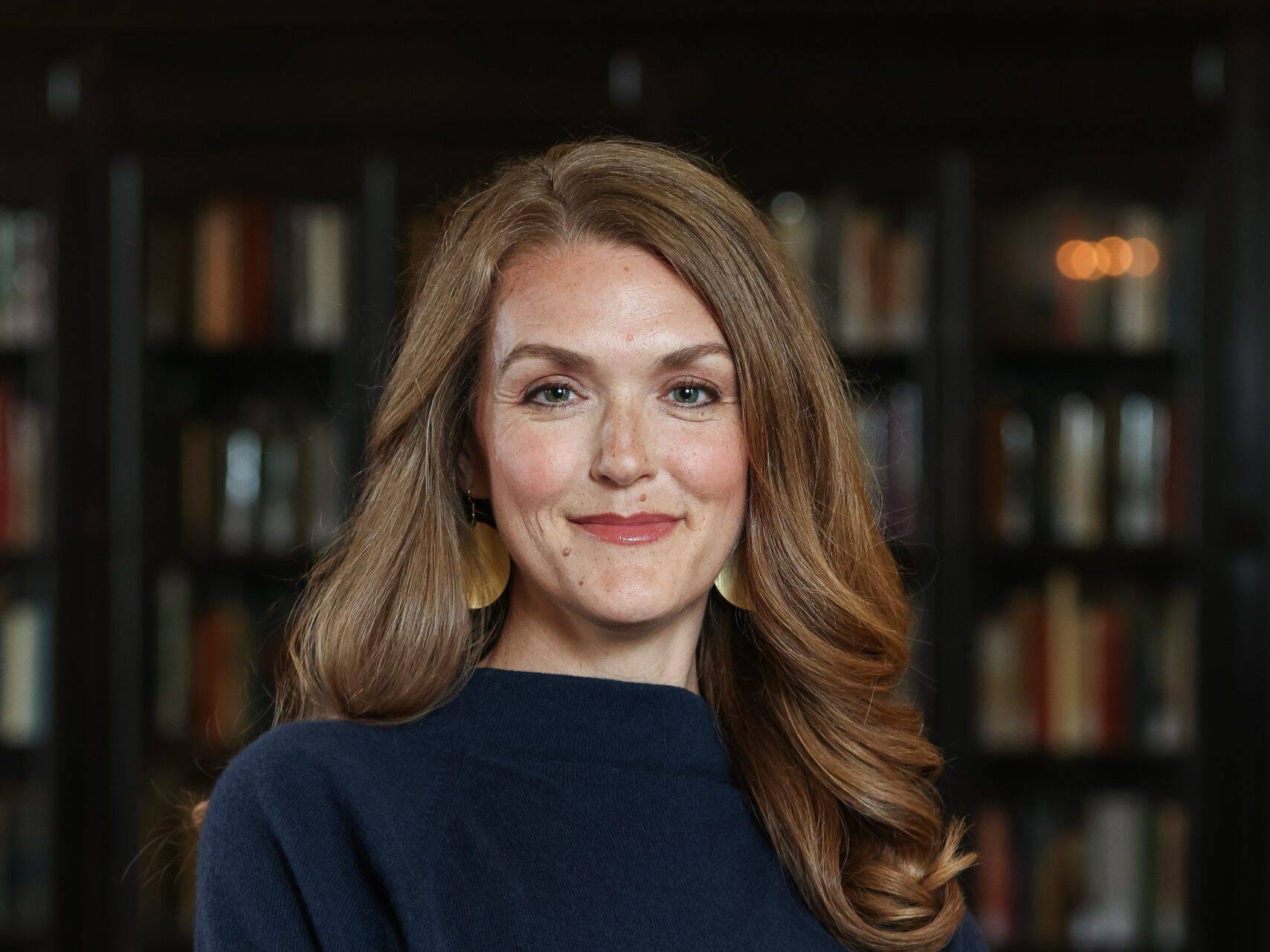
Today, I’m sharing my conversation with Jennifer Frey.
Please support The Honest Broker by taking out a premium subscription (just $6 per month).
Jennifer is a Professor of Philosophy at the University of Tulsa. She is also a faculty fellow at the Institute for Human Ecology at the Catholic University of America. She earned her PhD in Philosophy from the University of Pittsburgh in 2012.
She’s also a fierce proponent of liberal education. She brought that passion with her to the University of Tulsa, where she built a new honors college and served as the inaugural dean — until, after just two years, the administration cut its funding by 92%. When that happened, Jennifer responded in the New York Times, offering an ardent defense of the value of liberal education.
In that piece, she wrote:
When students realize their own humanity is at stake in their education, they are deeply invested in it. The problem with liberal education in today’s academy does not lie with our students. The real threat to liberal learning is from an administrative class that is content to offer students far less than their own humanity calls for—and deserves.
I knew I wanted to talk to Jennifer about these issues. She joined me here in Austin to discuss the story of Tulsa’s honors college, the many problems facing higher education in the United States, and the value of helping students craft intellectual friendships.
Below are highlights from the interview. For the rest of our conversation, check out the video at the top of the page.
Jennifer’s family recently experienced a serious medical event, and her husband Chris had to be hospitalized. There is a donation page for her family as Chris recovers.
Highlights from the Jennifer Frey Interview
Jared: Jennifer Frey, thank you for joining me.
Jennifer: Thanks for having me.
Jared: Why don’t we start by just telling everybody the story of what happened at the University of Tulsa?
Jennifer: I’m a philosopher, and prior to moving to Tulsa, I was at the University of South Carolina. In 2020, we were all on Twitter a lot, and I post a lot about higher ed. One day I posted about the University of Tulsa and how terrible it was because they had eliminated their philosophy department, which is happening at a lot of places, and there was an acceleration during COVID. You actually don’t need to have a financial calamity to just want to murder philosophy. You simply need to not value it.
I checked my replies, and I got a reply from the president of the University of Tulsa that said, ‘Hey, Jen, we’re not that bad. You should come visit us.’ He followed up and said, ‘I probably agree with a lot of your criticisms. I’d love for you to come out.’ In November of 2021, I went to the University of Tulsa, and I gave a talk in which I criticized the university, but I also talked about why philosophy should always be at the center of a university. That was the first time in my life I got a standing ovation for a talk.
It turns out the president had an ulterior motive. He wanted to start an honors college, which he said would be like a mini St. John’s College. Great books, liberal education.
“We grew enrollment by 500%, and we were bringing 26% to 27% of freshman into honors….We were bringing in money, grants, and donors. Then it all ended.”
Jared: For many people, building something like that is a dream.
Jennifer: Yes. I was like, ‘Oh, that’s interesting. You should do that.’ Then he asked me to come lead it. I said no, but he was very persistent. Eventually, we agreed that I would help him build a college on paper. We worked together for about a year, and at the end of the year, I kind of fancied what I had come up with. Then he said, ‘I still need someone to run this college.’ I interviewed, and I was hired and decided to move the whole family halfway across the country to Oklahoma to start this new college.
The transition to administration, and away from an intellectual life to a very practical life, was very difficult, but it was incredibly rewarding. But to make a long story short, it was really successful. We grew enrollment by 500%, and we were bringing 26% to 27% of freshman into honors.
Jared: Were these students who probably wouldn’t have applied to the university if it weren’t for the honors college?
Jennifer: I think some of them, yes. They had to do a separate application for honors, and we’re very clear that it is a lot of effort. I was always impressed by how many young people wanted to do this, because it’s reading thousands of pages of difficult books every semester for two years. We built a residential college, and they were living together in a community, with all kinds of activities. We were bringing in money, grants, and donors. Then it all ended just about as quickly as you might imagine.
Jared: Before we go into exactly how it ended, let’s talk a little bit about what the curriculum was like.
Jennifer: We built it to be collaborative with the faculty who are teaching it. The most controversial thing was that it was a set curriculum. Everyone is going to teach the same syllabus. And that was for the simple reason that I wanted to build community. It was four semesters of great books from Homer to Hannah Arendt.
The first semester of freshman year, it was Three Ancient Cities: Athens, Rome, and Jerusalem. You’re reading texts that would be considered sacred. You’re reading epic poems. You’re reading philosophy. You’re reading tragedy. You’re reading history. Then the second semester is the Long Middle Ages, emphasis on long. We read Augustine’s Confessions, Boethius’ Consolation of Philosophy, the Divine Comedy — and we read all of it, because if you just read Inferno you’re not going to understand what he was up to. We also read St. Benedict’s Rule, because medieval monasticism is so important.
Jared: If they’re reading Benedict’s Rule, they’re also going to get something like lectio divina. They’re going to get some kind of an idea of close reading that’s not deconstructive reading.
Jennifer: In your first year, you’ve gone from Homer to Calvin. That’s a huge range of time. And I want to stress that these are seminars. There are no lectures or secondary sources.
In your sophomore year, it’s the Birth of Modernity. That’s basically Machiavelli to Mary Shelley. You get Hobbes, Locke, Rousseau, Kant, Marx. We read Don Quixote, which is a lot, but also very fun.
Jared: This is probably where students are likely recognizing names more. Maybe they recognize some names early on in the Greek stuff.
Jennifer: But I’m not expecting incoming freshman to be conversant yet. Then in the last class, it is just the 19th and 20th century. That starts with de Tocqueville. Then we get to Hannah Arendt, and then every instructor gets a free text so they can end wherever they want.
Jared: What semester do you think the students enjoyed the most?
Jennifer: I didn’t run a survey, but I would put a lot of money on Three Ancient Cities being the most popular class.
Jared: So the students would do this for two years and then finish their studies in the broader University of Tulsa.
Jennifer: Yes. Our idea was that what we really needed to fix in higher education is general education. When you go to university, you have general education requirements. And the way that it functions in most universities is like a big cafeteria or buffet. Somebody hands you 10 categories, and they’re like ‘You need a green vegetable, you need three proteins, you need dairy.’ And students kind of look and see what’s left over or what looks good. That’s your general education. It’s incoherent. It’s mostly a matter of luck.
It used to be obvious to everyone that general education should be liberal, right? It’s not yoked to expertise or any sort of output. It’s a kind of formation, and it was thought that you needed a certain kind of liberal formation. Small ‘l’ liberal, not political or partisan.
Jared: I’m ashamed of this fact, but I managed to get a PhD in philosophy without reading The Republic.
Jennifer: It wasn’t your fault.
Jared: I took the history classes that were available. I checked the boxes. Then I went to grad school, and they assume that you’ve read Kant, The Republic, things like that.
Jennifer: Where did you go?
Jared: The University of Connecticut.
Jennifer: Did they even hope you’d read it? Did they care? Honest question.
Jared: One or two people there probably cared.
Jennifer: Were they Pitt people?
Jared: They were. Do you know Lionel Shapiro?
Jennifer: Of course.
Jared: Lionel cared.
Jennifer: What a good man. He’s from the old days of Pitt where it was like ‘You’re going to know your stuff.’
Jared: His history of philosophy seminars were notorious for the sheer intensity you had to bring to them.
Jennifer: Because he had experienced it!
Jared: My speculation is that new graduate students are coming in and have already started specializing. They’re pre-specialized. I started specializing as soon as I could.
Jennifer: I could go on a really long, angry tirade about how much I’m opposed to that. But back to the general point about higher education. Honors colleges are uniquely American. They function as a way for a very bright student to do their general education with honors classes. I sort of saw this as an opportunity to provide a general education that was truly liberal. My hope was that we could prove this is popular, that students want it, and that it works.
You just want to really kind of develop what Aristotle would call intellectual virtues. And you want to do it for the sake of human excellence, human flourishing.
Jared: So what happened?
Jennifer: I got fired. The president who courted me left, and then the provost did too. A new provost comes in, and the first thing she did was get rid of honors. They cut the budget by, I think, 92%. Almost everyone I hired was gone. We were pretty disruptive of the status quo, and I think maybe that wasn’t appreciated by everyone.
Jared: There’s this story that we tell about higher education: student’s don’t want to read, students aren’t interested, the kinds of things you’re offering doesn’t speak to students’ experiences, interests, or needs. I don’t think that’s a narrative you buy.
Jennifer: No, it makes me so angry. It feels patronizing to students. It’s also just false, and it’s a great way to excuse oneself from doing your job. And I think that everyone needs to ask themselves to what extent is student disengagement a reflection of problems in class or the university that need to be addressed? Maybe we can’t teach in the same way we’ve been teaching. I don’t think that the traditional lecture is the best mode of doing philosophy. Philosophy is dialectic.
Jared: When I was still in the classroom, even if I had a class of only 30 for an introductory class, my goal was to see how quickly I could get them talking to each other. As soon as they do that, and they see that there is a real disagreement, that what one person thinks is obvious another thinks is absurd…suddenly, they’re doing philosophy.
Jennifer: I learned pretty early on that if you start out lecturing at students, it’s disruptive to expect them to talk. So, I just decided to flip that. I would start every class by asking questions. That totally reorients them.
I think that one thing that was so important about the honors seminar is that it was a conversation. It was conversation sustained over an hour and some change. There’s a lot of formation going on in conversation. Wisdom requires the cultivation of certain virtues, and the best context in which to pursue both of those things is intellectual friendship. The students were friends, and they were friends who did not agree.
Jared: What is honors at Tulsa like now?
Jennifer: You’d have to ask the students. I’m on sabbatical, and I’m not teaching honors.
Jared: Were there any texts that you had in your curriculum that students hated?
Jennifer: What a great question. There were some texts that didn’t land as well as others. Some of the history texts were like that. A lot people did not like the Federalist Papers. Some people really didn’t like Sappho. Everybody loves Homer.
Jared: With many of these texts, they are so much weirder than you expect them to be.
Jennifer: The students are always surprised by how how naughty medieval literature is. They were like, ‘Oh, wow, there’s a lot of adultery in this.’
Jared: I want to ask you for a book recommendation for our audience. We’re looking for books that you think everybody should read. Do you have something for us?
Jennifer: People should read a book by Zena Hitz called Lost in Thought. It’s very much related to the things that we’ve been talking about. Zena is a tutor at St. John’s, a philosopher, and a friend of the perennial philosophy. It’s a beautiful book. It’s part memoir, part defense of the liberality of liberal learning. She really leans into the idea that seeking knowledge for its own sake is deeply, deeply connected to human flourishing. And she does it by showing it.
Jared: Jennifer Frey, thank you for joining us.
Jennifer: Thank you.


