

Welcome back to The Honest Broker interview series —also available on our YouTube channel. You can also find it on Apple Podcasts and other podcasting platforms.
Today, I’m pleased to share my conversation with Zena Hitz.
Please support The Honest Broker by taking out a premium subscription (just $6 per month).
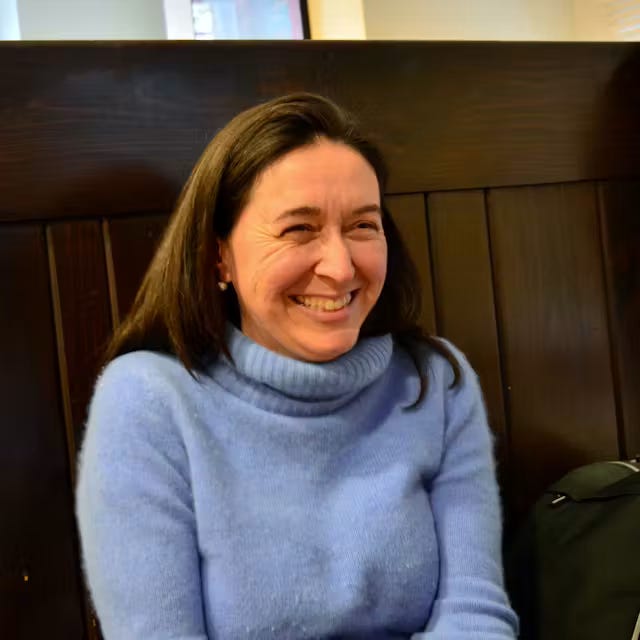
Zena Hitz is a tutor at St. John’s College, a Great Books school. She is also the founder of the Catherine Project, a free program allowing participants from around to world to participate in reading groups of the great books. She is also the author of the wonderful book Lost in Thought: The Hidden Pleasures of an Intellectual Life.
Zena sat down with me while visiting Austin to discuss the joys of the intellectual life, the state of the modern university, and how she is bringing humanities education to thousand of people through the Catherine Project.
Below are highlights from our conversation. For the entire dialogue, check out the video at the top of the page.
A CONVERSATION WITH ZENA HITZ
JARED: Zena Hitz, thank you for joining me.
ZENA: Thanks so much, Jared. It’s great to be here.
JARED: I wanted to talk to you because I was first exposed to your work through Lost in Thought, and then after I read Lost in Thought, I found out about the Catherine Project, and I’ve now participated in one Catherine Project group.
ZENA: Very good, very good.
JARED: You started this thing, the Catherine Project. Could you start by telling us what it is, and also how you got started?

ZENA: I had a kind of longing back from when I was straight out of grad school and started teaching undergrads intro to philosophy and stuff like that. A lot of the job of teaching philosophy at a public university is teaching people who don’t want to learn. So I developed this preoccupation with: what would it be like if you tried to find the people who only want to learn? Suppose you could just filter for the desire to learn.
My first idea was to have an open ancient Greek study group in Baltimore, which is where I was living at the time. We were going to read the Iliad, and this wonderful librarian helped us out, and a couple people turned up. They were grad students at Hopkins or whatever. So it turned out to be my friends. It was very small, and I realized I didn’t know how to reach people in an ordinary city who would want to do something like this. So there was a contact problem. How do I find these people?
But I was still haunted by the dream, and it sat in the back of my mind for, I don’t know, probably 20 years, 15 years. And then, as I talked about in Lost in Thought, I went through all kinds of transitions and tried to figure out what to do with my life, and finally settled on going back to St. John’s to teach. So I went back in 2015, and then in 2020, of course, we had emergency online COVID classes, which anyone who was teaching at the time knows was absolutely miserable. Just the worst kind of teaching you can imagine. Because it was unexpected, and these people were in their parents’ basement, and I was teaching a class called junior math, which was Newton’s Principia, one of the hardest books I know, and we just couldn’t do it.
JARED: That was a very St. John’s sentence.
ZENA: I have a lot of St. John’s sentences. I’m a Johnny born and bred, so that’s the way it is. But we couldn’t do it, because reading something that difficult requires having an in-person community to talk to people and get help and stuff like that. So we kept trying. We put in a college try, but it was really painful. Anyway, that’s a little bit beside the point.
The point is, I was really upset about being online. I wanted to just send everyone home and give them a chance, maybe, to fix their grade, but we had to do it. And I was very frightened. I thought, once universities figure out that they can have classes online, they’re never going to go back, because it’s so cheap. Administrators are just like that. They just want stuff that’s cheap. They don’t care about educational quality. So I was very angry, and that sometimes can be very productive.
I thought, if I were stuck on this forever, what would be the best way to learn? What would be the best way to teach? I thought, maybe it’s a bit like an Oxford tutorial situation, where people went away and read off screen and then had face-to-face conversations in person — or by Zoom, in this case. Small groups on Zoom are better than medium-sized groups, and medium-sized groups are better than large groups. The larger the group, the worse it is; the smaller it is, the closer it is to real human interaction.
So that was one thing I was doing back there. And then the book came out at the same time. Lost in Thought came out, and Lost in Thought made this argument that the life of the mind is for everybody. And I say this a lot, and it’s true: that was really a sentimental idea I had. Like, maybe if I have a Greek reading group in Baltimore, old Greek guys will show up and want to read Greek with me. I didn’t really know it was true, but I wanted it to be true. And then I started getting all of these emails from people who wanted to lead a life of the mind, who wanted to read the great books, and they would ask me what they should do. And I didn’t have a good answer for that question, and that haunted me.
So somehow these two things percolated, and eventually I thought, well, look, let’s just have open online Zoom classes on great books, and it’ll be totally open. Anyone can go. We’ll make it free. We’ll run on volunteer labor. I’ll tap into my academic network, get some professors, and I’ll get some former students to lead informal reading groups. And so that was the Catherine Project. It began — it was sort of born and bred on Twitter. So it was through Twitter that I got to know people who might be interested in something like that, and this was the golden age of Twitter, when everyone was on it because it was COVID, and the algorithms exposed you to all kinds of people.
So anyway, we started out with about 45 students. We had these things called tutorials—small groups, like three. We started with groups of three students and one professor. We had five of those, and they read—well, we had an early divide between people who wanted to read fast and people who wanted to read slow. So some of them just read the Iliad and the Odyssey, some read the Iliad, the Odyssey, some Greek tragedy, and some Plato. And we had two reading groups meant just for people in those tutorials—one was on Aristophanes and one was on Kafka, The Trial.
So we had these 45 people, and November 2020 comes around, and the Kafka group wanted a few more people because they wanted to read Kierkegaard, Either/Or. And it’s November, I was teaching full time, and I was just like, put something on Twitter: who’s up for reading Either/Or on Saturday nights? Like 100, 120, 130 replies. So I was like, uh oh, I have to do something about this. I can’t reject 125 people—they wanted like three people for their group. So at that point we pulled in a bunch of reading group leaders, and then for a long time the Catherine Project became mainly these peer-led reading groups. Some people had PhDs, some had master’s degrees, some were just really good people who had gone through great books programs as undergraduates, facilitating these open conversations about great books in small groups.
So at the end of spring 2021, I was totally out of steam. I was dead. And I applied to Emergent Ventures, which is Tyler Cowen’s group, for a grant. I had no expectation of getting it, because I’d spoken to Tyler a year earlier when I was just getting started, and he had put me through the ringer — the hardest set of questions anyone had ever asked me about the business plan, and how big was it going to grow, and how are we going to fund it, what was going to be the source of revenue. And I couldn’t answer any of those questions. I just had this romantic idea that if you opened up the doors, people would come. Anyway, Tyler, after a year, gave me the grant based on what we had done, without a budget.
We’re now enrolling 1,600 human beings per semester. One of the things that helped with that last spurt of growth is that we had started with these tutorials, with the reading groups that were supplemental, but we were worried that the list of reading groups was actually really intimidating for anyone who wanted to come into the reading for the first time. This is a huge list of books, many of which I had never heard of. We always wanted to be a way for people without much experience with us to find their way into reading and thinking and having conversations. So we instituted—this is the end of the second year—we’re now teaching the fourth unit of what’s called our core program.
It’s basically just a set of readings that we think are basic, that are a good introduction to the life of the mind, that we think will serve people well in the future. So that’s become a big component of what we do. We still run a trillion reading groups. Anyway, that’s the story of the Catherine Project.
JARED: I loved the experience with the Catherine Project, because the facilitator was a graduate student in Germany, and then we had a few other people in various parts of Europe, a couple of undergrads, and then just a few people who I had no idea what their academic background was, but they were joining from their lunch break, essentially, at their desk job. I loved how open the conversations were. I never felt the sense that anyone there didn’t feel like they could participate. And there was just this idea of taking what everyone said really seriously. I found it to be this really amazing experience.
ZENA: It’s a collaborative conversation. Experts don’t teach our courses. And although in the core program they tend to be people who are experts in something, they’re not necessarily experts in what they’re teaching. But they have more experience.
JARED: Let’s talk about that idea you said was a romantic or sentimental idea—that the life of the mind is for everyone. I’m actually writing a book about this too; we’ll talk about that later, off camera. I firmly believe this. One of the things my experience in the Catherine Project showed me is that people from very different walks of life, people studying very different things—I’m pretty sure some of the undergrads were not even humanities majors—and yet they were able to just sit with this text.
The Catherine Project also doesn’t require an educational background to apply, right?
ZENA: The only rule is that you’re 16. And there is an application—a statement of interest, we call it. But we’re really just trying to make sure people know exactly what they’re doing.
JARED: Most people who participate—do you think they have graduate degrees?
ZENA: I think we are still drawing a pretty broad range. Some pretty young people, people in high school or college, people just out of college, retired people. There’s a big chunk of people who are in their 30s and 40s who work in, say, tech, or have worked in tech, or in STEM, engineering. And they’ve realized, having been on a really intense career path, that they’re missing something. So we get a lot of people like that.
JARED: What are those things that you don’t do but wish you could, in some perfect world where the Catherine Project has infinite money and infinite resources?
ZENA: One of the things I’m thinking about now is the collapse of specialized research training in the humanities. Lots and lots of graduate programs at the moment are shuttered. They’re not admitting new students, and it may just be a freeze for a time, but it’s hard to see that it’s not the beginning of a shift. I think it was going on for a while anyway, but then the cuts in the science funding that the Trump administration put in last year shook up the administrators, and one gets the sense that they were funding graduate humanities programs with some of the excess money from the sciences that’s been cut.
Part of what I try to do when I’m thinking about things like this is to think not about what would be good for one person or another, but what’s the whole ecology of humanistic learning. What are all the things that need to be in place for humanistic learning to be part of what we do as a culture or as a community? And it seems to me we do need people who are working at a deep and serious level on the books, or on basic humanistic topics. So I’ve been trying to think about ways in which—and I think it’s very compatible with the Catherine Project, it just needs some kind of residential or brick-and-mortar context—but I wonder whether there’s a real appetite among many of our members, and especially our staff, Jordan and Ashley, to do in-depth work.
It’s incredibly refreshing to read a great book, and to be reading them all the time, when you’ve had to leave grad school, you’ve left academia—or even as a supplement to what you’re doing in your highly specialized academia. But it all seems to be supported by people who’ve sat with books for a long time and have really chewed through them and thought things through and have a sense of what’s knowable and what’s not knowable. So the idea would be to have something like a residential library where people could come and study and have visiting faculty who could mentor people. That’s the dream.
JARED: In a way, the core of the Catherine Project—what you’re doing now—is this foundational work. We’re going to give you this foundation in the great books, and also teach you the joys and pleasures of reading widely, but then if you want to, you narrow. Which is kind of the dream of humanistic education too: we all get this broad foundation, we all feel immersed in this tradition, and then you don’t write a dissertation on why the great books are great—you write a dissertation on some subset of some small problem about Homer’s Odyssey, and you’re going into archival research, or doing work on histories of languages, or reception history, all this stuff you’re not going to get in your life-of-the-mind seminar.
ZENA: There’s a lot of thinking that can be done about the books that is just a matter of reading it carefully, learning the original language, reading around it so you know what it’s responding to and what responded to it, reading the commentaries. That already gets you a lot of really interesting angles on a book that you don’t get when you just read it for class, which means two hours a week.
So yeah, I’d like to foster that. Like the Catherine Project, I’ve always tried to be open about what, if it’s successful, it will contribute. So one thought is, when all the institutions die—in the post-apocalyptic wasteland, when we’re all eating out of trash cans and warming ourselves by fires in the open and there’s broken TV sets everywhere. I don’t know where these images come from; they’re probably from Mad Max. So when all of that is there, there will be a Catherine Project. We’ll still be reading books and talking about them in this post-apocalyptic landscape.
But that’s just preserving something that might die. In a way, it would be better if, instead of that, it provoked some reform on the part of the institutions. One of the things it has shown—and programs like it do show, and this I know is something Jennifer Frey has also been arguing—is that there’s been a kind of myth that people don’t want to study this stuff anymore, and I think it’s really obviously not true. People really, really want to study it, and they choose not to major in it in part because the administrators, and often the faculty, are telling them that it’s a waste of time. And if you’re trying to make your way in the world, and the people who hold the power and the keys to the future are telling you it’s a waste of time, then you better listen to them, because they’re going to be able to help you into the next stage, whatever it is.
So this Catherine grad program, or whatever it is, has a similar structure. Maybe it will take the place of these graduate programs that are likely to close, especially for people who aren’t necessarily going to become academics but who wanted to get to the next level. Or maybe it will become the university of the future.
JARED: One of the things I like to think about a lot—but I’m curious to hear what you think—is just the concept of an autodidact. What is an autodidact for you?
ZENA: An autodidact is obviously someone who teaches themselves, who’s self-taught. I tend to think about it in terms of examples. Probably my favorite example is Malcolm X. Obviously, a highly intelligent person, growing up in a society where it was extremely difficult for a black man to have a job that suited his abilities. And he ends up in prison for theft when he’s pretty young, and at that time they have prison libraries—which I think they don’t anymore, of that kind. So they don’t have prison libraries stuffed with classics; they have prison libraries with a few out-of-date copies of, like, Business 101, or self-help stuff like that. So anyway, he read the entire prison library—vast swathes of the prison library—and just became a different person. I think of that as being an autodidact.
I think you don’t need to be alone to be an autodidact. So another example: there’s this wonderful book I’ve promoted for years called The Intellectual Life of the British Working Classes by Jonathan Rose. He describes these groups of workers would get together and educate themselves. They’d pick an evening, they’d pick something to read—Plato, Aristotle, Kant, Descartes—they’d study astronomy or math or science or literature, Shakespeare, classics. And they would teach themselves.
JARED: There’s some way that everyone’s actually an autodidact. I call myself one—I have a PhD, but I call myself an autodidact, because after I left my PhD, I realized there were all these gaps in my education, and I was never going to be able to take a seminar on them, so I just read it. I understand I’m stretching the term a little bit here.
ZENA: I think everyone is an autodidact, because you don’t really learn seriously unless you’re teaching yourself. An expert can tell you something, but you still have to decide whether it’s true, even though you don’t actually have the basis, the expertise, to judge it. There’s no learning without the participation of the learner.
That’s why calling attention to autodidacticism, or nurturing it as the Catherine Project does, is really important—as a reminder of what actually is core to any kind of education. A human being is not just a passive sponge for content that’s somehow been verified somewhere else. In order for us to learn well and live well, we have to find within ourselves the questions and the desires to learn, and we have to find ways to inquire and think about things. We can help one another, and experts can help us too, but in the end, it’s really what you do. That’s the nature of learning. There is no substitute for the act of thinking.
JARED: I was reading Aristotle’s Politics, which I hadn’t read before. I love the Nicomachean Ethics, and at some point it became shameful that I hadn’t read the Politics. And I tried to distill down the propositions you could definitely attribute to Aristotle from that book, and there aren’t that many.
ZENA: No, it’s a very hard book.
JARED: And then you wonder, why would you read it? Because Aristotle’s actually giving you the opportunity to think through these principles he’s floated for you, and then see how it worked out, and how it played out in history. And then you have to actually decide if any of those propositions or principles are true, if you agree with them. I think Aristotle is a great model for this. He really makes you think for yourself while reading him.
ZENA: Yes. And you wouldn’t get that if you just attended a lecture and then said, this was Aristotle’s political theory, and the professor handed you a list of propositions.
I think it’s true that even if you were totally persuaded of every Aristotelian principle, you would still have to figure out how to see all those cases, and to see what’s going on around you in light of those cases. And that is really not a simple task. That’s a serious kind of training.
And there’s no substitute for it. And why would you expect there to be? Why would you expect there to be an algorithm for how to make elections in the United States work better? That just doesn’t make any sense. You have to look at the way things are, you have to look at the kinds of problems we’ve had in the past, you have to look at the constraints there are on what’s possible. And then you have to try some things out. And maybe there is no right answer for something on that largest scale, and you can only fix the voting procedures in, you know, Texas or something. But we’ve really—I’ve gotten pretty deep into a view of human thinking and agency that’s really dangerously false. And that’s definitely part of what I feel like I’ve been working against.
JARED: And also, when you’re coming to a book like the Politics, Aristotle gives you all these cases from Greek history, and you need to think through them. But you shouldn’t limit yourself to only those cases.
ZENA: Yes.
JARED: We have thousands of years of political history post-Aristotle to draw on as well.
ZENA: Yes.
JARED: And I think if you could talk to Aristotle while reading the book, he would say, ‘Why aren’t you writing about the US in the 1960s as well, when you’re talking about the Politics?’ I was reading it on my Substack—I run a sort of informal book club on my newsletter—and some people are like, why would I care about those examples so much? And it’s like, well, okay, we’ll talk through all those examples if you want, and we probably should, but we have a thousand other examples we could talk about. If we think we can learn something through the act of reading Aristotle, it requires this very active process.
ZENA: Yes. It’s something that was in the air in the culture even relatively recently. There’s a beautiful piece by George Kennan, who is one of the great 20th-century diplomats and a beautiful writer—Kennan’s diaries are fabulous stuff to read. But he has a little essay on education for statesmanship. He was thinking about things like working for the State Department, or being a political person, and he’s like, look, there’s not a technique—you have to learn everything there is to know about history, literature, human nature. That’s what you’re dealing with; you’re working with real life. And so as much as you can learn about how things work, have worked in the past, work in this particular place—that’s all going to be material for you to make judgments. But there’s not going to be any substitute for making that judgment. So, yeah, we used to know this, and we’ve forgotten.
JARED: I had this experience when I left academia. I finished my PhD, and I just felt like I was leaving academia behind, so I kind of felt like they’d rejected me, too. And then I started thinking, what’s the point of philosophy? I had been initiated into this guild structure, where you study with a master, you produce your work, and I had been given the stamp, and then I hadn’t gone and gotten a job, so I was no longer part of it. And so now thinking is for those people, philosophy is for those people. And I now see the trajectory of the last five years of my life as reminding myself, and then wanting to remind other people, that I was completely wrong—that philosophy was just as much mine when I left academia, and in fact it was mine before I got the PhD too, and that it’s true for all of you as well.
ZENA: Yes. And that’s also a case of mistaking university constraints, which are totally contingent, for the real thing. There’s no reason for us to think this way, and there’s no reason to think that there’s only one way of using a degree, or that an institution has to be closed to people who aren’t in this special guild.
JARED: But there were material circumstances that made it harder for me to see that at first. As soon as you lose your university email, you lose access to journals—or it becomes a lot harder to access journals. You’re emailing friends, can you send me these articles, and sometimes they do it, sometimes it takes a few days. It can feel, from the outside, like knowledge is very heavily gatekept. Because things like journals, or books that cost two hundred dollars to buy your own copy, you can get at any university library—you just feel like you’re kept out from that.
ZENA: This has really gotten dramatically worse since all those library materials went online. In a way, of course, the online research library is an incredible resource—you can find stuff much more easily, there’s all kinds of databases and indexes that are much easier to use than the old big paper ones I was trained on, because I’m just old enough to have done that. But they have really locked up all of the specialized research, to the point where I don’t have regular access.
It’s a scandal that science is gatekept like that. You ought to be able to learn about a scientific topic by reading the original papers. They should not be kept behind these incredibly expensive subscription services. It’s only making the whole process less accountable, less transparent, and it undermines people’s trust. And it reinforces this idea that somehow an ordinary person can’t understand this stuff.
But I would like to see different kinds of platforms for the presentation of this kind of research that are open access, or minimal access. I don’t know what would have to happen for that to take place, but I wish people who had the resources and the abilities and the understanding would start doing that. That’s for sure.
JARED: All right. I want to be mindful of your time. So I have a question I always end on, which is, if you have a book recommendation for our listeners.
ZENA: Yes, I was wondering about that. I think what I’d like to recommend is the book—or the books—I was most excited about most recently, which was, last summer I read these Robert Caro books about Lyndon Johnson. These are very popular books, lots of people know they’re good, because there’s so many of them and they’re so long—they’re daunting in some way—but they are incredibly well written. They tell the whole story of 20th-century America through Texas, where we are right now. And it’s a particularly interesting view of Texas, and kinds of characters that we think of as being what makes Texas Texas, and not just Lyndon Johnson, who has his own sordid, very complex mixture of very, very bad qualities and very, very good qualities. And you’re never let off the hook, because the writing is so good. And there it is.
I was talking about this last night to a friend of mine, who I was recommending them to—because that’s basically what I do whenever I see someone, I’m like, you should read Lyndon Johnson. And then every now and then, once every three months, I meet someone who’s actually read them, and we just talk about them for hours. What is it that holds a human being together? What’s the nature of political power, political ambition? How does a person maintain any kind of integrity in that kind of context? How do these very beautifully noble motivations coexist with this really venal self-absorption?
So I think Lyndon Johnson is a fascinating figure, and a lot of the people in there are fascinating, and they’re absolutely masterpieces of books. I think there’s reason to think they are the great books of today. So I recommend them really highly—and yeah, it’s a bit like a continuation of Aristotle’s Politics. You’re reading through the casework, the cases, all of the things that happened in the 20th century in the Senate and the presidency, trying to think about what worked and what didn’t.
JARED: Awesome. Zena Hitz, thanks for joining us.
ZENA: Thanks so much, Jared. It’s a pleasure talking to you.


