
What I Learned from Binge-Watching Cowboy Movies

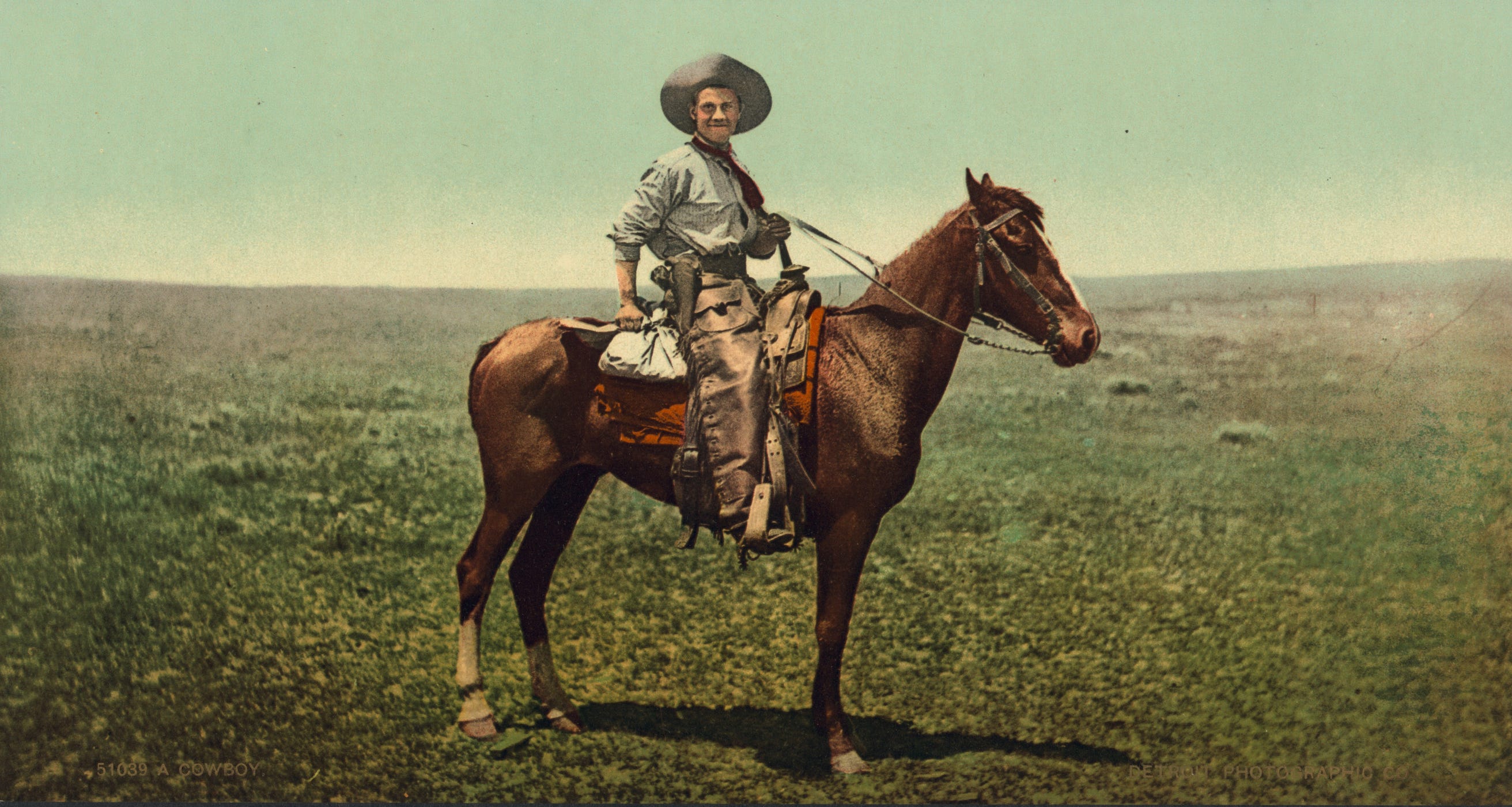
I hated cowboys when I was a youngster. Not real cowboys—I never met a single gunslinger, cowpoke, or desperado in in my urban neighborhood. My loathing was reserved for cowboys on TV.
And they were everywhere.
Please support my work—by taking out a premium subscription (just $6 per month).
At one point, eight of the top ten shows on the flickering tube were westerns. And it got worse from there—Hollywood kept churning out more and more cowboy movies and TV series. I tried to avoid them, as did many of my buddies, but it was like dodging bullets in Dodge. There was nowhere to hide.
That’s because our parents loved these simple stories of frontier justice. They couldn’t get enough of them. And when they weren’t watching them on TV, they dragged us off to movie theaters to see The Magnificent Seven (128 minutes) The Alamo (138 minutes) or How the West Was Won (an excruciating 164 minutes).
My friends and I preferred different genres. We vibed with spies like James Bond or astronauts or pirates or private investigators.
Anything except cowboys.
But we fought a losing battle. When we changed the channel to The Man from U.N.C.L.E. on NBC, the old folks would turn it back to Gunsmoke on CBS. We dug Star Trek. They felt more at home with Bonanza.
The battle raged for years. And then it was all over.
By the time I became a teenager, the cowboy was an endangered species in Hollywood. Demand for western movies and TV series collapsed. And I celebrated as all these rustlers and ranchers and rustics road off into the sunset for the last time.
After 14 seasons, Bonanza was canceled. After 21 seasons, Gunsmoke smoked no more. Rawhide went into hiding, except for the theme song (appropriated by the Blues Brothers).
And I never thought about it again. Until recently.

Now, years later, I started wondering about the western genre. What made this such a powerful myth for my parents’ generation? Why did it die? Could it ever rise again?
Or does it matter at all? Should we just put all those cowboy stories behind us, and move cheerily into the future?
That’s why I started watching western movies recently. At first I did so sporadically, to fill an idle hour. And then I ramped up into binge-watching, devoting several hours every day to this pursuit.
Many aspects of these films still put me off. I struggle with the clichés and tired formulas. But I’ve gradually acquired an affection for the genre—or maybe an affection for the audiences of an earlier day who could put such trust and faith in a sheriff or US marshal or gunslinger for hire.
Do any of us have that kind of faith in any authority figure nowadays? I doubt it. But I wish we could. And that’s impressed powerfully on my mind when I see Gary Cooper take on outlaws in the deserted western street of High Noon. Or James Stewart confront the dangerous Liberty Valance. Or John Wayne battle with a gang of desperadoes in Rio Bravo.
So forget all the shootouts and cattle drives and fancy roping. The real foundation of the western genre was moral authority. And Hollywood never let you forget it—that’s why heroes wore white hats and villains dressed in black.
The audience didn’t even have to think about it.
In some ways, it’s like the superhero movies of today. You just see the cape, and you know that Superman is fighting for justice. And the same is true of Batman and Spiderman and all the rest.
But imagine what would happen if the audience lost confidence in the moral authority of these caped and costumed do-gooders? Could the Marvel Universe survive if we no longer knew the difference between heroes and villains?
Because that’s exactly what happened to the western. Just consider the unsettling film The Good, the Bad and the Ugly—which came out around the time the western genre died. Despite the movie’s title, it’s hard to identify any character in this film as good—instead they merely differ in their degrees of badness and ugliness.
And the same is true of The Wild Bunch or Once Upon a Time in the West and so many other films from that era. There are no heroes on display here, only various pathways into nihilism.
So long John Wayne. Hello Friedrich Nietzsche.
But this made perfect sense. The entire US of A was traumatized by the Vietnam War, and then Watergate—along with assassinations, riots, sex, drugs, and rock & roll. The moral sureness of the Eisenhower years, along with the complacent righteousness of so much of the public started to erode. At first it happened slowly, and then rapidly.
The classic western could not survive this.
Sure, some folks tried to bring it back. In 1985, two important western novels were published. Lonesome Dove by Larry McMurty tried to revive the romanticism of the cowboy life and spawned a successful TV miniseries. The older generation loved it—it revived their faith in America and its traditional homespun ways
But that same year Cormac McCarthy released Blood Meridian—maybe the darkest and most nihilistic of all western novels. Blood Meridian is the book that gets assigned in college classes today, not Lonesome Dove. Some even call it the best American novel of its time, and praise it for its intense realism.
But is Blood Meridian actually a realistic novel? Does it tell us what the Wild West really was like? Do we want to replace our great American mythos with a tawdry tale of sadism and evil unrestrained?
I hope that’s not true. But McCarthy’s novel makes me worry. I admire the writing—yes, it is a great novel—but I’m actually glad they never turned Blood Meridian into a film. I don’t want to see those horrifying incidents translated into widescreen Technicolor reality.
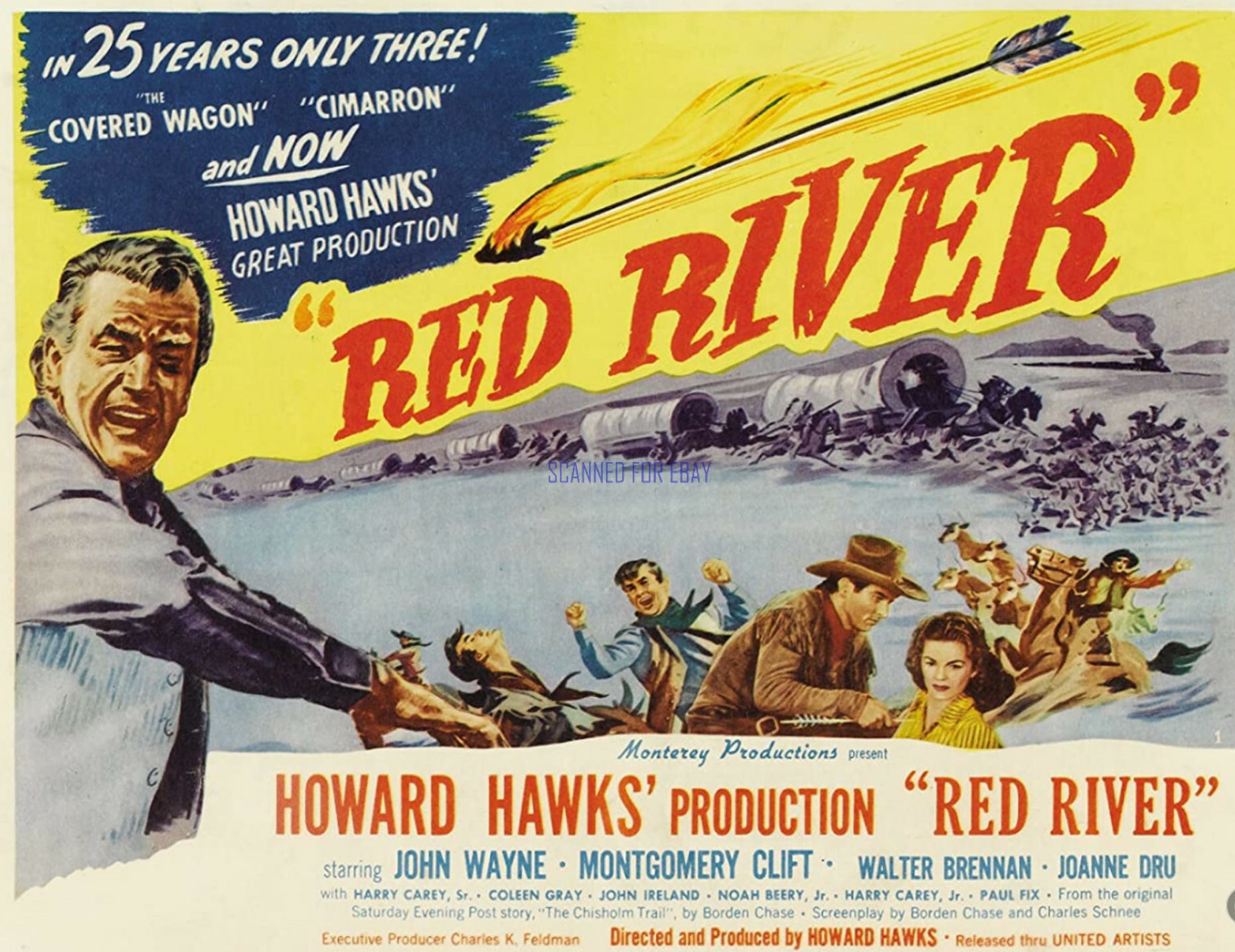
I learned during my binge-watching, much to my surprise, that the moral authority of the western film was getting undermined long before Vietnam. We already get a taste of antihero relativism from Humphrey Bogart in The Treasure of the Sierra Madre (1948). In Red River from that same year, John Wayne starts playing against character, stirring up generational conflict with his moral blindspots and authoritarian excesses. Something similar happens with The Searchers (1956), where the audience is horrified by Wayne’s savagery.
So when Clint Eastwood showed up in various western towns, during a series of mid-1960s films, he is simply taking this moral ambivalence to the next level. At first, audiences got excited by this new kind of western. But—as I learned during my binge-watching—if you consume it night after night, you start craving something more heroic.
I’m convinced that movie audiences felt the same way by the mid-1970s. And they did find something more heroic and rock solid—but not in a cowboy movie. It came in the form of Star Wars. You might even say that George Lucas had invented a new kind of cowboy film.
In Star Wars and its early sequels, Han Solo and Luke Skywalker deliver everything that the western film had abandoned. We have clearly defined heroes and villains, shootouts and killings, and a leading lady (Carrie Fisher) who provides a bit of old-fashioned romance.
You get none of these things in, for example, The Good, the Bad and the Ugly, where no woman has a meaningful part or (if I remember correctly) any dialogue whatsoever. That might have felt edgy for a while, but sooner or later most of the audience switched over to Star Wars.
It wasn’t just the special effects. Or even great storytelling. It was the ability to find moral certainty in a world that had lost it. By translating the western formulas to outer space and a distant future, virtue became plausible again. Harrison Ford was the new John Wayne.
I’m hardly surprised that virtue also made a comeback in intellectual circles during this same period. Right between The Empire Strikes Back and The Return of the Jedi, philosopher Alasdair MacIntyre published his influential book After Virtue—a book that both shocked and delighted me when I first read it.
Other books followed in its wake, trying to resuscitate virtuous behavior as a serious endeavor for smart people. None of them succeeded in changing the cultural tone—which continued on its unstoppable hedonistic and relativistic trajectory. (Not without a cost—around this same time, the pervasive ethical confusion gave us Harvey Weinstein, Jeffrey Epstein, Bill Cosby, etc.) But these books still had a meaningful impact in legitimizing an alternative worldview in which moral authority still survived, and demanded our attention.
That’s why something like Lonesome Dove winning the Pulitzer Prize was even possible. You can’t really kill people’s hopes and dreams. Nihilism isn’t going to win without a fight. And by the time we reach the mid-1980s, the battle lines are now clearly drawn—much like the white-hat-versus-black-hat confrontations in those classic westerns.
What surprised me is how much this debate between virtue ethicists (and their allies) and postmodern nihilists (and their fellow travelers) started to play out in the next phase of the western film.
You see it already in Heaven’s Gate (1980), a budget-busting western directed by Michael Cimino, that destroyed United Artists—and Cimino’s reputation as well. My interpretation of this is different from the conventional version. I believe that critics and academics expected Cimino to deliver a nihilistic western—after all, this was the same director who had unleashed The Deer Hunter on the world. But instead he returned to the romance and heroism of the 1950s. So even his allies (heavily tilted toward postmodernists) abandoned him.
Cimino was supposed to be a Derrida of the silver screen, but that’s not what he served up in Heaven’s Gate. By any measure, the story is conventional. Maybe with better editing and marketing, Cimino could have bypassed the critics and made a play for a mass audience. But odds were against him—even at that early point in his career, nobody was ready for Michael Cimino as a populist filmmaker for middle America.
Some filmmakers have tried to play it both ways. The Coen brothers, for example, have made landmark films in both styles. No Country for Old Men (2007) is based on a novel by Cormac McCarthy (see Blood Meridian above), and is the most brilliant nihilistic western you will ever see. But just three years later, those same filmmakers released True Grit (2010), which restores our faith in the Wild West.
Taylor Sheridan is straddling the same divide in his popular western shows. In Yellowstone he deftly balances the two agendas. Kevin Costner (playing rancher John Dutton) is a flawed person, but we still sympathize with his love of the land and rugged determination. He is both dysfunctional and idealistic—those traits coexist in the same complicated person. So you can watch this series either way, as deconstructing the myth or building it back up.
We still live with that dilemma today.
Do we trust our gunslingers and authority figures? Or do we fear them? And allow me to point out the obvious—this is not just a question about cowboy movies. It’s a question about our society as a whole.
So do you vote for Gary Cooper as president, hoping for a courageous man of conviction. Or do you pick Clint Eastwood, because you need a cruel bastard to maintain law and order?
Maybe the western film is a good place to explore these issues. It provides all the necessary archetypes, and is perhaps the purest setting where we can grasp the trade-offs between freedom and social order, independence and authority, toughness and benevolence, innocence and experience.
If that happened, the western story would have gone full circle. After rising in status as popular entertainment, it collapsed into cynicism and senseless violence. And now may be the moment when it returns to its legitimate place as a foundational myth—a kind of Iliad and Odyssey rolled together for the American psyche.
We need myths and stories. And, for better or worse, this is the one we’ve inherited. Let’s not abandon, but make the most of it.
I share my brother Ted's late life discovery of the Western as a favorite genre.
I should also mention that our Mexican great-grandfather and grandfather actually were cowboys--vaqueros--though that was already long in the past by the time we were born.
In fact, our great-grandfather Juan Jesus Ortiz was shot and killed in a bar in Lost Cabin, Wyoming. Both of his sons were soon supporting their mother by riding cattle drives. Our grandfather quit life on the range and ended up in Los Angeles.
If you've watched "Death Of Stalin", you'll know that he was a fan of western movies. My guess is that Stalin got out of them what he needed to think that he, too, wore a white hat.
Louis L'Amour's memoir, "Education of a Wandering Man", describes a character about as close as one gets to moral unambiguity. Louis came of age during The Great Depression. That event was about as challenging as it gets in modern times to existential survival, and where Mr. L'Amour found his moral clarity in it.