
Predictions on the Future of Netflix (and Other Huge Platforms)
I dig more deeply into the collapse of audience capture


A few days ago, I offered some comments on the crisis at Netflix—describing it as a sign that manipulative “audience capture” strategies in business have stopped working.
I typically put these in-depth culture briefings behind a paywall, but at the last moment I decided to make this one available to all. And I was rewarded when it went viral with a vengeance. Within a few hours, my “audience capture” critique racked up more than five thousand likes and five hundred shares on Substack alone—but it also took off on other platforms.
This brought in many new subscribers. I welcome them aboard, and hope they become active members of our community.
I was especially gratified to get a nod from legendary investor Michael Burry (celebrated in the hit film The Big Short for his anticipation of the 2008 mortgage meltdown). His boost brought an entirely different audience to my Substack, which is mostly about culture and not finance. Even so, there’s a heavy dose of futurism and prognostication at The Honest Broker, so I hope these newcomers will find something of value here.
Even so, this viral article left many important questions unresolved. The biggest one is: What happens next?
Please support The Honest Broker by taking out a premium subscription (just $6 per month).
Today I’m offering more detailed predictions. These will tell you not only what these companies should do, but what they must do if they want to avoid stagnation and declining market share.
Of course, that’s no guarantee they will take my advice. In fact, if you just judged matters by the current media and web landscape, you might think there’s no chance they will abandon audience capture. But if they continue down the current path, they will pay a high price for their stubbornness.
First, let me define what I mean by “audience capture”—because some people use this same term differently, and I want to make sure we’re on the same page.
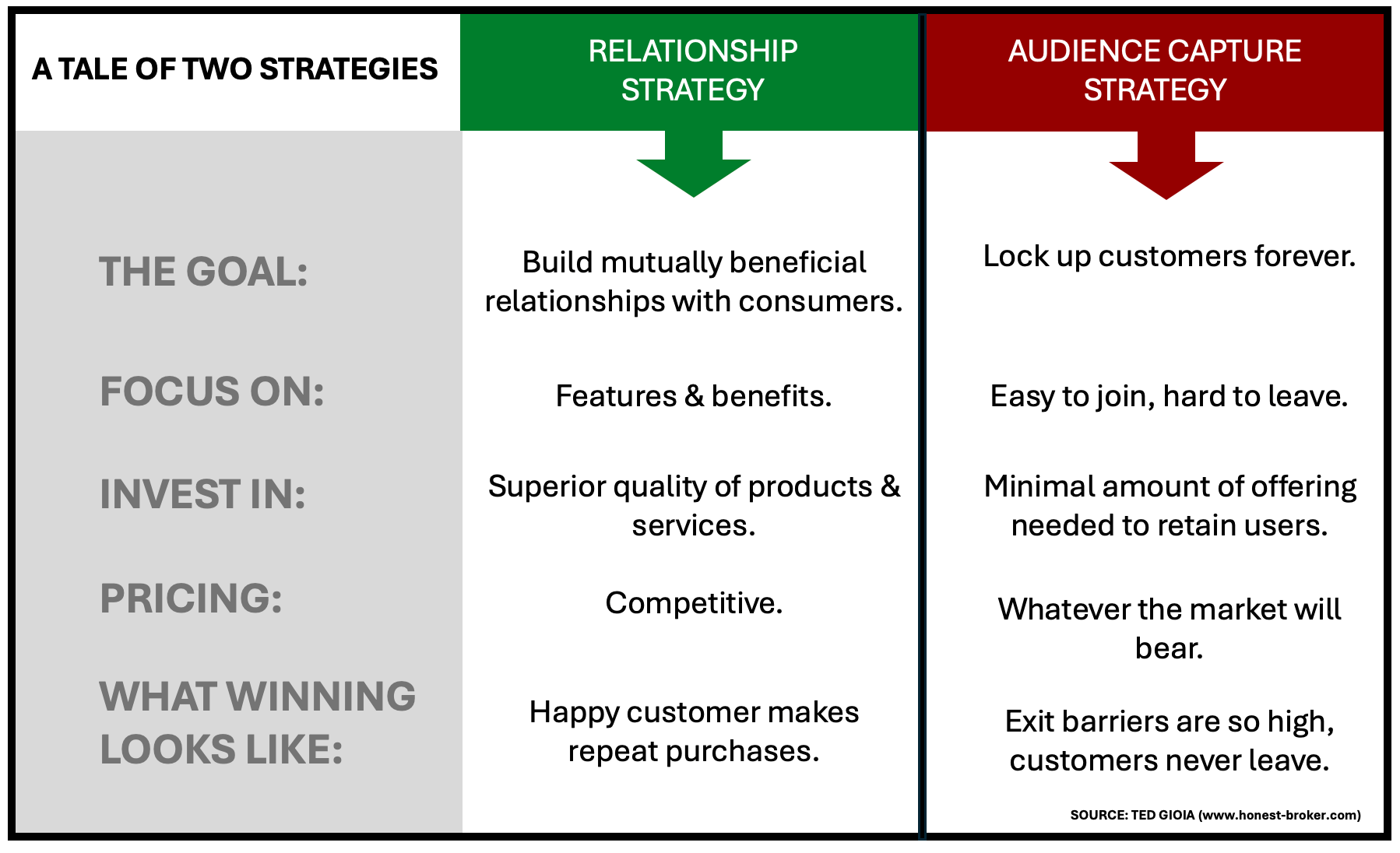
Audience capture strategies focus on locking up a customer base—via network effects, free stuff, loyalty programs, cheap entry-level subscriptions, etc.—and making it hard (or at least a hassle in some way) to leave. After reaching critical mass, the company shifts to squeezing the customer with frequent price increases and other exploitative measures, counting on the fact that many will just put up with it.
As you can see, there’s a world of difference between these two strategies, and the key parameters of the audience capture approach are disturbing.
Even more disturbing, however, is my next claim: Audience capture is rapidly becoming the default approach of the largest companies in the world. So its potential for abuse must be a matter of concern for all of us.
This would have been unthinkable a half century ago. In those days, audience capture was a rarity—found mostly in airline frequent flyer programs and forgotten gimmicks like Blue Chip Stamps. But the Internet really gave impetus to this approach as a default for digital platforms. At it’s most extreme, platforms grew enormously by offering consumers something for free (search results, videos, social media content, etc.), and then gradually shifted focus to milking this user base.
At this final stage, the audience capture company prods users into watching crappy advertising, or making in-app purchases, or agreeing to have their personal information sold to data brokers, or participate in some other exploitative scheme. That’s because, in the world of audience capture, companies always squeeze more and more—trying to gauge how much they can impose on users before they revolt.
Once you see this strategy spelled out, you recognize it everywhere. Many of the worst perpetrators have almost forgotten what it’s like to serve a customer.
I’m giving notice that this approach has gone too far, and that a genuine backlash is underway. That’s why Netflix has seen it’s share price collapse. And the same is true at many other platforms.
So what happens next? Let me spell it out.
