
The Collapse at Netflix Signals the End of Audience Capture
The most popular strategy in the tech world has stopped working. That's good news for all of us.

Today’s culture briefing is free for everyone. Enjoy!
If you value analysis of this sort, consider taking out a premium subscription.
Please support The Honest Broker by taking out a premium subscription (just $6 per month).
A few weeks ago, I warned about problems brewing at Netflix (and other streaming platforms). In just the last few days, these problems have gotten worse, much worse—and the situation has reached crisis proportions.
Even more revealing—the crisis is now spreading through the tech world like a wildfire. It’s no exaggeration to say that Netflix dragged down the entire NASDAQ today, after the release of its disappointing quarterly results.

That’s because savvy investors on Wall Street now grasp what’s really going on. They fear that the root cause of Netflix’s woes portends the collapse of the dominant business strategy in tech today.
This is hugely important—and not just for investors or technocrats. All of us will be impacted by how this plays out. And I have a strong hunch that what is bad for Netflix might just be good for you and me.
That’s because Netflix’s failed strategy is audience capture. And you and I are part of the audience it wants to keep in captivity.
More on that below—but let’s start by looking at damage done to Netflix’s stock. When I warned about it in June, the price had already dropped 45%.
But today, shareholders woke up to this.
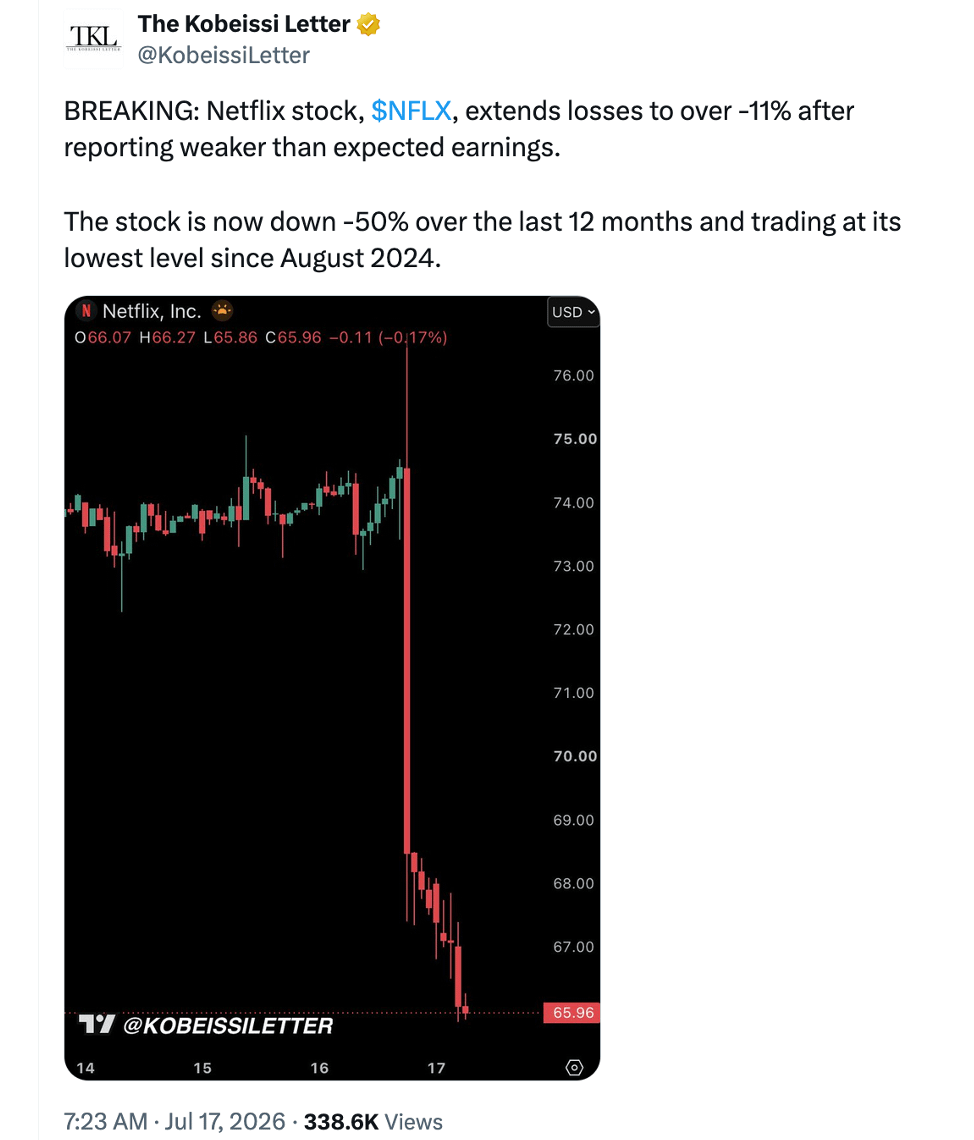
After today’s debacle, Netflix will have wiped out the entire last two years of stock price gains.
This is usually where I take a victory lap, and point out that I warned of the danger three weeks ago. But there’s bigger story here that must be told.
The disappointing revenue report yesterday is just the tip of the iceberg. The company’s reluctance to provide viewership numbers is an even more revealing sign of how bad things really are.
Netflix once bragged regularly about its growing user base. But yesterday they refused to share updated viewership numbers until 2027!

Yet even without those metrics, I’ve seen evidence of a coming corporate collapse—but only if you dug into the numbers.
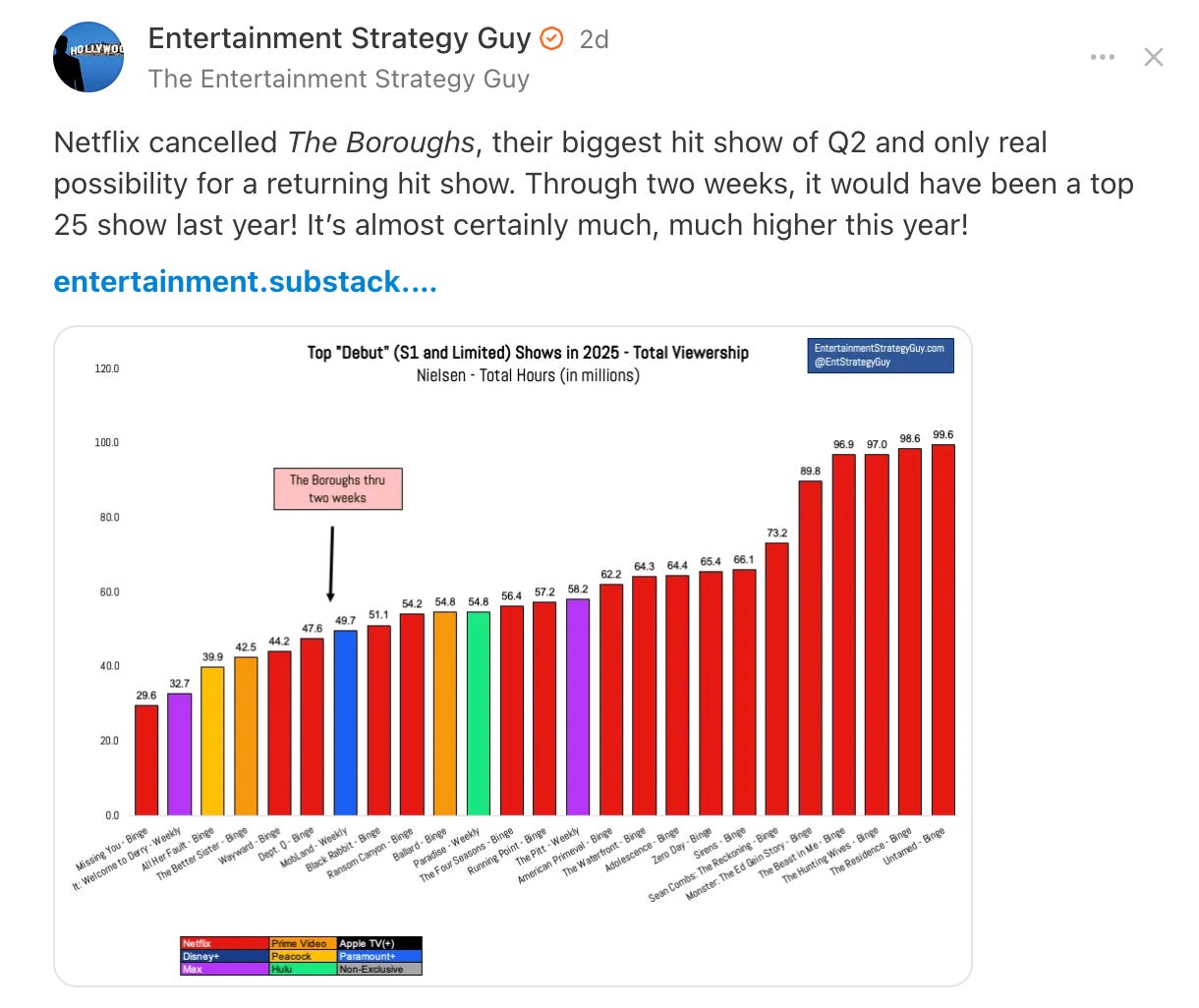
Last week, for example, we learned that Netflix’s audience is skipping the second season of the platform’s hottest offerings.
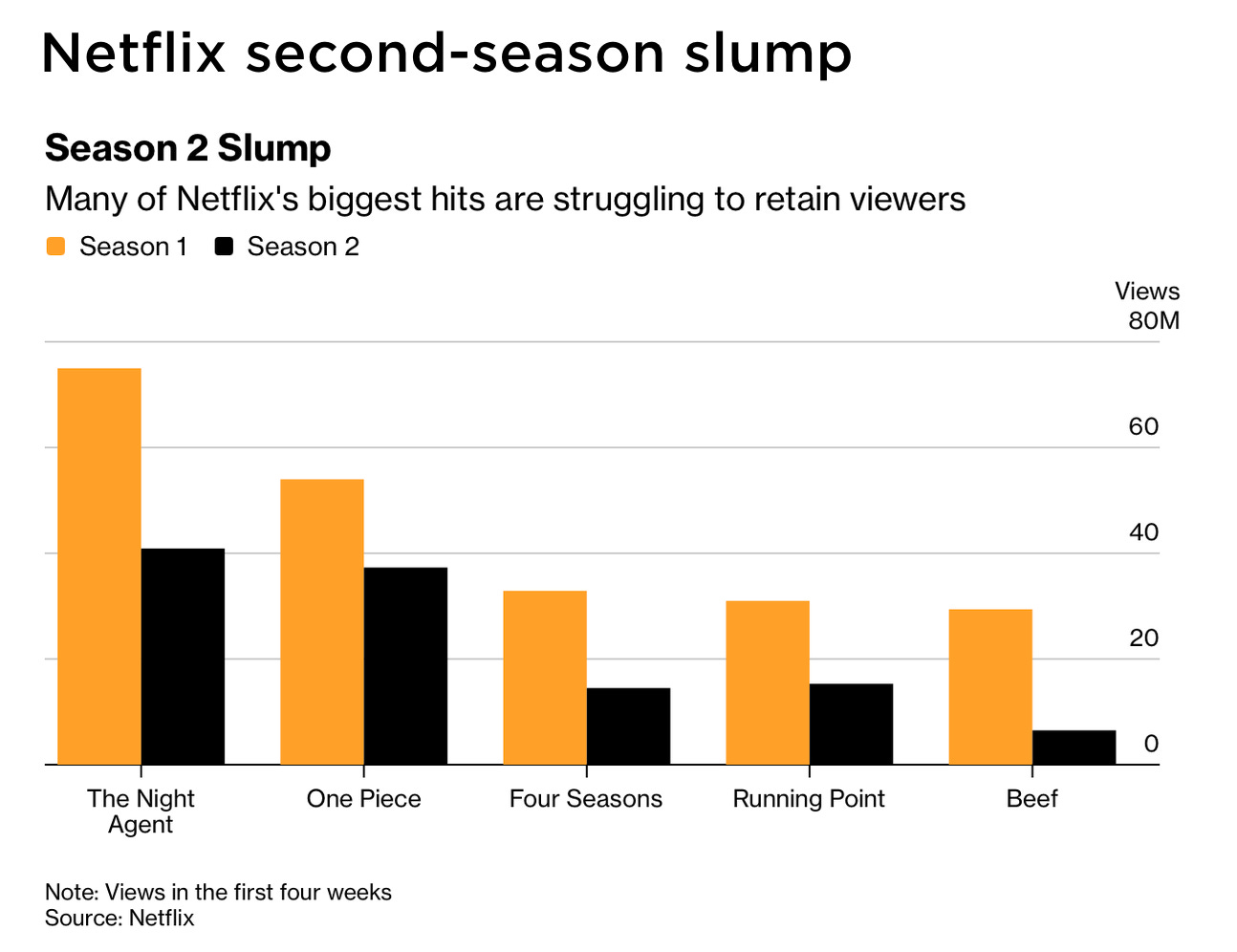
That’s scary stuff for Netflix. But it gets worse. The audience is also losing interest in the platform’s brand new series.
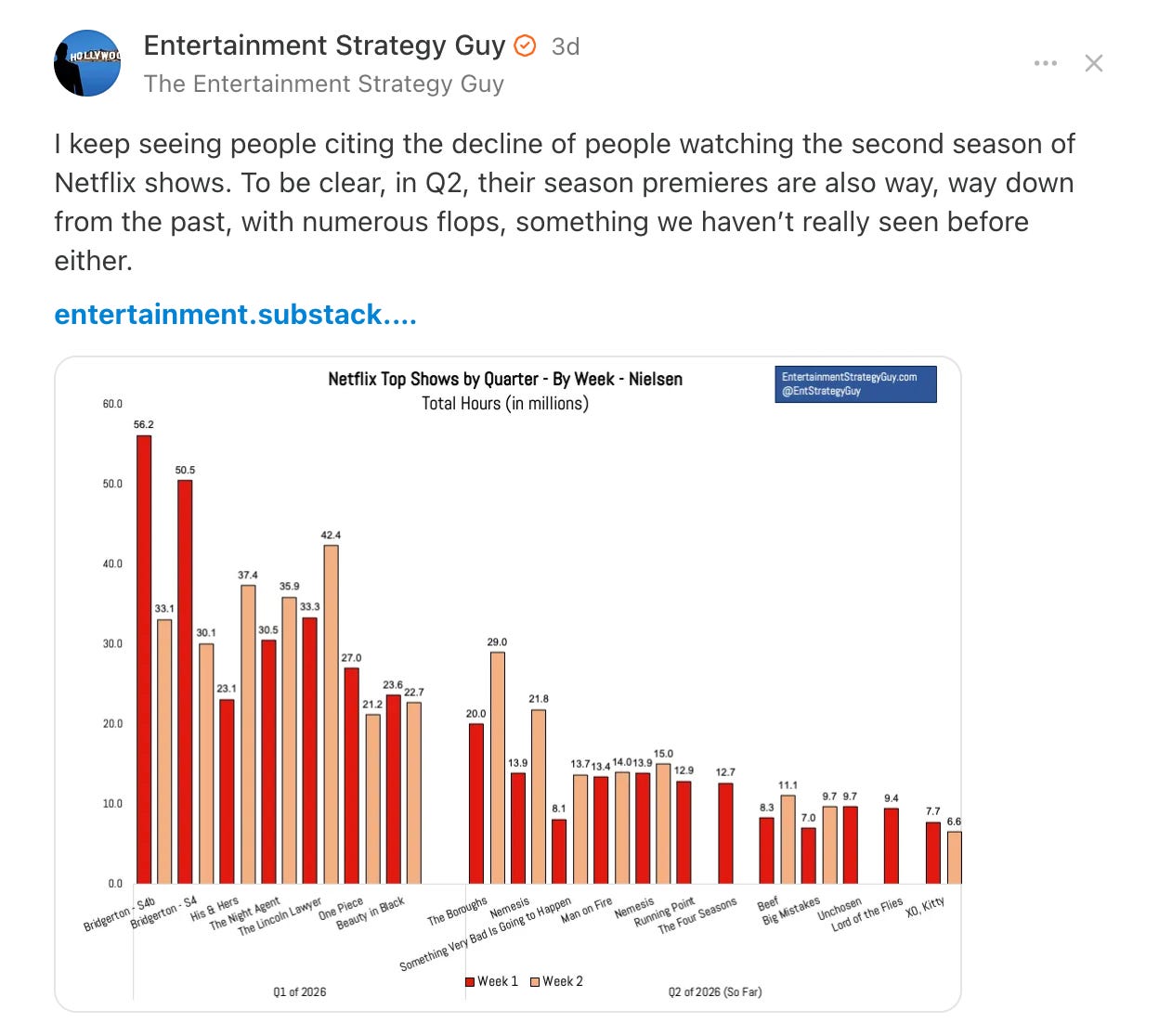
The situation is so dire that even Netflix’s biggest new series of the second quarter failed to get renewed. But if the platform can’t count on its new hits, will anything save it?
Netflix doesn’t want to tell us about users canceling their subscriptions. But just go over to Reddit and other platforms where people say what they really think about the company. You will get an earful.
Funny I was talking to my wife about how Netflix has practically nothing left we want to watch and maybe it was time to move on. If this price increase goes through that would be the final straw. I suspect a lot of others are getting close to that limit….
Another frustrated customer didn’t even make a comment—just shared some numbers. But the numbers paint a dismal picture.
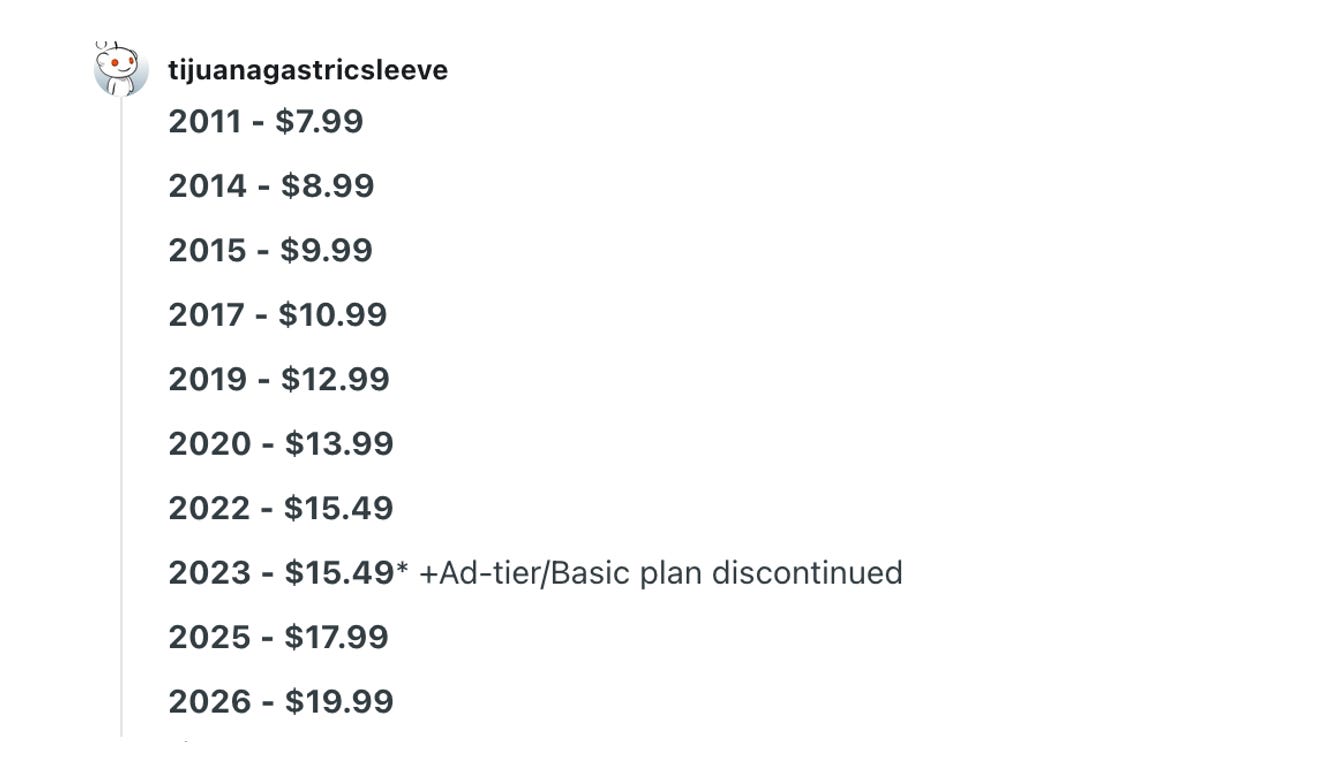
Netflix got into this mess by pursuing a simple strategy: (1) Spend less on programming, and (2) Raise subscription prices.
That is the “audience capture” strategy mentioned above. The idea is that the audience got captured years ago with cheap subscription prices, and now the platform can squeeze them mercilessly—offering less and charging more. Netflix has been pursuing this agenda for several years now.
Ah, but Netflix isn’t the only company building its future on audience capture. It’s getting used at almost every streaming platform. And even companies outside of the media space are practicing variants of it. You see it at Google, Meta, X, Apple, etc.
It’s shocking how many companies have learned this technique. The entire printer and toner business is now built on audience capture. The same is true of the software industry—don’t even get me started on my Microsoft Office subscription fiasco. And, of course, all those customer loyalty programs (variants on the frequent flyer gimmicks that started this craze years ago) are examples of the same stale strategy.
Even the AI world is turning into an audience capture business—both for itself and its customers. This is one of the key reasons for my frequent criticisms of AI slop. It feeds into step one of the strategy outlined above. The companies use AI to reduce the cost of content, thus boosting margins while reducing their dependence on human creators.
Audience capture has always existed, but never to this extent. When I consulted at BCG we called it a milking strategy, where you raised prices and reduced capital investment in a business—which was now your cash cow. You squeeze all the money you can from it, for as long as you can.
But back then we realized that milking only worked in the short term. Eventually you killed the cow. And the risk is the same today with “audience capture”—which is just a new name for that poor old bovine.
Sooner or later, the audience refuses to be held captive. And that’s happening now at Netflix—hence the stock sell-off.
But it’s happening elsewhere too, although few are paying attention. Look at the share price at Spotify or Disney for ther examples.
Did you know that Mark Zuckerberg’s social media empire has stopped growing? In the first quarter, Meta saw a decline in users for the first time in the company’s history.

This is not just a coincidence. Meta is the king of audience capture, and when it starts losing that audience, other tech companies ought to pay attention.
You should expect to see more problems of this sort at audience capture corporations. And that’s bad news for the technocracy, because this manipulative strategy is everywhere. If it stops producing results, they will need to take drastic steps.
But their nightmare is our blessing. That’s because the end of audience capture means tech companies will need to return to serving customers, not holding them in bondage.
They aren’t ready to take that step—not now, at least. Pleasing customers is hard work. Milking cows is a simpler business. But they won’t have a choice. The cattle are finally resisting. They might even stampede!
Moo, moo, moo!


I give the leading audience capture companies 12-18 months at most before the worst consequences of their overreach hit their financial statements. And it may happen even faster.
If they were wise, they would start acting now. But whether they fix the root cause of their audience capture mess now or later, the end result will be the same. That captive audience will find itself liberated.
If I’m right, this may represent the biggest shift in the consumer economy of our time. So check back here for updates—because this will be a bumpy rodeo ride for all parties.
Netflix's problem isn't just unique to streaming, though. It's the core problem with growth-obsessed capitalism, where sustainable metrics like profit or churn are secondary to the shell game of "constant growth." You can't create satisfying art in that environment, much less a viable customer service model.
Is this an indication that perhaps companies are learning they should be customer-driven and not the other way around?