
What Is My American Identity, Really?
And who gets to decide it?

I am an American, born in SoCal, where I learned to go at things as I taught myself, jazzy and free-style. It helped that Los Angeles, during my childhood, existed without any burden of tradition. I could make things up as I went along, almost as if my life were a sax solo.
There wasn’t much money in my home town of Hawthorne, California—but totally absent was old money. There were no established families or fancy neighborhoods. (Although my mom joked about some imaginary divide—when I told her that Norman Mailer wrote about Marilyn Monroe’s impoverished childhood in Hawthorne, she griped: “Marilyn grew up on the good side of town!”)
Everything existed in a jumble at the intersection of working class and middle class. My family, like many others, moved back and forth over that divide. My father worked as a servant almost until age forty, then put aside enough money to open up his own shoe store. By Hawthorne standards, this was a big deal.
The richest guy from Hawthorne back then was a real estate developer named Ernest Hahn (one of the inventors of the shopping mall). Hahn had been a poor immigrant’s son, just like my dad. I got to meet him once—he was friendly and remembered everybody’s name, and their spouse’s and children’s names too.
One of Hahn’s first construction projects was a simple job for my grandfather, who ran a liquor store in Hawthorne at the time and needed some work done on the shop. That was a tiny project, but when Hahn died in 1992, the LA Times called him “one of America’s wealthiest men.” Of course, Hahn had moved out of Hawthorne long before. That made perfect sense—my home town was no place for the super-rich.
But I flourished in that working class environment. I believed that my hometown represented America at its best, without much baggage. When I got a scholarship to Oxford some years later, I was shocked by the intense British class consciousness and its latent hostilities. I felt awkward seeing the college servants, especially the college “scout” assigned the job of cleaning my room (a Sisyphean task, that). I was reminded of my father’s years working as a chauffeur for a rich man. How had I stumbled from one side of the divide to the other?
The United States isn’t really a society without economic classes, but it looks that way from the perspective of Oxford. Christopher Hitchens summed up the British attitude in an anecdote:
An old joke has an Oxford professor meeting an American former graduate student and asking him what he’s working on these days. ‘My thesis is on the survival of the class system in the United States.’ ‘Oh really, that’s interesting: one didn’t think there was a class system in the United States.’ ‘Nobody does. That’s how it survives.’
I now realize that going overseas was the fastest way for me to understand what it meant to be an American. It’s perhaps amusing or tragic that the people I’ve met in other countries often have a clearer image of Yankees than I do myself.

I’ve always had confusing notions about my identity. My father was Sicilian and my mother Mexican. And there are also Native American and Swedish strands in my convoluted DNA.
So what am I exactly? What is my American identity?
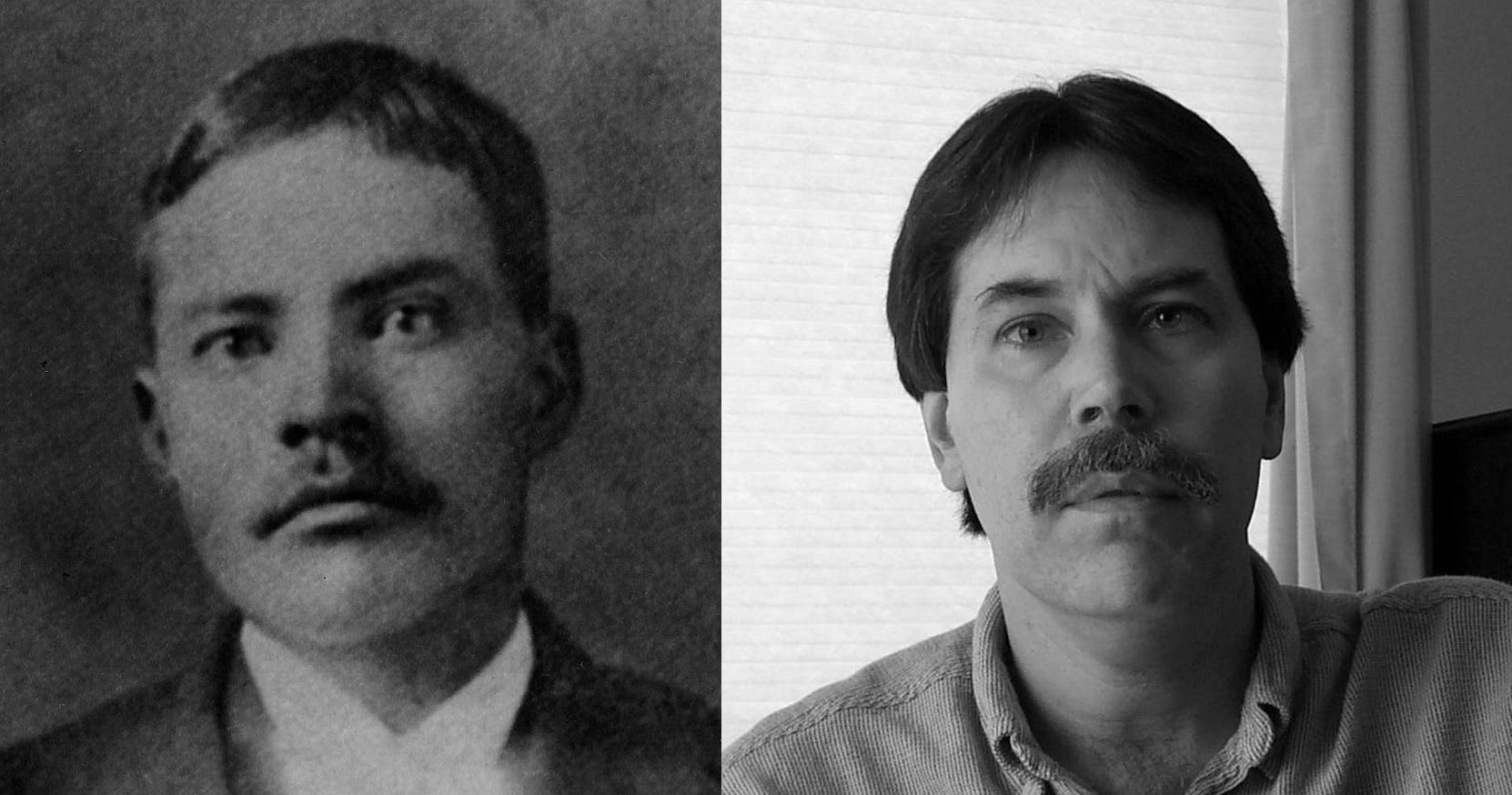
I look white enough and that’s how others view me. But I’ve never really been certain about that—to this day I hate filling out forms that ask for my ethnic identify. It’s even stranger for my children, because my wife’s father is from India, and her mother’s family came from Ireland.
So we are a confusing breed in my household, straddling at least six different ethnic groups from three continents. But there’s at least consolation in the fact that we can celebrate almost every holiday—from St. Patrick’s Day to Cinco de Mayo—with some authenticity.
Please support my work by taking out a premium subscription—for just $6 per month (even less if you sign up for a year).
By the way, I think this ambiguity is why my Sicilian relatives have such close relationships with Jews—yes, that’s true in real life, and not just Mafia movies. When I tell most people that I’m unsure whether Sicilians really classify as white, they look at me like I’m crazy. But my Jewish friends understand—we both straddle that uncertain territory between insider and outsider.