
The Strangest Book in Harvard Library
100 years ago, Arthur Inman decided to write the most brutally honest and explicit diary in history—so he hired people to tell him their intimate secrets


This article was previously behind a paywall. But now I’m making it available to everyone. Enjoy!
If you value work of this sort, consider becoming a premium subscriber.
That gives you access to hundreds of essays, reviews, and other perks—including my best-of-the-year albums list for the last ten years. It also ensures that you can read everything published on The Honest Broker in the coming months.
Please support my work—by taking out a premium subscription (just $6 per month).
The Strangest Book in Harvard Library
On the opening page of The Inman Diary, the book’s editor makes a bold claim: this work “has no counterpart in any literature that I am aware of.”
The author Arthur Inman had decided “the only way for him to win fame, perhaps even immortality, would be to write a diary unlike any ever written….It would contain the kind of information he had looked for and never found in other diaries.”
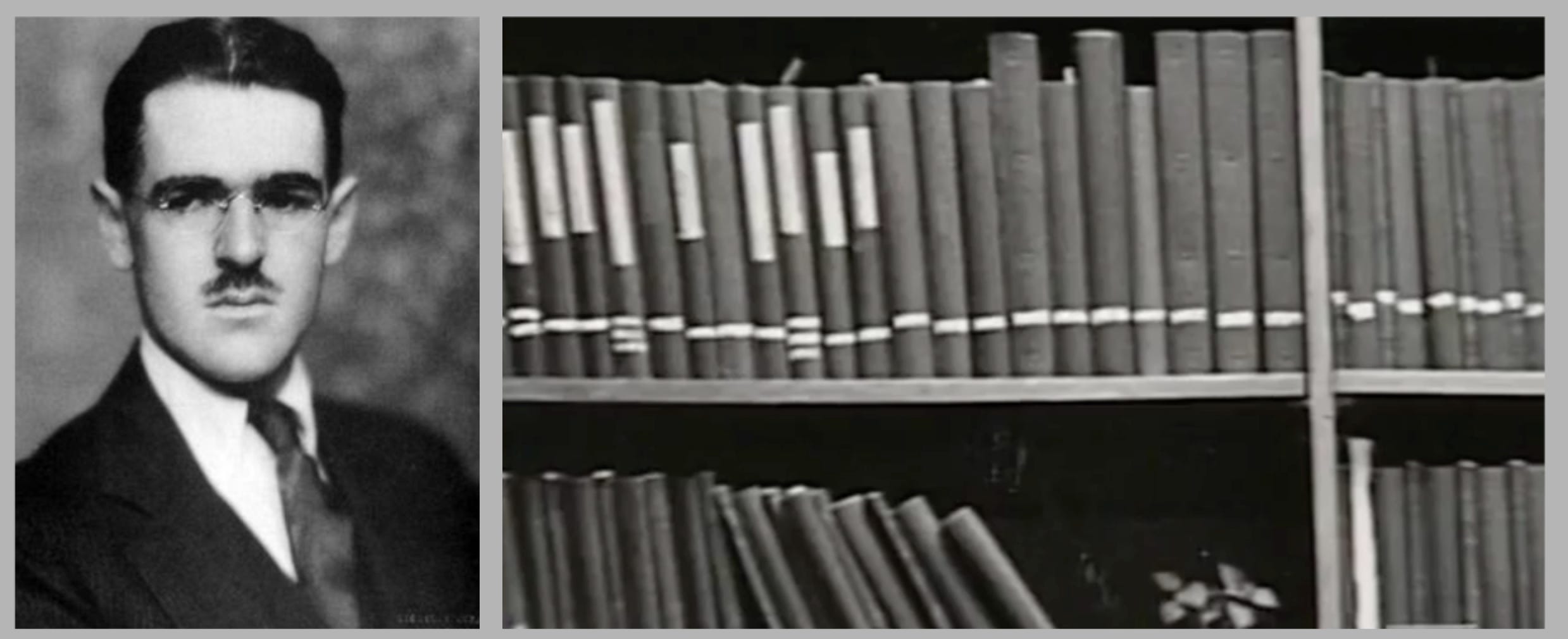
At first glance, this seems an impossible goal. Since the time of Augustine, authors of confessions, memoirs, and diaries have prided themselves on their candor and unflinching honesty. And after Rousseau, who pushed this dictum to an extreme, the limits of frank disclosure would seem to have been reached. What could Arthur Inman do in the 20th century, that hadn’t already been done before?
Adding to the challenge, Inman had nothing to write about—or so it seemed. He was a semi-invalid who spent most of his life in a darkened room. Even recluses like Proust and Pynchon are gadabouts by comparison.
Yet Inman wrote some 17 million words and filled 155 volumes (now housed in Harvard’s Houghton Library)—that’s roughly 25 times as long as the Bible—and devoted more than 40 years to his project. He started writing his diary in 1919 and continued working on it until shortly before his death in 1963.
But here’s the twist, and the quirk that turned Arthur Inman into one of the most fascinating writers of the 20th century. This peculiar man took ads in the newspaper, offering to hire “talkers’ who would tell him the wildest and most intimate details of their lives. The end result was a diary with more than 1,000 characters—striving with one another to provide the most compelling, uncensored narrative. That crowd-sourced approach turns the Inman journals into a compendium of confessions unlike anything ever written down before.
Inman paid his “talkers” a dollar per hour. And he often went beyond listening, having sexual relations with some of the women who took the job. By any definition, he was a creepy guy whose behavior violated all reasonable norms. Even Inman’s own editor Daniel Aaron admits that this disturbed individual’s massive journal is the “autobiography of a warped and deeply troubled man whose aberrations call for psychiatric probing.”
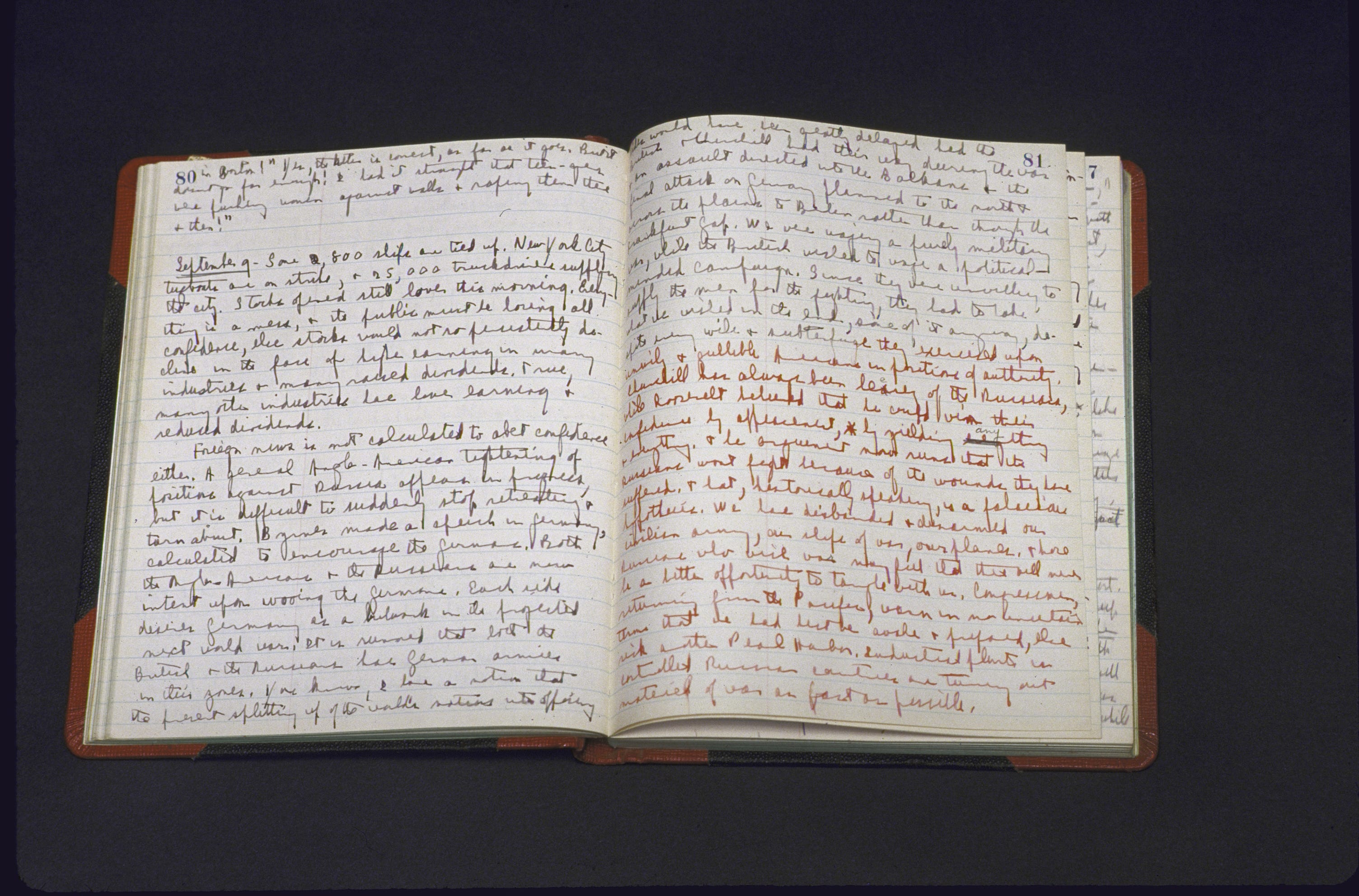
Inman often closed entries in his diary with the send-off: “I wish I were dead.” Yet he also saw himself in a heroic light, dreaming of the posthumous fame his massive diary would eventually bring him. But even Inman must have known that what he was writing was far too controversial for publication in his lifetime without considerable censorship—although the awareness that he was violating the prevailing moral standards of his time may have motivated him all the more.
His talkers were extraordinarily trusting and candid. Perhaps the darkened room and the quasi-anonymity of the setting made it feel like an actual confessional, with all the sacramental implications such situations bring. Maybe it’s even simpler: people want to reveal their darkest secrets, as Foucault tells us, and will seek out settings where it can happen. Or perhaps the reality was more banal and tragic: these folks simply needed the cash, and Inman was the only person paying for their secrets.
Sometimes Inman’s talkers showed up with stories ready to tell, but if they were reticent, he would immediately start probing. Here is his account of a first meeting with a Mrs. Haviland (never brought back for a second session, because she was too “sweet”):
“I asked her how old she was, how long she’d been married, whether she loved her husband, whether he loved her, whether she loved her son or her husband best, why she’d been to the hospital lately, whether she used contraceptives, how much salary her husband made, who her ancestors were, how she budgeted her money, if she believed in God, how many friends she had, what did she look forward to in life, what sort of childhood she’d had, was she calm or emotional, did she read, like music, the movies, and so on. Most of her answers I believed, some I didn’t.”
Inman avidly read published diaries of others, and noted with dismay how often the original texts had been censored to avoid shocking the delicate sensibilities of readers. He was so upset by this that he wrote an angry letter to Dr. Francis Turner of Magdalene College, Cambridge, who was working on a transcription of Samuel Pepys’s diaries, complaining of these excisions. Inman added that if anyone ever censored his own diaries, he would come back as a ghost to haunt that person—and hinted that Pepys might do the same.
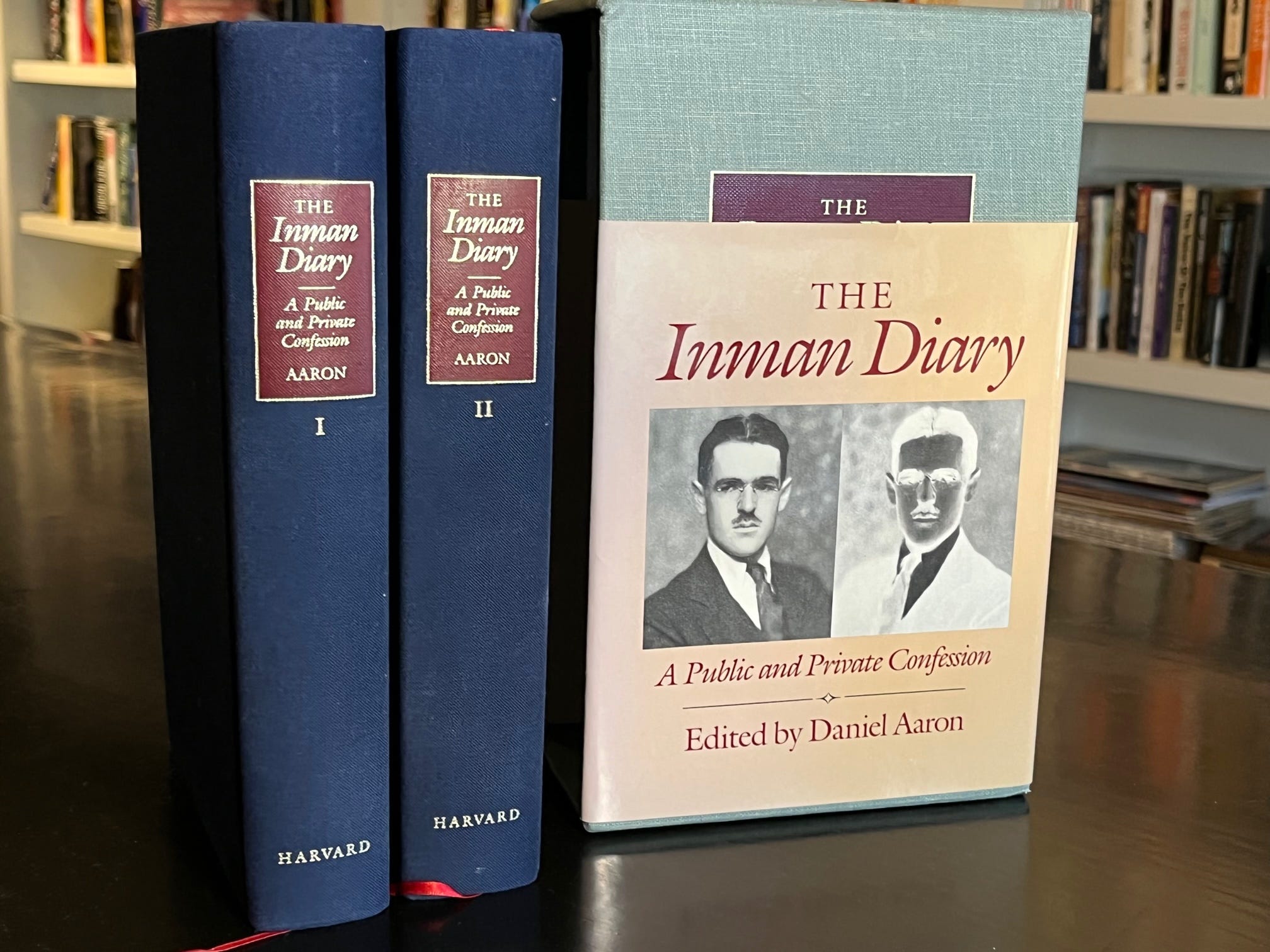
I doubt The Inman Diary could still be published by Harvard University Press nowadays. There’s just too much in its pages to upset, dismay, shock, and appall. And if you aren’t offended by Inman’s dealings with his talkers, you will invariably find his opinions on politics, society, religion, race, and a host of other matters reprehensible, in whole or in part.
So let me make clear: if you are the kind of person who needs a trigger warning, proceed no further. Trigger warnings were invented for books of this sort—which probably deserves an army of them, spaced out like sentinels every 10-20 pages. Yet is there any other book that conveys so fully the range of human experiences of that time and place with such brutal frankness and unflinching candor? The historian, as I see it, has a choice between getting a shock or remaining in ignorance. I know how I’d handle that trade-off, but I’m hardly typical in that way.
Time magazine had a different take on the diary. When the book was released, they dismissed Arthur Inman as just another "megalomaniacal bigot misogynist Peeping Tom hypochondriac." In its more measured review, the New York Times declared: [Inman] is not an attractive figure, but he is an oddly captivating one….At the very least [the book] is of considerable clinical interest.” (True to this prediction, Inman is often cited in academic literature on aberrant psychology.)
The editor of the Inman diary, Daniel Aaron, clearly came to abhor the diarist himself—even the tone of his footnotes reflect his distaste. “I couldn’t stand him,” Aaron later commented in an interview. “How did I get involved with this man? How can I deal with this man?” But then he feels compelled to add: “And gradually as I read on, I became quite fascinated by him, seeing him as a kind of rare person.” Aaron eventually decided that a “movie would be the best way of capturing that book.”
In all fairness, Inman’s talkers didn’t seem very interested in self-censorship, and many clearly savored the opportunity to tell their raw stories without fear of consequences or judgment. They are a strange assortment, but where else will you find a book written in the 1930s where, on a single page, you encounter a firsthand account of pimping, prostitution, bootlegging, bribing, drug addiction, homosexuality, rape, illegal gambling, drunkenness, police violence, a stint in Bellevue, and even glimmerings of a philosophy of life. The appearance of a skilled musician who “tickles the ivories” is just an extra.
Do you doubt me? Here is an extract from the testimony of Anthony Abruzzo, age 24:
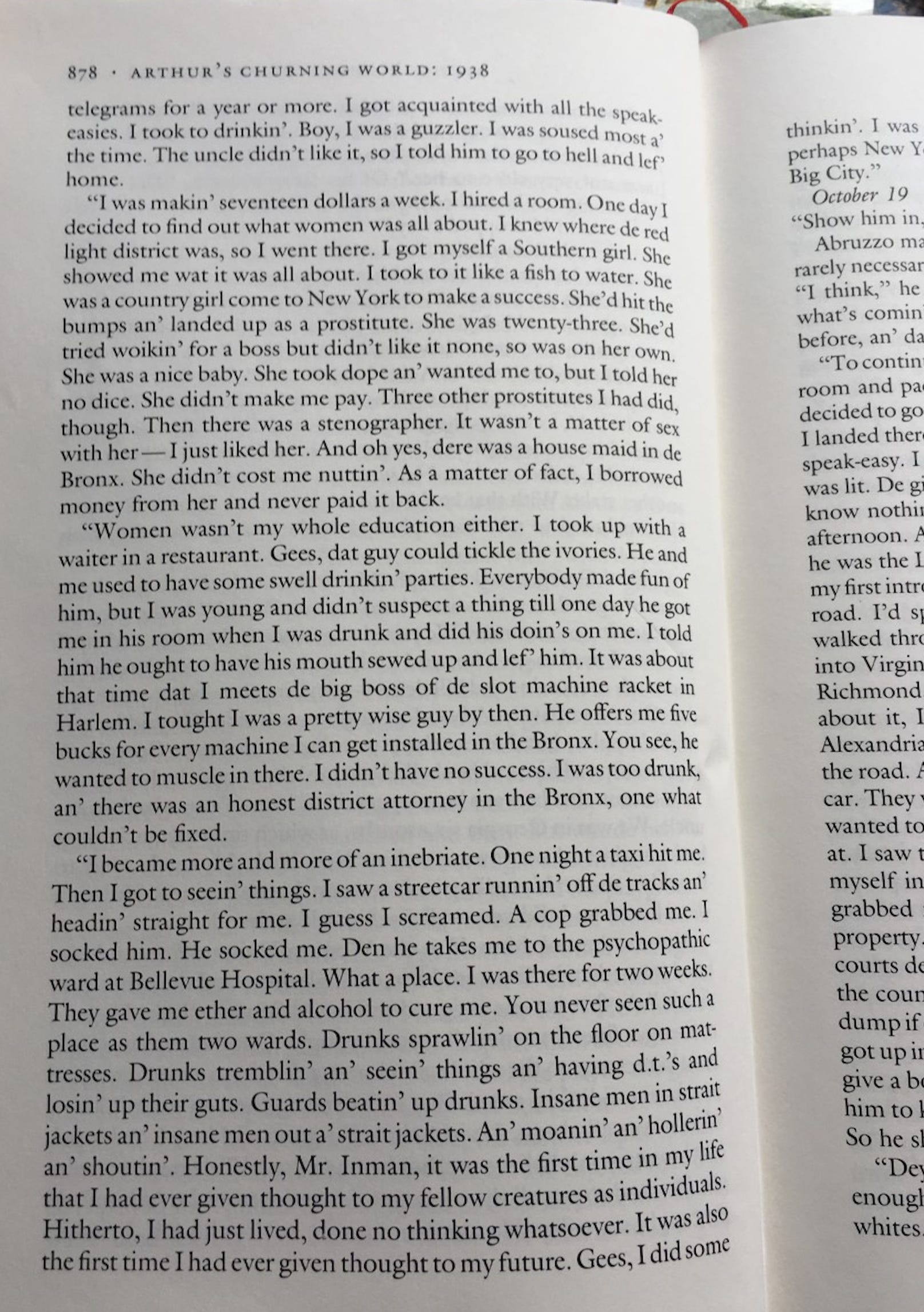
It’s possible that Inman’s hirelings invented stories to please their employer. But the actual experience of reading these narratives is utterly convincing—testifying to people’s intense desire to be understood, to be validated by the exposure (and acceptance by the listener) of their darkest secrets. And Inman, for all his faults, was quite a listener.
When Inman wasn’t listening, he was corresponding. Some of the most gripping sections of this book come from the letters Inman included verbatim. Patricia, a young woman living in Hollywood in the 1930s and having uninhibited dealings with aspiring stars, sent Inman frequent missives, and these will give you an angle on the pre-WWII film business you won’t encounter elsewhere. Even more moving—and more distressing—are the letters Inman received from lonely women in small towns whom he connected with via correspondence clubs, a Great Depression equivalent of today’s dating apps. Inman joined these clubs under assumed names, with the goal of getting stories, not dates. Once again, the whole enterprise is morally debased, but these letters from the lonely are gripping in a way no work of fiction could match.
Somewhere midway in his life project, psychiatry took off in America, but that was hardly the case when Inman started out. As late as 1930, the American Psychoanalytic Society had only 65 members, and there was a deep social stigma associated with seeking out counseling of this sort. Many of Inman’s talkers must have felt much better discussing forbidden subjects in a private conversation with a total stranger—best of all, one who would pay for the service, and showed such relish in every detail.
Inman hated psychiatrists, but he must have seen himself as a kind of fellow traveler in their world. He certainly sought out troubled people, and gave advice willingly enough. And he had another technique that, when incorporated into his diary, created a unique meta-narrative unlike any I’ve encountered in other books. Inman would write down frank and unsparing accounts of his talkers, then rudely show them what he had put in his diary. This would set off all sorts of angry scenes and recriminations—and thus provide him with further material for his project. This is a kind of experimental fiction beyond what anyone was doing in those distant days, and more like Karl Ove Knausgård in our own time than John Dos Passos (the novelist Inman ostensibly used as a role model).
Inman didn’t live long enough to see his life’s work show up in print. He attempted suicide at several junctures, three of them documented in his diary. But two weeks after the Kennedy assassination, on December 5, 1963, Inman was in low spirits—street noise always upset him, and now the construction of the Prudential Tower near his Boston apartment was more than he could take. A few months earlier, he had survived an attempt to kill himself with sleeping pills. This time he decided on a revolver, brutally efficient in this instance—and thus putting an end to both Arthur Inman and his enormous journal.
He would have been delighted at the posthumous publication of his diary by Harvard. But he could hardly have enjoyed the way he has been treated by posterity. He is rarely dealt with as a literary figure, but his book gets cited frequently in papers on neuroticism, suicide, hypergraphia, and various other psychological disorders.
Inman wanted to be a celebrated writer, but instead got turned into a poster child for dysfunction. That couldn’t have been his goal, yet in an odd sort of way, it ensures that the Inman Diary will survive as a seminal text. Written in a dark time by a disturbed man, it captured a part of the 20th century no one else dared put in a book. The only question that remains is who will dare to read it.
He sounds like an evil Studs Terkel.
I bought the two-volume set when it was published in 1985 -- the reviews made it sound like a fascinating freak show, which it is, and I've always been drawn to portraits of Boston brahmins gone off the rails. I read half of the first volume before setting it aside for a series of cold showers. Never picked it up again but it still sits on my bookshelf, glowering. Thanks for the reminder of its very dark, um charms.