
The 10 Greatest Failures of Orson Welles
Sometimes misses are as important as hits


We judge artists by their greatest hits. But is that fair? Lately I’ve started to question this approach.
Perhaps the truest measure of creative inspiration is a willingness to pursue a vision even at the risk of failure. By this measure, misses are just as important as hits—and maybe an even more revealing measure of aesthetic boldness. That’s because we never really discover our true potential unless we push it to the breaking point. We go “all in” as they say in poker—even when the odds are against us.
I’ve reached this conclusion, late in life, because of my recent immersion in indie culture. I’m not alone in this—going indie is now the new normal in a creative life. We are living through a collapse in legacy institutions, and this has forced so many of us into the precarious world of freelancing.
Failure is an everyday experience for a freelancer. We pitch projects, and watch the rejections come back to us. But we can’t give up—we need to pay the bills. Even more important, we need to keep our dreams alive.
So every rejection must be followed by a new attempt. Maybe if we’re fortunate, we eventually reach a stage where we can boast about our greatest hits. But that’s late in the game.
It takes a lifetime of misses to create those hits (if they come at all). And those misses tell the real story of our passion, our resilience, our willingness to push our talent to the limit.
Please support The Honest Broker by taking out a premium subscription (just $6 per month).
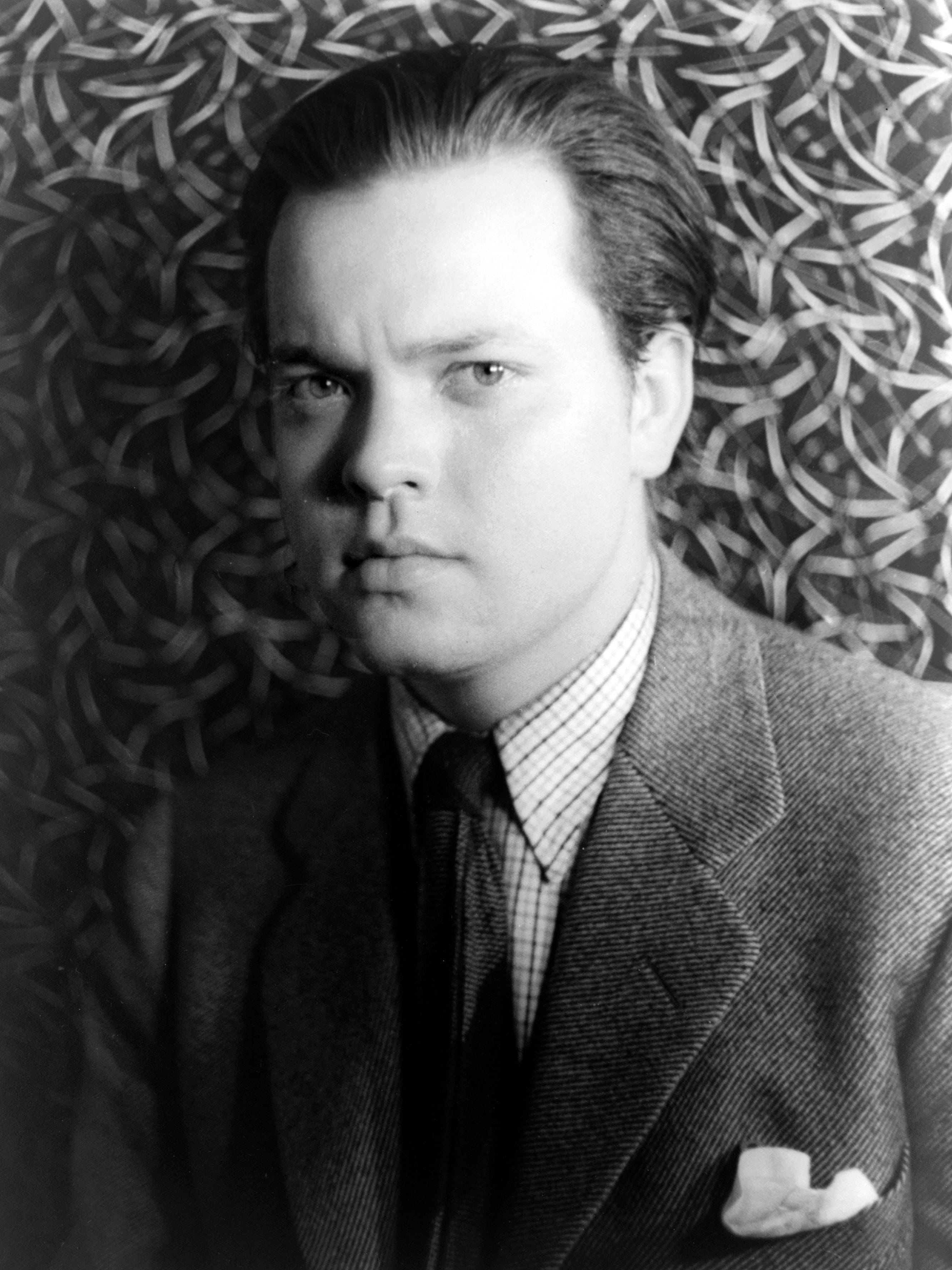
These speculations have led me to return to the work of filmmaker Orson Welles (1915-1985)—who I see as an inspiring role model for indie creators of the digital age. Welles is like many of us today. He lost institutional support from Hollywood studios while still in his twenties. And despite his reputation as the most innovative filmmaker of his generation—for many years his debut movie Citizen Kane won polls as the best film of all time—was forced into a precarious life as a perennial freelancer.
He spent most of his career working on projects that failed. And not because they weren’t good (see the list below)—but for other reasons. Some blame Welles’s prickly personality. Others will fault close-minded Hollywood execs. Or maybe Welles was just cursed with bad luck—problems did seem to follow him wherever he went.

You might say that even his hits were misses. His biggest early success came via a 1938 radio rendition of H.G. Wells’s The War of the Worlds, which convinced many listeners that extraterrestrials were actually invading America. Welles got plenty of publicity but was threatened with $12 million in lawsuits in the aftermath. He was lucky to escape without criminal charges.
His greatest triumph, Citizen Kane, was also anything but a conventional hit. The major theater chains refused to book it—fearing punishment from newspaper magnate William Randolph Hearst, the thinly-disguised model for Kane. So even at the peak of his career, Welles had a target on his back.
It got worse from there. He couldn’t finish the editing of his second film The Magnificent Ambersons (1942)—because FDR prodded him into going to Brazil as a cultural ambassador during World War II. So Welles was out-of-touch as the studio butchered his remarkable film, and even added a saccharine new ending. It’s testimony to Welles’s greatness that The Magnificent Ambersons is still ranked among the best movies of the era despite the meddling.
After Brazil, everything fell apart for Welles. Hollywood never forgot him, but also never forgave him. He got occasional gigs (although more often as an actor). But this brilliant filmmaker never enjoyed job security or long-term institutional support. He was the permanent indie gadfly—always pitching projects and sometimes actually starting them. But rarely finishing them.
At his death in 1985, Welles left behind at least 19 unfinished projects. Add to that the many others he abandoned in earlier years. And then there are so many Welles concepts that hardly got started at all—but were promising ideas that deserved better. Finally, Welles suffers the added indignity of achieving some commercial successes (on radio or the stage) that are now lost to us—so even these must be counted among his misses, at least from the perspective of posterity.
Below I’ve listed Welles’s ten greatest failures. But I could have easily expanded it to twenty or thirty.
I do this as testimony to Welles’s greatness. From a mercenary perspective, these might be failures, but from an aesthetic standpoint they testify to a creative force that operated at the highest level of intensity for a full lifetime.
Let this offer some solace to the indie creatives of today, who also face so much rejection. Just making the attempt—being the “man in the arena,” as Teddy Roosevelt called it—is a far grander thing than earning a steady paycheck by settling for less.
The Ten Greatest Failures of Orson Welles
The History of Jazz (with Duke Ellington and Louis Armstrong)
Welles paid $12,500 to Duke Ellington to create music for a film on the history of jazz. He also planned on hiring Louis Armstrong as a lead actor (he would play himself). Ellington even began work on the score. But during the controversy over The Magnificent Ambersons and his Brazilian project (see below), Welles couldn’t get backing to turn this into a reality.
Judging by the talent alone, this almost certainly would have resulted in the greatest jazz movie of the era, and perhaps of all time.
The Story of Samba
The US government sent Welles to Brazil in 1942 to build goodwill for the war effort, but without any script or clear plan for a movie. But Welles was excited by the samba music he heard and had access to technicolor film. The result was an amazing film—or, rather, it would have been. But the studio eventually dumped 200,000 feet of footage into the ocean, in order to get a tax write-off on the project.
Welles later said that he might have anticipated the great Black Orpheus film of 1959, which helped turned Brazilian music into a global phenomenon, but was waylaid (again) by the close-mindedness of Hollywood execs.
Some footage survives, most of it black-and-white, and is housed at the UCLA Film & Television Archive. Part of it was released in 1993. But this only hints at what Welles might have achieved with studio support.
Around the World
Welles collaborated with Cole Porter on a Broadway musical based on Jules Verne’s famous novel Around the World in Eighty Days. Welles actually got this onstage—but had to spend $350,000 of his own money to make it happen. It failed mostly because of the enormous expense. Welles recreated a multimedia extravaganza which included a live circus onstage and required 38 separate sets.
Bertolt Brecht came backstage after a performance and told Welles that Around the World was the greatest moment in American theater he’d ever seen. But this wasn’t enough to pay the bills. Welles dreamed of turning the Broadway production into a movie, but couldn’t make it happen. So he had to watch from the sidelines as Mike Todd, one of the financial backers of the musical, adapted the same story into a megahit movie that won the Oscar for Best Picture in 1956.
War and Peace
Welles wrote a script for a film adaption of Tolstoy’s epic novel—and all the pieces were falling into place. The cast would include Laurence Olivier, Vivian Leigh, and Ralph Richardson—with Welles playing Pierre. The Soviet Union even expressed a willingness to let Welles use the Red Army for filming battle scenes. But the negotiations with the USSR eventually stalled, and Welles’s screenplay is now lost.
So Welles watched as a bystander (again) when, a few years later, director King Vidor and producer Dino de Laurentis turned War and Peace into a box office hit.
Voodoo Macbeth
This was actually a success onstage, but is now lost to us—so it shows up on our list of misses. Welles believed that the supernatural elements in Shakespeare’s Macbeth could be retold through the prism of the African diaspora, with its syncretic religions and folklore—so he moved the setting from Scotland to the Caribbean. He put this onstage with an African-American cast, and sold out the theater for ten straight weeks in 1936.
Welles was just twenty years old, and already a phenom. But only four minutes of film survive to document this breakout work.
Julius Caesar
As the Macbeth project makes clear, Welles believed that Shakespeare was relevant to every time and place. So while others view Julius Caesar as a story about the Roman empire, he saw it as a cautionary tale of a republic threatened by a fascist leader—and almost a precise analog to the world crisis of the 1930s and 1940s.
Welles envisioned an reworking of Shakespeare’s play in modern dress and filmed in the style of newsreels. He planned on casting Richard Burton in the title role, and even secured financing (from King Farouk of Egypt). But Welles’s project was canceled when MGM announced a Caesar film starring Marlon Brando.
Cowboy Movie Featuring Jesus Christ
While working on Citizen Kane, Welles explored the possibility of making a follow-up movie on the life of Christ, but set in the Wild West. Welles would star and direct, and even got the support of Bishop Fulton Sheen, the most prominent American Catholic of the era. Welles wrote a screenplay and got to the point of scouting shooting locations in Mexico. But the project was shelved, and Welles shifted his attention to The Magnificent Ambersons.
Heart of Darkness
Here’s another example of a failed Welles project that anticipated a later success by another director. He explained the concept to Peter Bogdanovich:
PB: Wasn’t your original Hollywood deal to make Heart of Darkness?
OW: Pretty much….I came to Hollywood and wrote the script, which was going to be a film in the first person: the camera was going to be Marlow, which is ideal for that kind of story, because he’s in the pilot house and he can see himself reflected in the glass through which you see the jungle….I did a very elaborate preparation for that, such as I’ve never done again….We designed every camera setup and everything else—did enormous research in aboriginal, Stone Age cultures in order to reproduce what the story called for. I’m sorry not to have got the chance to do it. The reason we didn’t was because we couldn’t knock $50,000 of the budget.
Welles got to the point of shooting for a single day—proof of concept for the first-person narrative scheme. But the project went no further.
Years later, Francis Ford Coppola relied on Joseph Conrad’s Heart of Darkness for his classic film Apocalypse Now, considered one of the defining movies of the era. But Welles’s version, like so many other of his most ambitious projects, never happened because of financial constraints.
A Collaboration with Vladimir Nabokov
After the publication of Nabokov’s bold quasi-sci-fi novel Ada or Ardor, Welles reached out to the author about turning it into a film. He even flew out to Paris and had a productive face-to-face meeting with the novelist. But the project went no further. That’s a shame—this book deserves film treatment, and Welles would have brought the right spirit of risk-taking to it
A 1940 Comic Film Starring a Young Lucille Ball
After Heart of Darkness fell through, Welles suggested making a comic farce based on the novel The Smiler with a Knife by Cecil Day-Lewis (father of actor Daniel Day-Lewis). But the studio objected to his casting decision.
Welles explained the problem to Bogdanovich:
There was an actress under contract at RKO then making a picture, called Lucille Ball, who I thought was the greatest female clown around—she could have been just superb in this picture. And they said, ‘What do you want Lucille Ball for? She’s practically washed up in pictures.’ This was thirty years ago—imagine how idiotic they were. They didn’t know what they had. So we didn’t make Smiler with a Knife.
I limited myself to ten projects. But I had to leave out many others—Don Quixote, The Pickwick Papers, Catch-22, King Lear, etc. Even so, the specifics are less important than the larger truth, namely that failure is as much a part of artistic greatness as commercial success. If you don’t encounter it (and repeatedly), you almost certainly aren’t pushing hard enough.
In our current cultural crisis, where creators feel abandoned by the leading institutions (and sometimes by the public too), this may provide some consolation—but also much need inspiration. For many of us, the hardest part of chasing our dreams is overcoming the fear of failure. From that perspective, Orson Welles still has much to teach us.
POSTSCRIPT
Let me close with something Welles actually finished.
Below is the trailer for Citizen Kane. Many have seen the movie, and admired its innovations, but this “coming attraction” footage is also a case study in risk-taking.
See how many intentional mistakes and mishaps you can identify—almost as if Welles was making fun of his lack of experience in filmmaking, even as he was showing off his boldness.
"I started at the top and worked my way down."
The connection between Welles and Dostoyevsky is more central than critics usually note (in spite of The Stranger). The core principle in Dostoyevsky is the dialogic, also a form of structure that refuses a single answer or blueprint or method. This drives the monologic world of executive hollywood crazy, and was one good reason why Welles could never really get support. Citizen Kane is a good model: there is no one answer to who he was (and the sled is not exactly an answer).