
Montaigne and the Origins of Substack
Self-publishing has a glorious history—but what's coming next is even better

Michel de Montaigne may be the most influential essayist in history—even Shakespeare borrowed from his work (taking some passages almost verbatim). But if Montaigne were alive today, this famous essayist might be mistaken for just another slacker living in his parents’ basement.
Okay, let’s be fair. He actually lived in the family castle. But it still was slacking. At age 38, he didn’t have a job—and preferred reading books. Leave me alone, was his message to the world.


But even a castle was too noisy for him—or maybe it was just his wife from an arranged marriage that made him feel that way. In any event, Montaigne eventually decided that he needed total isolation, almost like a monk in a hermitage. So he moved into the tower on the family estate. He called it his citadel.
Here he surrounded himself with books, and announced his intention to devote the rest of his life to reading and philosophizing “in calm and freedom from all cares.”


But at age 47, Montaigne had a change of heart. He returned to the world, ready to embark on travels and public service. But before leaving for Italy, he had one last goal he needed to fulfill closer to home—and it would have a decisive impact on Western culture.
During his years in the tower, Montaigne wrote 94 essays, and compiled them in two book-length manuscripts. These he now delivered to a printer in Bordeaux, and paid to have them published. A short while later, he traveled to Paris and proudly gave a copy to King Henry III
In his mind, he was serving as his own patron, drawing on the family wealth to cover the expenses of his debut as an author. But today, of course, we would call this self-publishing—a term that is often (unfairly) used to demean the value and legitimacy of these rule-breaking efforts by do-it-yourself writers.
If you want to support my work, please take out a premium subscription (just $6 per month).
Call it what you will, Montaigne’s achievement cannot be denied. He not only invented the modern essay—setting the stage for Bacon, Emerson, and so many others. But he also helped shape the human sciences and legitimize the personal memoir. That’s because his essays covered many topics but really had only one subject—namely Montaigne himself, with all his quirks and opinions and hot takes.
His essays marked a milestone in the history of individualism. So, of course it makes sense that they were self-published. That’s what individualists do. They are happy to work outside the system.
I could even imagine our slacker Montaigne publishing these essays on Substack today. You might say that he anticipated the Substack style of writing. His balancing of memoir and analysis, subjective and objective, observation and generalization is very much aligned with what I see on this platform every day.
Some writers aspire take the high (but narrow) road of the scholar, while others prefer the larger byways of entertainment. But Montaigne only wanted to be himself, and help us see the world through his eyes—and he had confidence that this was just as valuable as any declaration from established authorities.
He was the first to perfect this way of communicating, but hardly the last. In some ways, he might be the best role model for any author today who wants to shape the wider public conversation. Because Montaigne, again like so many Substackers, knew that most persuasive writing is always conversational.
My favorite self-published author is Marcel Proust—who was born almost exactly three hundred years after Montaigne entered his tower. But the similarities don’t end there, and not just because both are French.
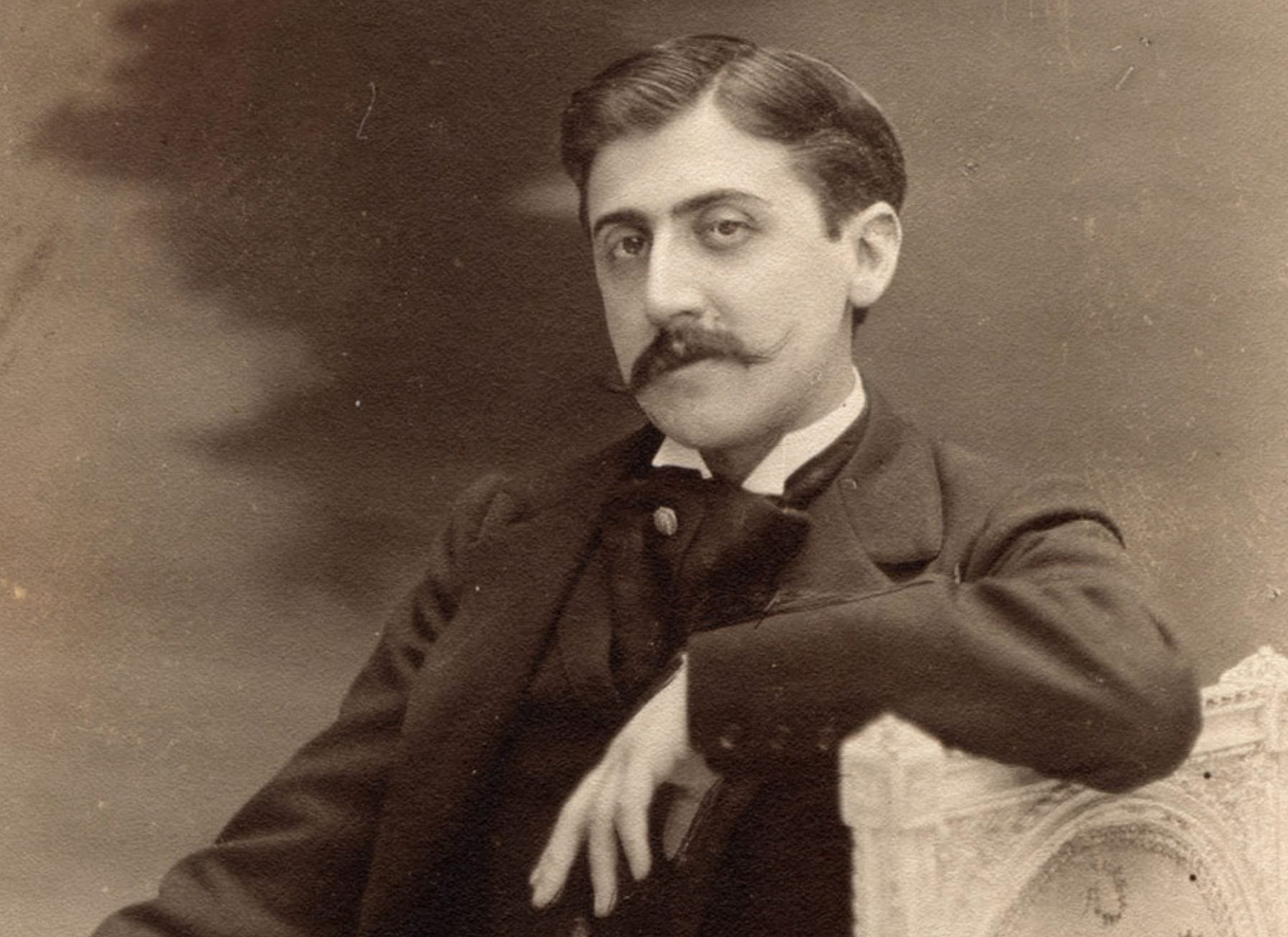
Proust was another slacker from a wealthy family who used his inheritance to retreat from society. They both produced a single famous work of literary genius—and were at the same age when they embarked on their respective projects. In both instances, a masterpiece was saved from oblivion because the author had enough money to cover the costs of publication.
These authors delivered works of universal appeal, but based on cranky individualism. Like Montaigne, Proust showcases his eccentric persona on every page. In fact, there’s good reason to believe that André Gide, the editor who rejected Proust’s book, judged the man’s character rather than his actual manuscript—he later admitted that he had formed a negative impression of Proust based on a few encounters in society.
In Proust’s case, he only had to subsidize the publication of the first volume of À la recherche du temps perdu. The Gallimard publishing house, making amends for its initial rejection, released the next volume, which won the prestigious Goncourt Prize, as well as the subsequent installments of Proust’s 3,500-page work.
No, I can’t imagine Proust succeeding on Substack. Some of his sentences are longer than most of the articles here. He’d be lucky to find a hundred subscribers. Even so, I’m certain he would approve of other writers bypassing the system and reaching out directly to readers.
The link between individualism and self-publishing is confirmed by my third famous example, poet Walt Whitman. He assigned the name “Song of Myself” to one of his best known poems, but that title could just have easily described the writings of Proust and Montaigne. Once again, literary experimentation intersected with strident self-aggrandizement—and the publishing establishment wasn’t ready for what he created.
Whitman’s defiance shows up again in the name of his self-published volume Leaves of Grass. Grass was a derisive term used by editors when referring to writings of little merit, while the word leaves describes the paper used in printing a book. So Whitman takes the insult of rejection and turns it into a mark of pride. His Leaves of Grass would not only bypass the gatekeepers, but change the course of American poetry. Like Proust, Whitman added to the scandal by reviewing his own book (under a pseudonym).
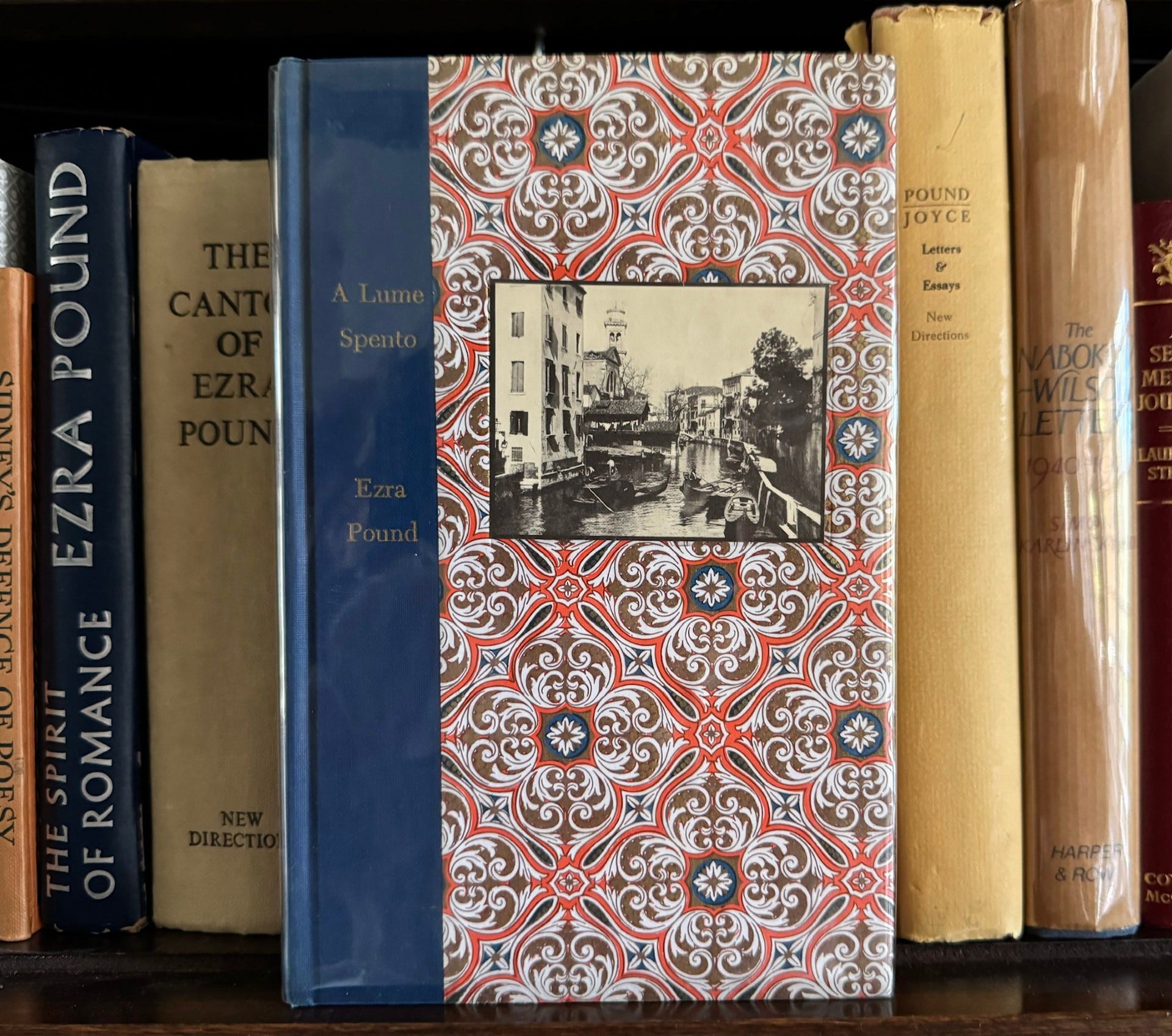
Poetry has long embraced self-published authors. Four years after Whitman’s death, Edwin Arlington Robinson self-published his first book of poems—and he went on to win three Pulitzer Prizes. Alfred Lord Tennyson’s first book of poems was also self-published, but that didn’t stop him from rising to the position of Poet Laureate, a role he held for 42 years. Ezra Pound’s debut was also self-published, and he went on to launch the careers of others (James Joyce, T.S. Eliot, etc.) who, without this intervention, might have been forced into self-publication as well.
Pulitzer winner James Merrill had a different expedient—he let his father pay for the publication of his first book. It probably helped that his father Charles Merrill was co-founder (along with Edmund Lynch) of a brokerage firm you might have heard of. If we include other examples of authors helped by subsidies from family and friends, our list would get long and unwieldy.
In the light of these examples, we must abandon any snobbish disdain for the self-published author. This might even be the best route nowadays for writers who challenge norms and break rules. Substack is part of this glorious alternative to official channels, although it is a relative latecomer to the field of homemade writing.
But Substack can help build the future of self-publishing. In this regard, it needs to offer authors more options for publishing books, and not just shorter works via newsletter. I’d love to see the full book treatment made available here—making works available in digital, audio, and physical form.
The latter could be handled easily with print-on-demand technology. Substack could offer physical books without having to invest in physical inventory and large warehouses. The quality of print-on-demand books has improved markedly in recent years, and they can be sold as high-end volumes that look just as good as the releases coming from major publishers—or even better.
I fully intend to return to publishing physical books in the future, and I would prefer to do it here. But Substack must make that option possible. When that happens, I will happily join the ranks of those releasing self-published books. I suspect this will be more profitable for all parties, and also more liberating.
I wouldn’t even be surprised if self-publishing achieves a total flipflop from its previous role in the book economy. In the old days, authors started by self-publishing but later switched to traditional publishing after establishing their reputations. I now anticipate the reverse: Authors who start out with book deals from publishers will leave those intermediaries behind after they have proven their market value.
After all, who needs a publisher when you can do everything yourself—and capture most of the profits (previously retained by the publishing house)?
This is the next revolution in the book business (and the music business, by the way). It would be nice if the revolution happened here on Substack. But no matter what this platform decides, this shift will happen—and for the better.
So let’s thank Montaigne. We can learn from his example. But, even better, we can take his individualist approach into the 21st century—and really shake things up.
Don't forget the non-literary example of Telemann, who owned a printing establishment, through which he published all his (and other people's) works. And, as you probably know, selling music sheets was a source of substantial income for the "music industry" (for lack of a better word ;)) at that time.
“Because Montaigne, again like so many Substackers,knew that most persuasive writing is always conversational. “
How write you are @Ted Gioia 😉