

I see this term “public intellectual” everywhere nowadays—and it has a nice ring about it. It summons up images of speakers standing on soapboxes proclaiming the truth to passers-by.
That’s actually happened in places like London’s Hyde Park and 125th Street in Harlem. It sounds so very fair and democratic. Not every intellectual teaches at Harvard and Yale. Sometimes they really do exist out in the wild. We ought to nurture and support them.
Not long ago, these same people were often called “working class intellectuals.” I had two uncles who could be described that way—they lacked prestigious degrees and institutional affiliations. They grew up poor, but were smart and well-read and could speak articulately on almost any subject.
A few colleges specialized in educating these working class intellectuals. Consider the case of City College of New York, where the finest minds of the proletariat got book learning on the cheap. (You can find a list of CCNY alums and profs here—it includes an impressive number of Nobel laureates and Pulitzer Prize winners.)
But those days are long gone. Working-class intellectuals have vanished in recent years. Instead we have witnessed the rise of millionaire—or billionaire—intellectuals.
Please support my work—by taking out a premium subscription (just $6 per month).
There have always been super-rich people, but in the past they kept a low profile. In my youth, the wealthiest person in the world was Howard Hughes, and he stayed in hiding for the last two decades of his life—you couldn’t even find a current photograph of the man.
He was doing us a favor. Hughes was rumored to have abandoned all the niceties of personal hygiene.
During the last fifteen years of his life, Hughes was described as a tall gaunt skeleton of a man with long, unwashed matted hair, a scraggly beard, and fingernails and toenails of such length that curled in upon themselves. He dressed only in a pair of dirty undershorts or went nude.
Believe it or not, Martin Scorsese cast Leonardo DiCaprio to play Hughes in the biopic. You gotta love Hollywood.
Hughes briefly emerged from seclusion on just one occasion. On January 7, 1972, he made a brief phone call from the Bahamas to seven journalists assembled in a room in a Hollywood hotel. This was necessary because a scamming author had published a fake autobiography attributed to Hughes, and the world’s richest man wanted to denounce it as a fraud.
He spoke on the phone for a few minutes, then signed off. That was the last time the media had any contact with Howard Hughes.
After Hughes’s death, the richest person in the world was Daniel Ludwig. You have probably never heard his name. But that’s no surprise—Ludwig was even more reclusive than Hughes. He lived for 95 years, and only gave one interview during that time.
Fast forward to today. Elon Musk is now the wealthiest person in the world—and he’s making proclamations every day. He even bought his own social media platform, and posts his opinions constantly. He’s the reverse of Howard Hughes. You can’t escape him. And unless he flies off to Mars, you never will.
It’s not just Musk. There are dozens of billionaires who aspire to public intellectual status. Bill Gates serves up book reviews. Peter Thiel gives a lecture series. Tom Steyer makes speeches and offers himself as a candidate for President.
We have come a long, long way from the working class intellectuals and soapbox pundits of yore. Everything now is pay-to-play.
How did this happen? When did the status of public intellectual become something you can buy, like merchandise on the shelf at a Rodeo Drive boutique?
The recent release of the Jeffrey Epstein files gives a clue.
Epstein left NYU without earning a degree, and got dismissed from his teaching gig at Dalton for poor performance. But this didn’t prevent him from getting his own office at Harvard.
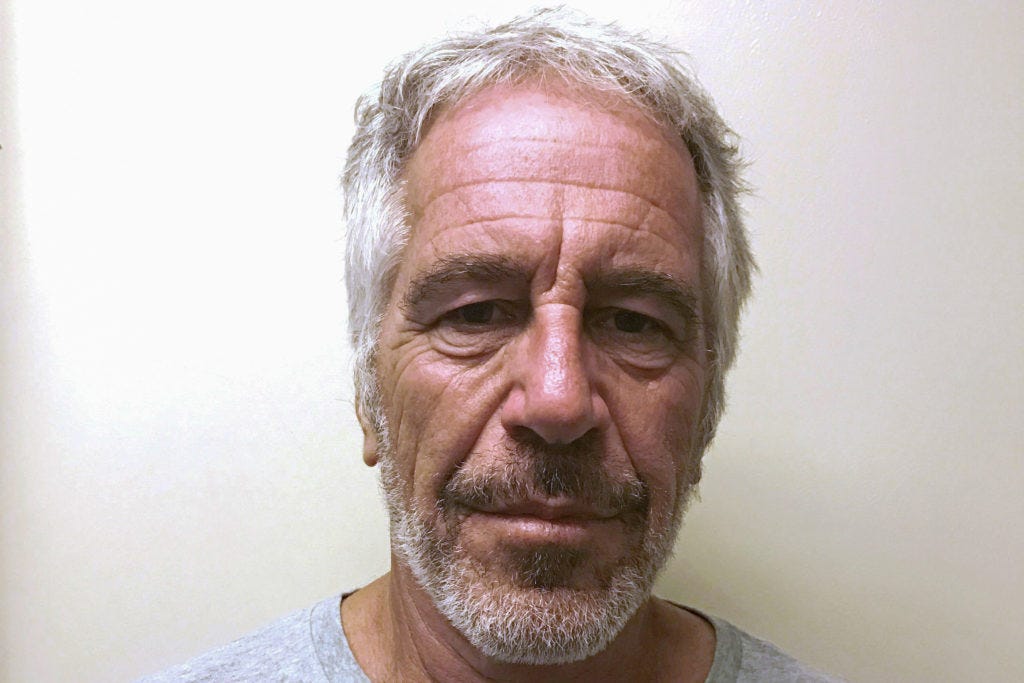
Harvard even appointed him as a Visiting Fellow—although the university now admits that “Epstein lacked the academic qualifications Visiting Fellows typically possess, and his application proposed a course of study Epstein was unqualified to pursue.”
Even after his arrest and conviction (forcing him to register as a sex offender), Epstein was given a keycard and passcode access to the facility for Harvard’s Program for Evolutionary Dynamics.
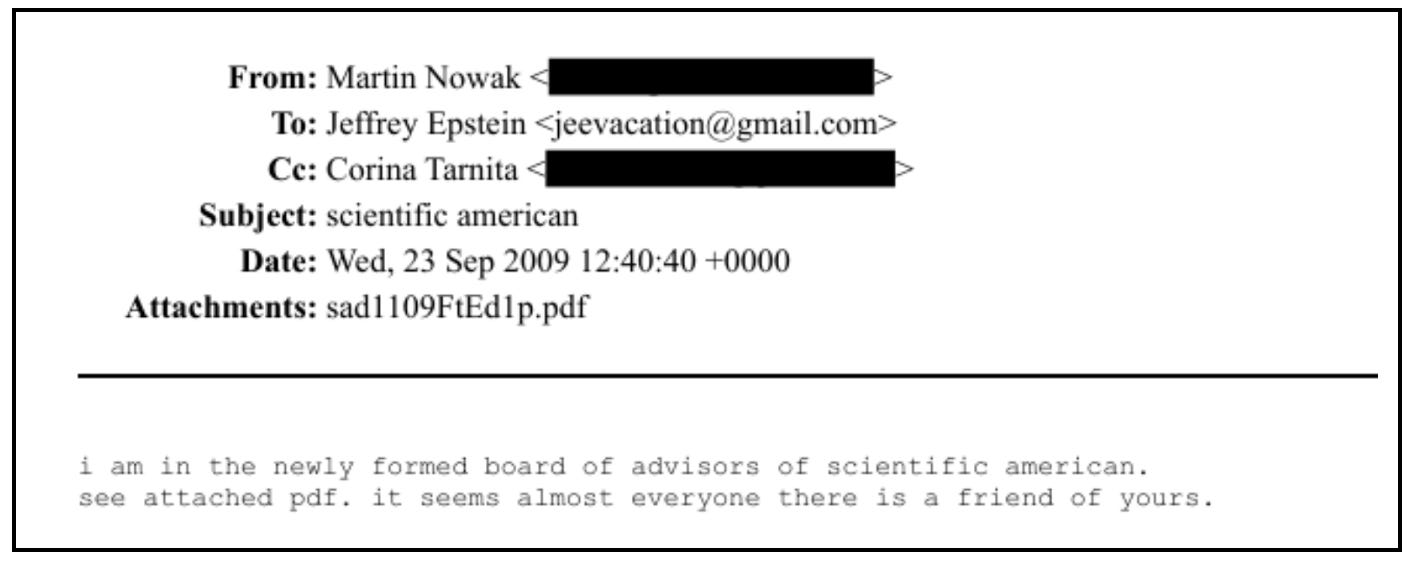
Epstein’s publicist sought to burnish Epstein’s reputation by asking PED to post on PED’s Harvard website links to Epstein’s foundations’ websites, which included both flattering descriptions of Epstein as a science philanthropist and false claims about the level of support he provided to Harvard. In 2014, Epstein’s publicist asked Professor Nowak to feature Epstein in a full page on PED’s Harvard website. Professor Nowak approved each of these requests.
The mention of Epstein’s publicist is important. Epstein had a whole team working on enhancing his reputation.
And this, my friends, is how rich people can become public intellectuals. They pay for it, and money talks.
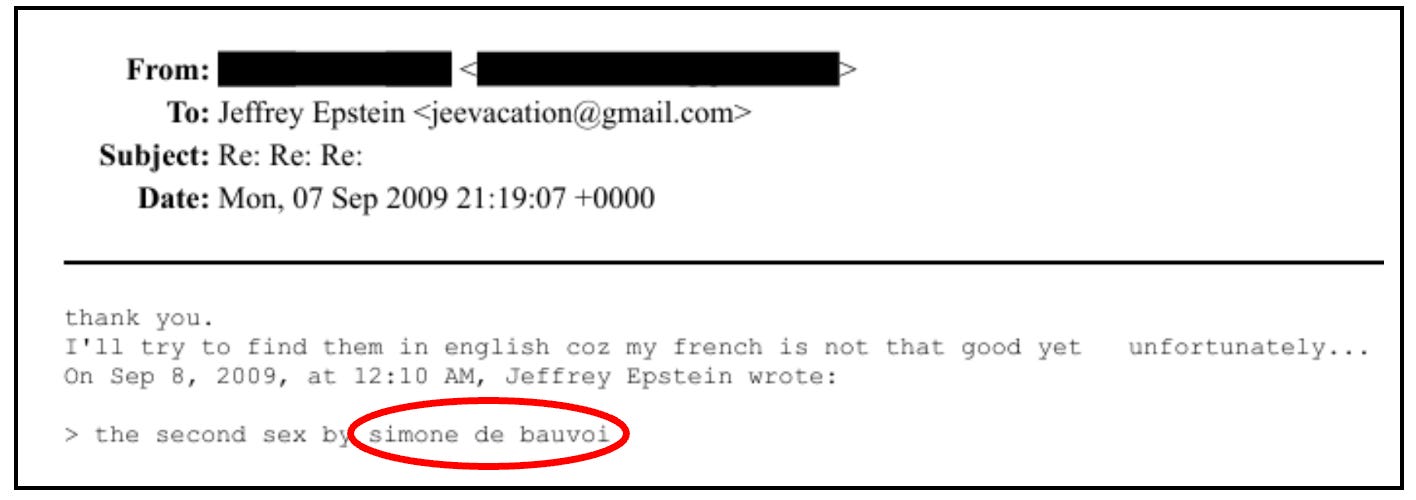
Epstein acted the part. He gave out book recommendations and literary advice, but in the clumsiest way. He refers to Simone de Beauvoir in one email as “simone de bauvoi,” and in another instance as “simone de beauoirs.”
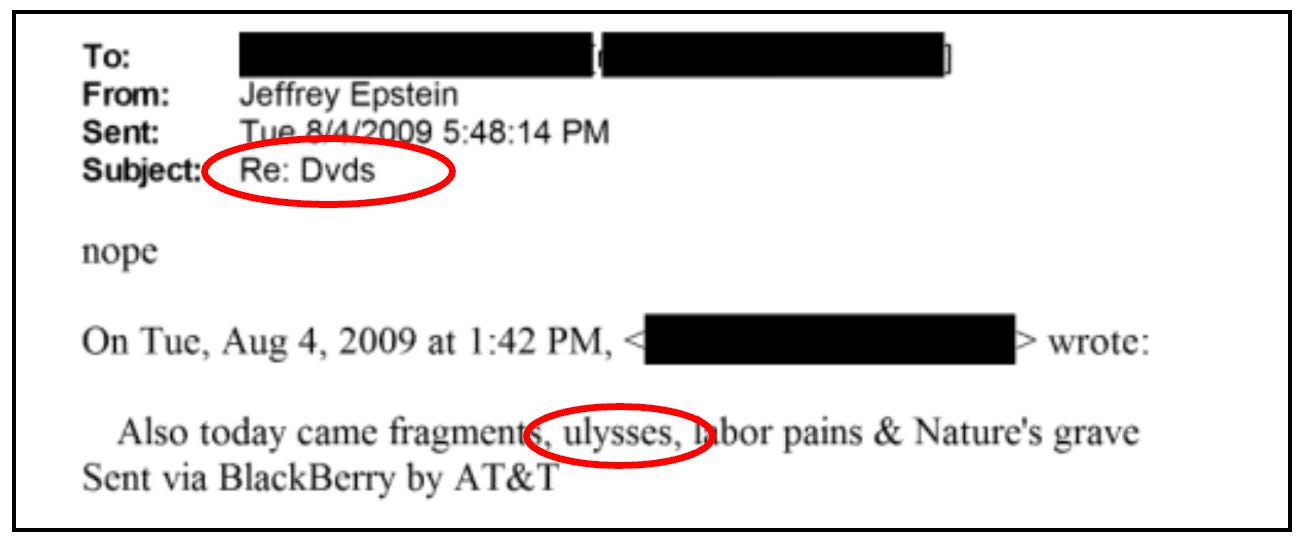
He was happy to discuss James Joyce’s Ulysses, but there’s evidence that he only ordered a DVD with that title.
Hey, if you have enough cash, all this doesn’t matter. According to one source, “almost everyone” on the board of Scientific American was a friend of Mr. E.
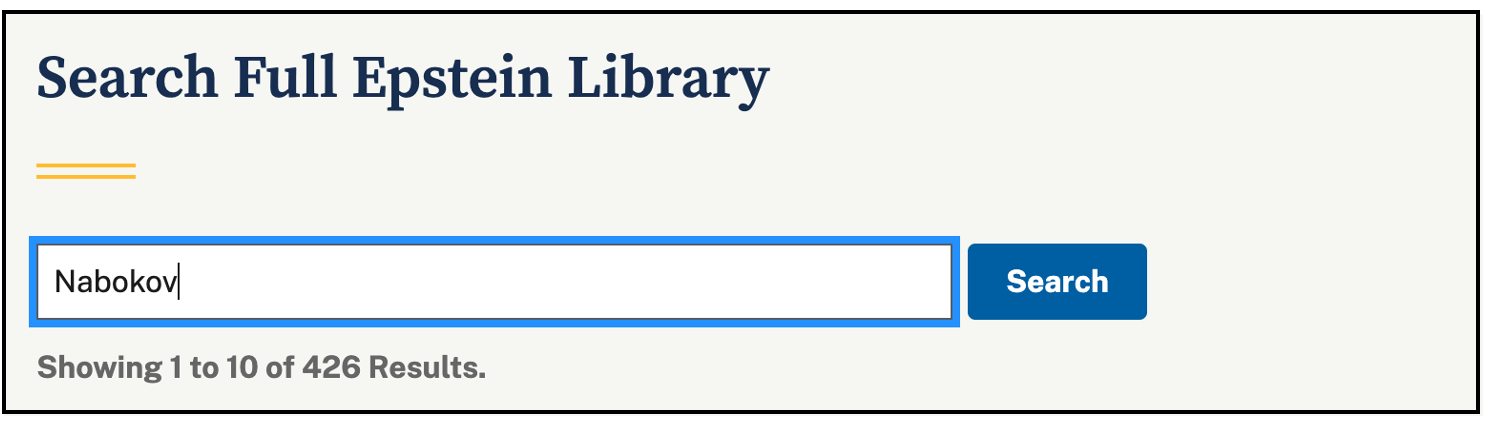
In all fairness, some literary names Epstein gets right. There are 426 references to Vladimir Nabokov (author of Lolita) in the Epstein files. I’ll let you speculate on why that is.
If you really want to see something shameful, watch this video clip (go to the 56 minute 20 second mark)—where Epstein is praised as smarter than any economist in the world.
I’m focusing on Jeffrey Epstein here, but he is hardly a unique case. Sam Bankman-Fried, currently incarcerated in Terminal Island penitentiary, also gained renown as a public intellectual before his conviction on fraud, conspiracy, and money laundering charges.
He was lauded as a major thinker in the Effective Altruism movement (which I’ve critiqued here). But he bragged that he “would never read a book.”
“I’m very skeptical of books. I don’t want to say no book is ever worth reading, but I actually do believe something pretty close to that….I think, if you wrote a book, you fucked up, and it should have been a six-paragraph blog post.”
This is embarrassing—not so much for Bankman-Fried but for the journalists and fanboys who praised his intellectual stature and gave him a platform for his crude, awkward opinions. But this shameful cringing behavior is increasingly the norm in a broken culture where everything is for sale—even from the most prestigious institutions.
I’m not suggesting that the age of public intellectuals is over. In fact, I see many worthy of that title here at Substack, but one measure of their credibility is that they’ve achieved it without a public relations team or criminal behavior.
We’ve interviewed several of them here at The Honest Broker. And we plan to talk to more of them in the future. That’s part of our mission.
They’re the real deal. And they didn’t need to pay off anyone to get where they are. Here at The Honest Broker, we don’t do pay-for-play.
Maybe the media outlets that embarrassed themselves with Jeffrey Epstein and Sam Bankman-Fried should pay more attention to them instead of anointing another wealthy malefactor as a serious thinker.
Even better, why don’t these “elite institutions” nurture and support the next generation of public intellectuals. This time, they can pick people who speak truth to power, and not just sell out to the highest bidder.
That would be a refreshing change.
How many wealthy techies I know in Silicon Valley who boast they have not read a book "since college." They read trade mags in their discipline but that's it. And yet they make strident opinions on everything going on everywhere. They stoke the fires of narcissism.
At the risk of sounding like a typical Reddit "contributor":
"Epstein was given a keycard and passcode access to the facility for Harvard’s Program for Evolutionary Dynamics."
PED? Oh...
You can't make this stuff up.