
Hollywood Is Turning into a Content Farm for Silicon Valley

For the last few years, I’ve worried about Silicon Valley taking over Hollywood. But things reached a tipping point back in October.
Apple had just swept the Emmy awards—walking away with 22 tiny statues.
David Ellison (son of database billionaire Larry Ellison) was poised to take control of Paramount.
Disney share price was down 50% from its high, and increasingly looked like an acquisition target for some bored web tycoon.
Warner Bros. was already on the selling block, and would inevitably get taken over by the expanding technocracy.
I was alarmed back then. But that was October. In December, things look even worse.
Please support my work—by taking out a premium subscription (just $6 per month).
A few weeks ago, Disney announced another miserable quarter—with profits from its entertainment business dropping 35%. Its margins are ugly, and there’s no clear plan for a turnaround in sight.
The company is so creatively drained that CEO Bob Iger actually wants users to generate their own Disney content. What’s next? Does he want us to build our own theme parks? Should I start my own troupe of Mouseketeers in the basement?
The company is looking for a new CEO—and the sooner, the better, if you ask me. But none of the likely candidates inspire much trust. So the company’s Matterhorn-sloped downward slide is likely to continue with accelerating speed.
I’m convinced that the House of Mouse will soon get swallowed up by a tech titan. I see Apple as a likely buyer, but Disney might also get acquired by Google, and bundled with its YouTube business.
That’s the hot strategy nowadays.
You buy a Hollywood movie studio, and turn it into a content farm for tiny screens. And then, in phase two, the people making the content get replaced by AI.
Let me remind you that Google’s market cap is now 20 time the value of Disney. They could buy out Disney with the spare change lost in the CEO’s couch cushions.
And Google already has a huge investment in AI it needs to justify. A captive movie studio would be just the ticket.
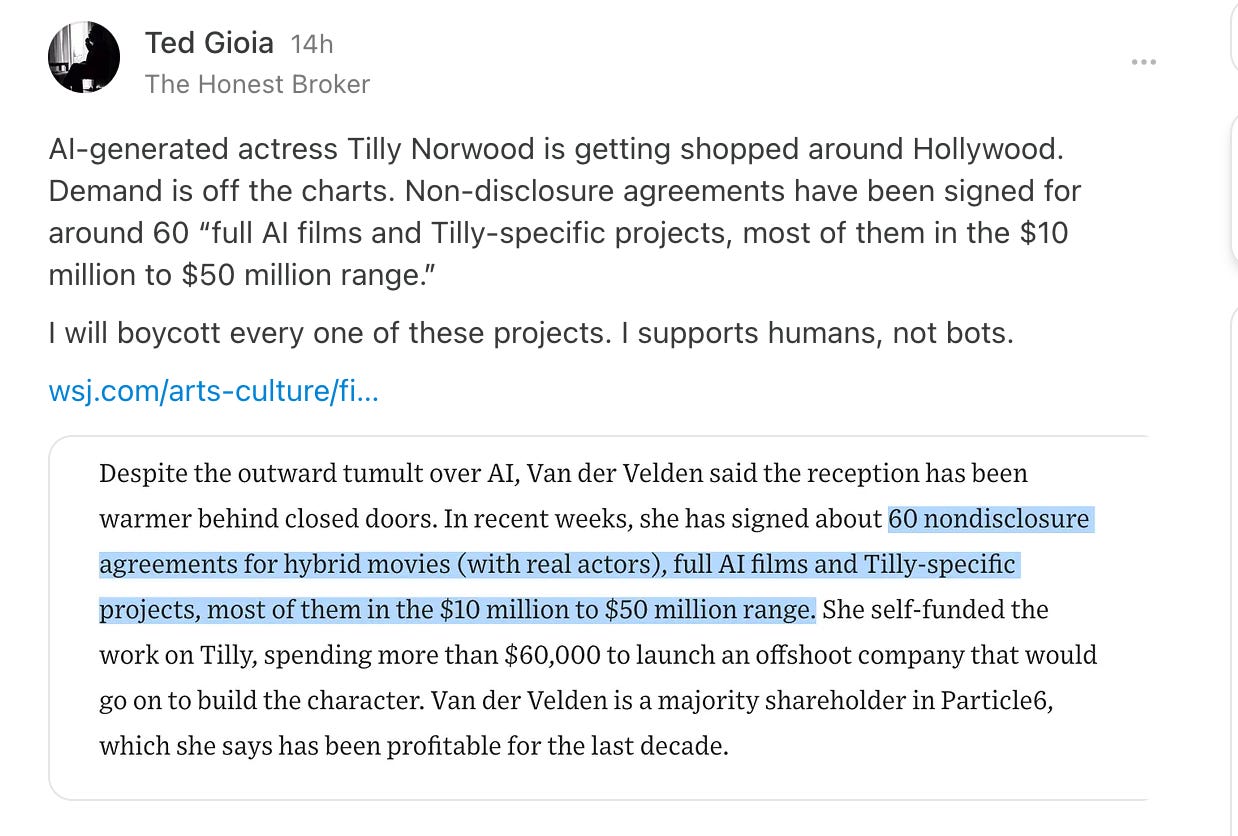
The AI situation has also gotten worse in recent weeks. The hottest new concept in film is the AI-generated movie star. We learned in November that forty (or more) of these digital cyborgs are already in development. The future plans for these constructs is still top secret. But demand is off the charts.
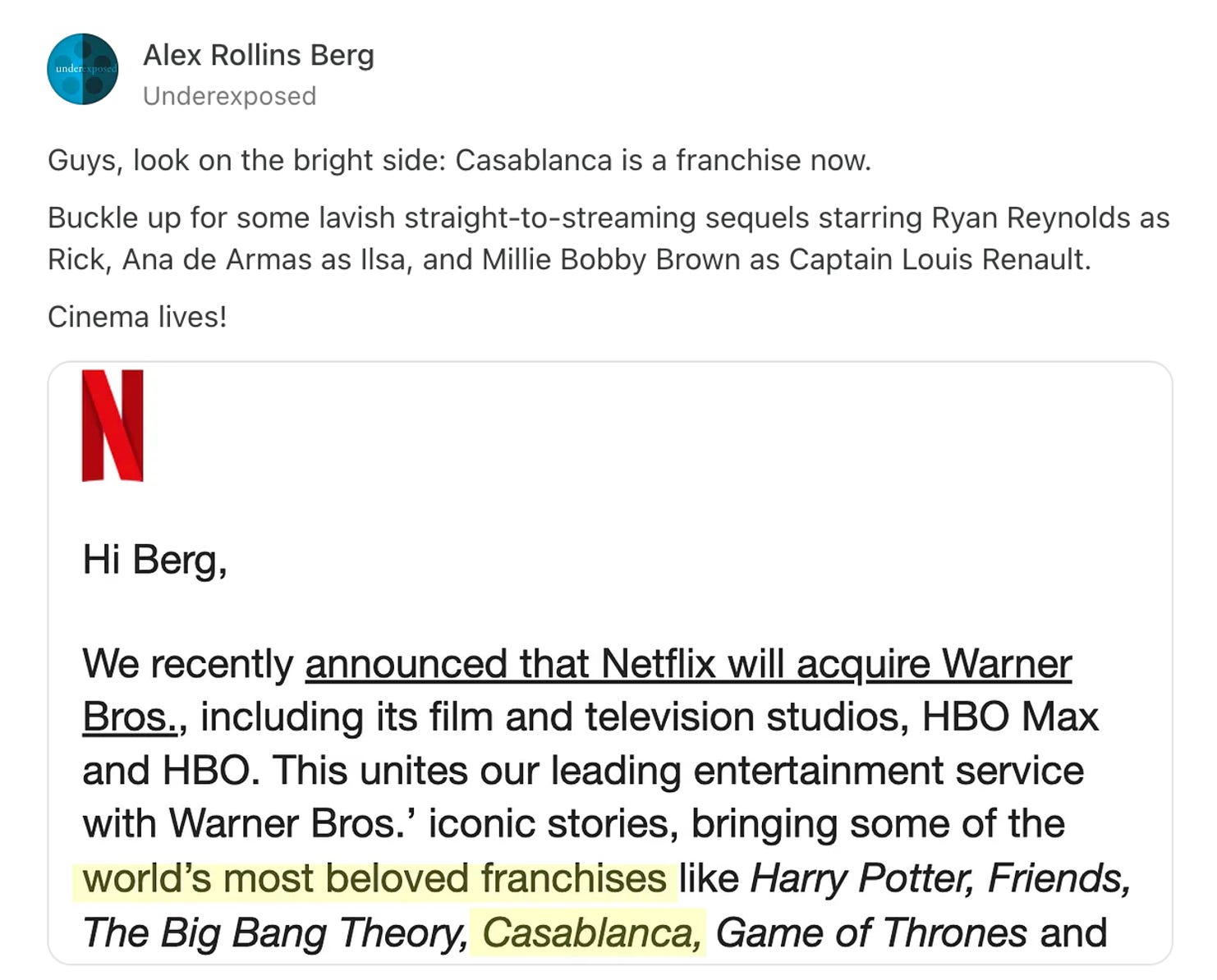
That threat is still in the future. So right now I’m fretting more about the fate of Warner Bros. Netflix has emerged as the likely acquirer—although Paramount still might take the prize.
Many people see this as a harmless deal. After all, Netflix is already in the movie business. So what harm can they do at Warner Bros?
“Digital apps are now bigger than Hollywood in every way—except the size of the screen.”
They can do plenty of harm—Netflix may be acquiring a Hollywood studio, but it isn’t really interested in supporting the existing movie ecosystem. What it really wants is:
Intellectual property
Brand franchises
Streaming content
That’s all folks, as they say at Warner Bros. Everything else is just excess baggage—jettisoned at the first available opportunity.
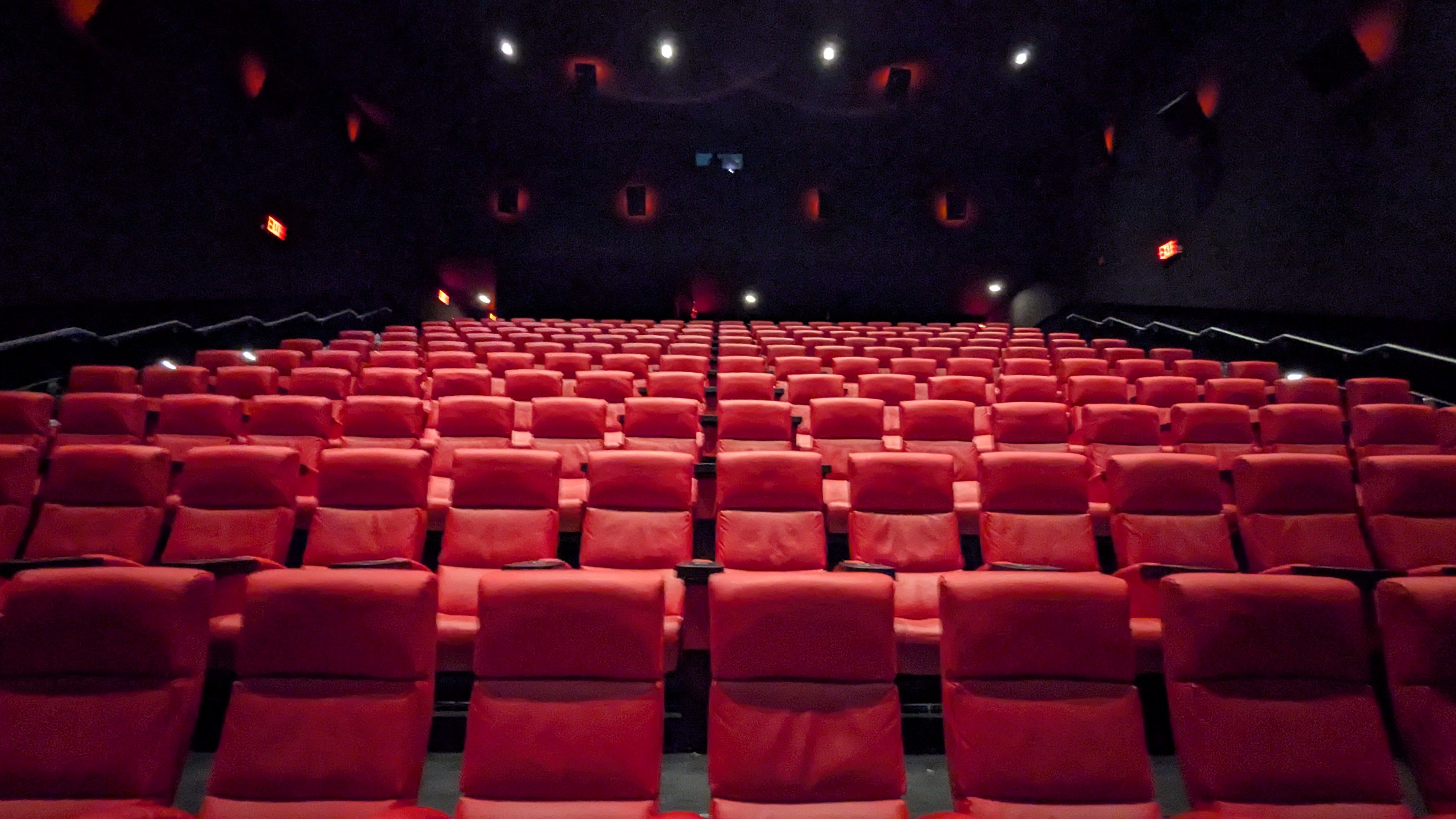
You will see the damage in your home town—where movie theaters are already struggling for survival. We’ve lost 5,700 movie screens since 2020, and ticket sales are still declining.
You can’t blame COVID anymore. But you can blame Netflix.
Back in April, Netflix’s CEO announced that movie theaters are “an outdated concept.” He’s said he wasn’t bothered by the disappearance of so many cinemas. He pointed out that most people can’t walk to a movie theater—but they can watch at home.
That’s his dream. He wants to replace moviegoers with couch potatoes. And the easiest way to do this is preventing theaters from accessing hit movies.
Not long ago that was called restraint of trade. But now it’s business as usual.
Netflix is still forced to show its movies in theaters for a few days—in order to qualify for Oscar consideration. But that rule will obviously change as streamers gain influence. Meanwhile Netflix makes sure that few people see these films on a big screen in a communal setting.

The company’s treatment of Guillermo del Toro’s new film Frankenstein is a case in point. The filmmaker believes that the best audience experience is in a movie theater, but Netflix only released his film for a few days in cinemas—without any marketing or promotion.
So Frankenstein only earned $129,000 at the box office in the US. That’s not per theater—that’s in total at every theater. The film cost $120 million to make. Under the old rules, studios would spend heavily on marketing to draw people to movie theaters in order to recoup their investment. But not anymore.
Netflix has a different plan. They just want you to pay your subscription bill each month. If you get too excited about the big screen movie experience, you might stop paying for Netflix—and that’s threatens their couch potato vision of the future.
But what about us? Do we lose that larger-than-life communal experience at the cinema? Do we all become stay-at-homes staring at tiny screens?
Gift subscriptions to The Honest Broker are now available.
That’s what is at stake right now in Hollywood. The studios fumbled, and gave tech platforms an entry point into the film business. And now the digital apps are bigger than Hollywood in every way—except the size of the screen.
Our only hope is the rise of new indie operators. We need creative people who make great films outside the control of tech billionaires and AI slop factories. But is that even possible anymore?
Keep posted—because 2026 may be the most turbulent year in Hollywood since the rise of talking films a century ago. But it also might be the moment when a serious resistance movement strikes back.
For my part, I’m not willing to give up on big screens and independent filmmaking without a fight.
Yes, yes and yes. All true.
However, you can't blame Tech for year after year of (mostly) dumbed-down, race-and-gender-swapped, zero-risk-superheroing, hectoring-lecturing about what Critical Drinker calls "THE MESSAGE." That's a corporate-creative own-goal.
One could argue whether or not this is all by design in order to further the progress of Technocracy Inc, but in any case there is almost nothing worth going to the theatre FOR, especially at prices where they are now.
Screen size aside, we are the keepers of the human artist flame. There’s a generation being trained to accept actor / singer / writer inanimate entities. Empathize, loathe, love, laugh with “its”. But AI is degenerative. It can’t live without feeding on new human genius. When an AI app fills in a band we would have been thrilled to HIRE, it’s degenerative not to mention depressing. AI will degrade art slowly with glimmers of inspired hope. But without a business model to nurture said hope…resist AI in the arts at all costs.