
Did Streaming Subscription Prices Just Hit the Wall?
Consumers have learned three winning strategies for defeating subscription fatigue

I’ve never raised the subscription price at The Honest Broker. There has only been one price change since launching in 2021—and that was a reduction. The annual rate here was originally $60, but it’s now just $50.
It’s a fair rate—even a bit low by Substack standards. But I don’t want to raise it. Times are tough enough already without me making them any tougher.
If you want to support my work, please take out a premium subscription (just $6 per month).
But I am clearly out of alignment with the rest of the world. Online subscription prices have been taking off like a billionaire’s starship in recent years. Many services are boosting rates every few months—again and again and again!—so that, over the course of several years, the cost can double or more.
That might stop in the near future.
There are (finally) signs that the streaming prices have hit the wall. The public simply can’t afford paying hundreds of dollars per year for each platform. So I’m not surprised that a new survey shows that 55% of consumers want to cancel subscriptions right now.
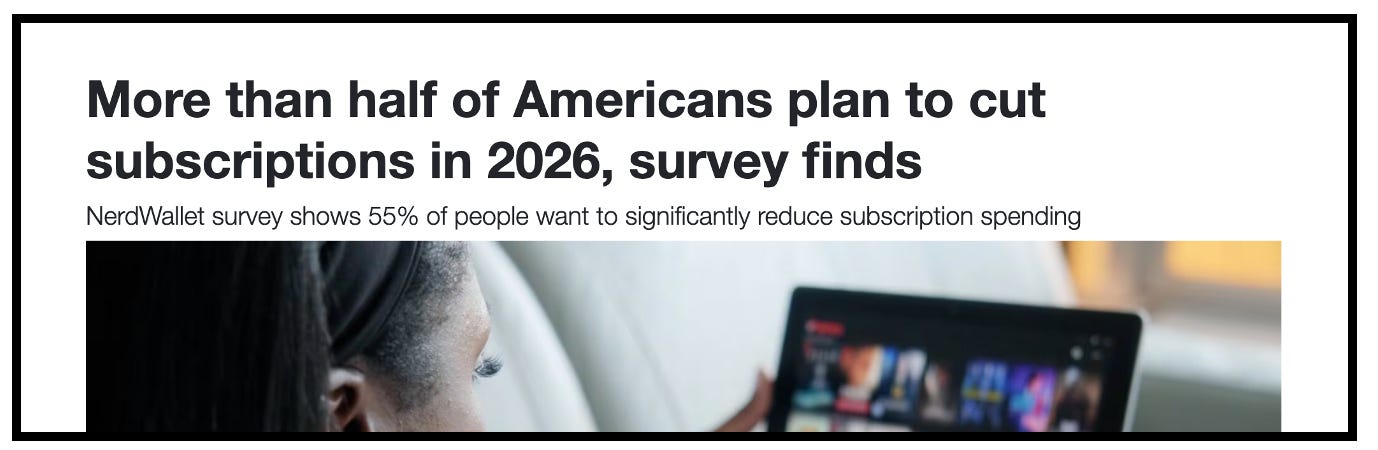
This isn’t just an idle threat. According to Deloitte, 40% of consumers have already cut back on subscriptions during the previous three months. Even more revealing: 61% say they would cancel their favorite service if the price went up by just five dollars.
Let me repeat that—they would cancel their favorite service, not just any platform.
People now complain of subscription fatigue—and for good reason. If things don’t change, it will soon reach the point of subscription exhaustion. Tech companies have created this mess, and now must live with the consequences.
They did it with three exploitative strategies.
(1) Everything got turned into a subscription.
Not long ago, I purchased software—but now I’m forced to subscribe. Not long ago, most online services were free, but now I’m asked to subscribe for everything from cloud storage to AI. Social media is the next frontier, and will soon get turned into one more subscription racket.
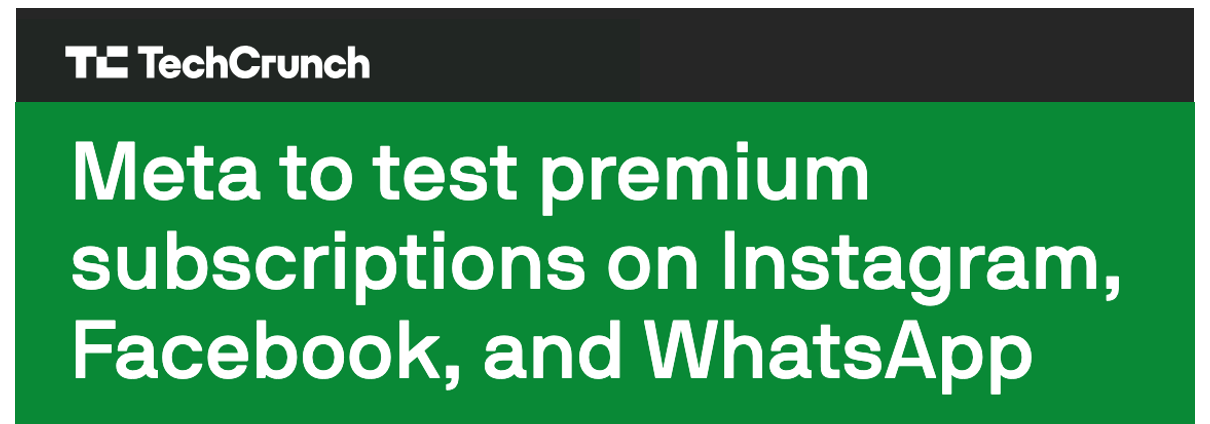
Even the ink for my printer now comes via a subscription. And watch out if you cancel. Your printer can be disabled remotely in retribution.
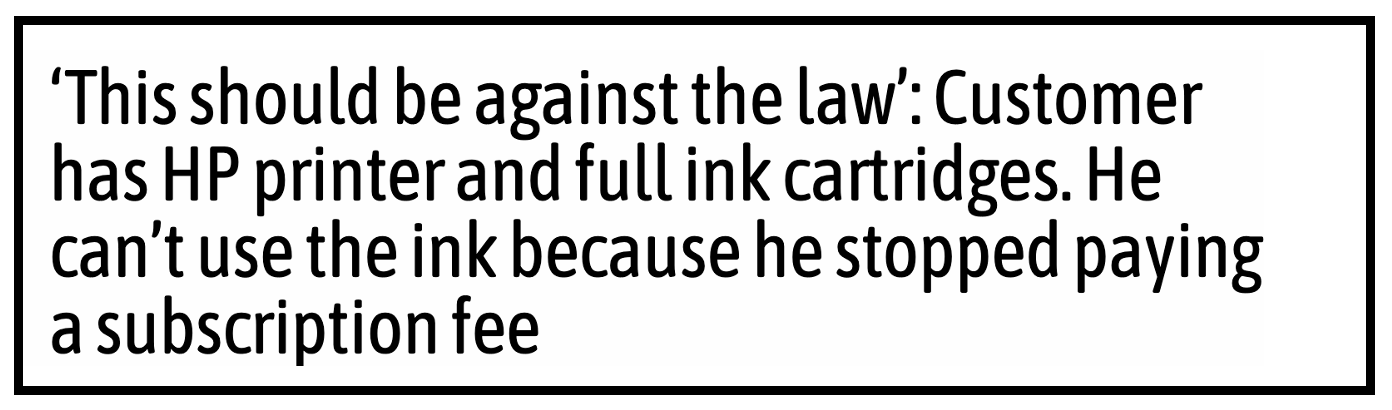
That looks more like extortion than a subscription. So are you surprised that consumers are getting fed up?
(2) You’re now punished with intrusive and endless advertising if you don’t subscribe.
It’s not just your imagination, those YouTube ads are getting longer. And if you’re irritated, that’s exactly what they want—you might just pay up for a premium subscription.

(3) Instead of competing on quality and service, companies focus on “audience capture”—and then exploit the captives.
That’s you, by the way—you are the captive. At least that’s how you’re treated by the big tech platforms.
Years ago, these same companies started by offering stuff for free, or at a small price. They only forced through huge price increases after they had captured a huge user base. You see that strategy at Netflix, Spotify, Instagram, etc.
These companies make little effort now to improve their offerings or user interface. In many instances, quality has declined, even as they raise prices. But consumers aren’t stupid—they can see that they’re getting a shaft that won’t cop out.
All this marks a huge change from the streaming environment of a decade ago. Back then, the conventional wisdom was that subscription prices needed to stay below ten dollars per month—that sweet spot where consumers were willing to sign up.
Of course, that ten dollar rate was based on psychology, not economic reality.
Back when Spotify listed on the stock exchange, I tried to figure out how it could turn a profit while charging just $9.99 per month for a subscription. I kept working over the numbers, but they never made any sense.
And it wasn’t just Spotify. Other platforms faced the same problem. The math just didn’t work.
So I bravely announced that “streaming economics are broken.” If these companies wanted to survive, I argued, they would need to raise prices.
But even I can’t believe how greedily they have now implemented that strategy. Spotify has raised its price three times in less than three years. It’s now asking $12.99 per month. And if you want a family subscription—which is essential in a household like mine—the price jumps to $21.99 per month.
Those are US prices, but Spotify is doing the same thing everywhere. Last summer, the company forced through price increases in 150 countries.
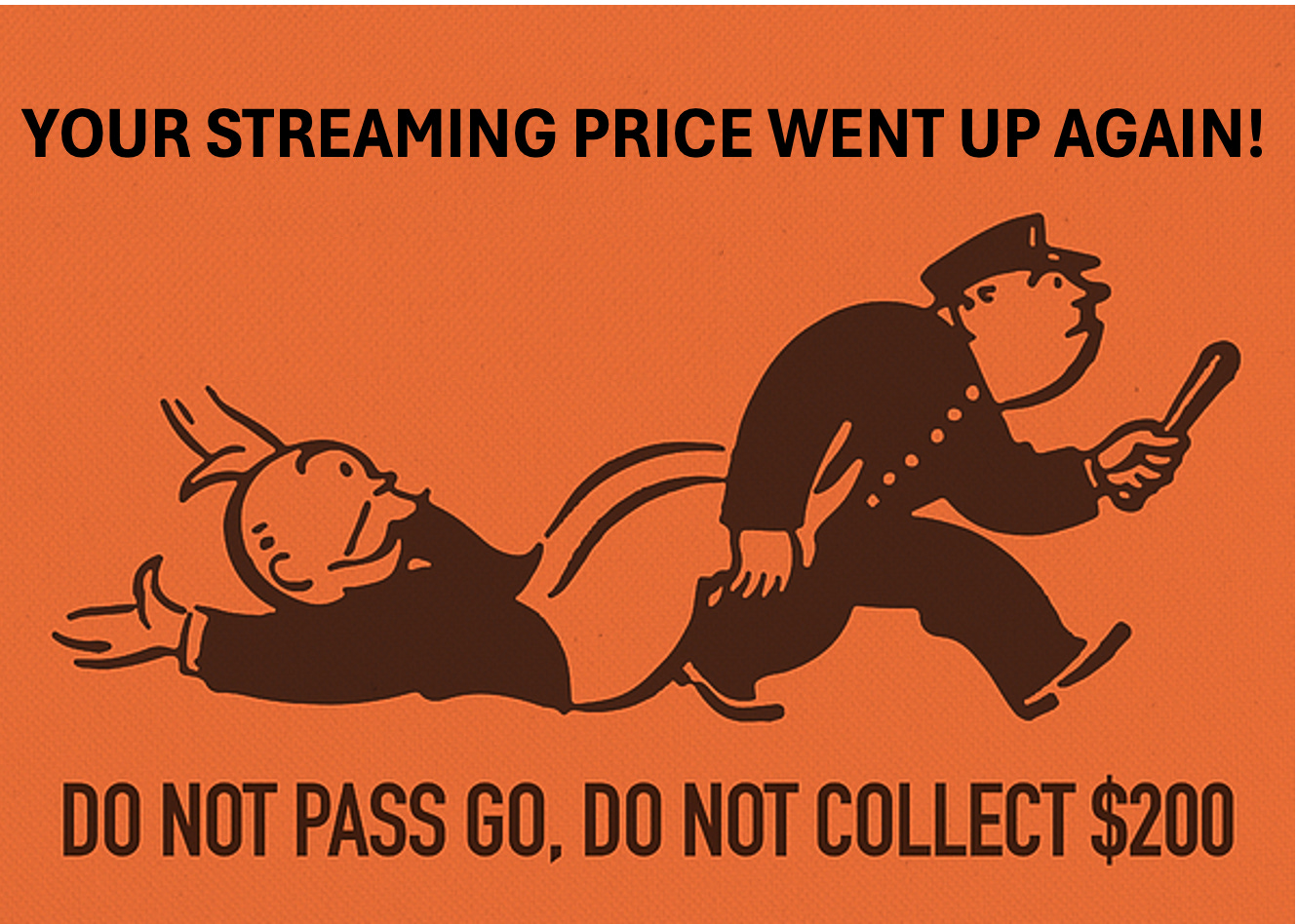
YouTube is even more avaricious. The company is now raising its premium subscription to $15.99 per month. And the family rate is a whopping $26.99—that adds up to $329 per year.
Video streaming companies are playing the same game. Not long ago, Netflix charged me $9.99 per month. I recently got a notice that my new price has been “updated” to $19.99. Yes that’s more than a doubling over the course of just a few years.
But Netflix may have gone too far. The company’s stock dropped 12% last week after its latest quarterly results. Investors expected the company to raise its guidance for future earnings—because of this subscription price boost. But the company refused to do so, and took a more cautious stance.
According to Morningstar analyst Matt Dolgin:
“The market likely hoped for increased full-year guidance, given that the March price hikes came as a surprise…Growth acceleration in 2027 now seems less likely.”
The more you dig into the latest earnings report, the more ominous things look. Netflix only met expectations because of the breakup fee after it walked away from the Warner’s acquisition. Without that one-time benefit, earnings per share would have dropped year-on-year.
If you try to find some good news here for the company, it comes from Netflix’s shift to advertising. This may be its growth engine in the future—because price increases are now stirring up consumer resistance.
I’d like to be able to provide specific numbers here, but Netflix now refuses to tell us the number of total subscribers. That’s revealing in itself. Not long ago, the company bragged endlessly about subscriber growth. Their silence now tells you everything you really need to know.
Three Ways to Defeat Subscription Fatigue
You aren’t helpless here. You do have options for battling subscription fatigue. Here are three of them.
For a start, customers have learned that canceling a subscription might make sense even if they are just bluffing. It’s amazing how different the rate looks if you’re willing to walk away. I recently canceled a subscription, and was offered an 80% price cut if I would reconsider.
I’m now thinking I should cancel every streaming subscription once per year—just to see what special offer I’m missing. Even if I sign up again at the old rate, I haven’t lost anything by trying this tactic.
Another way of combating costs is a rotation strategy. Under this scenario, consumers only pay for one video streaming subscription at a time. When they want to watch something on another platform, they simply cancel the current subscription and move to the new provider. This lets them watch anything they want for just one monthly payment.
Sure, it’s a hassle. But when annual subscriptions can cost $300 per year or more, consumers are increasingly willing to go to the trouble of ‘rotating’ from service to service.
Of course, you always have the final option of just walking away. Judging by the mood of the consumer, that will start happening more and more.
Maybe if enough people push back, the big platforms will reconsider their abusive plans for audience capture and exploitation. Hey, they could always go back to competing on quality—wouldn’t that be a relief?
And again, I’ll point out that Substack is the worst subscription “deal” of all. $6 to $10 per month PER single subscription. They refuse to offer aggregate subscriptions at a reasonable price so I’m forced to pay for just one or two (not this would, which I would include if it were in an aggregate of like 5 subscriptions for $10 monthly.)
The problem is this, Many of us are already "subscription poor". Yes, $6 a month is not huge by itself, but when everyone establishes a paywall, fewer and fewer people can afford to participate. I do appreciate your method of allowing comments by non-subscribers, this is more than most people allow on SubStack. I'm already paying $1500 or more every year for various subscriptions, I cannot justify or afford any more, no matter how good the content is. It really sucks, particularly when I must say "no" to a good creator.