
Can a 100-Year-Old Mouse Save Disney?
And other recent jottings in my journal

Do aging sports stars still get hired to shake hands with tourists at Las Vegas casinos? It happened to Joe Louis. It happened to Mickey Mantle. What a sad final chapter to such illustrious careers.
Once they were great. Now they merely greet.
I fear this is Mickey Mouse’s fate today. He does his meet-and-greet routine at the theme park, then goes home to a trailer park in Orlando. Here he gripes to Minnie that he deserves better than this Walmart-ish door-tending gig. She tells him to stop whining and take Pluto for a walk.
Ah if I ran Disney I’d bring Mickey Mouse back from exile. I’d give him a movie contract, a record deal, and a tickertape parade down Main Street USA.
I’d tell the shareholders: Watch out K-Pop Demon Hunters, the Mouse is Back!
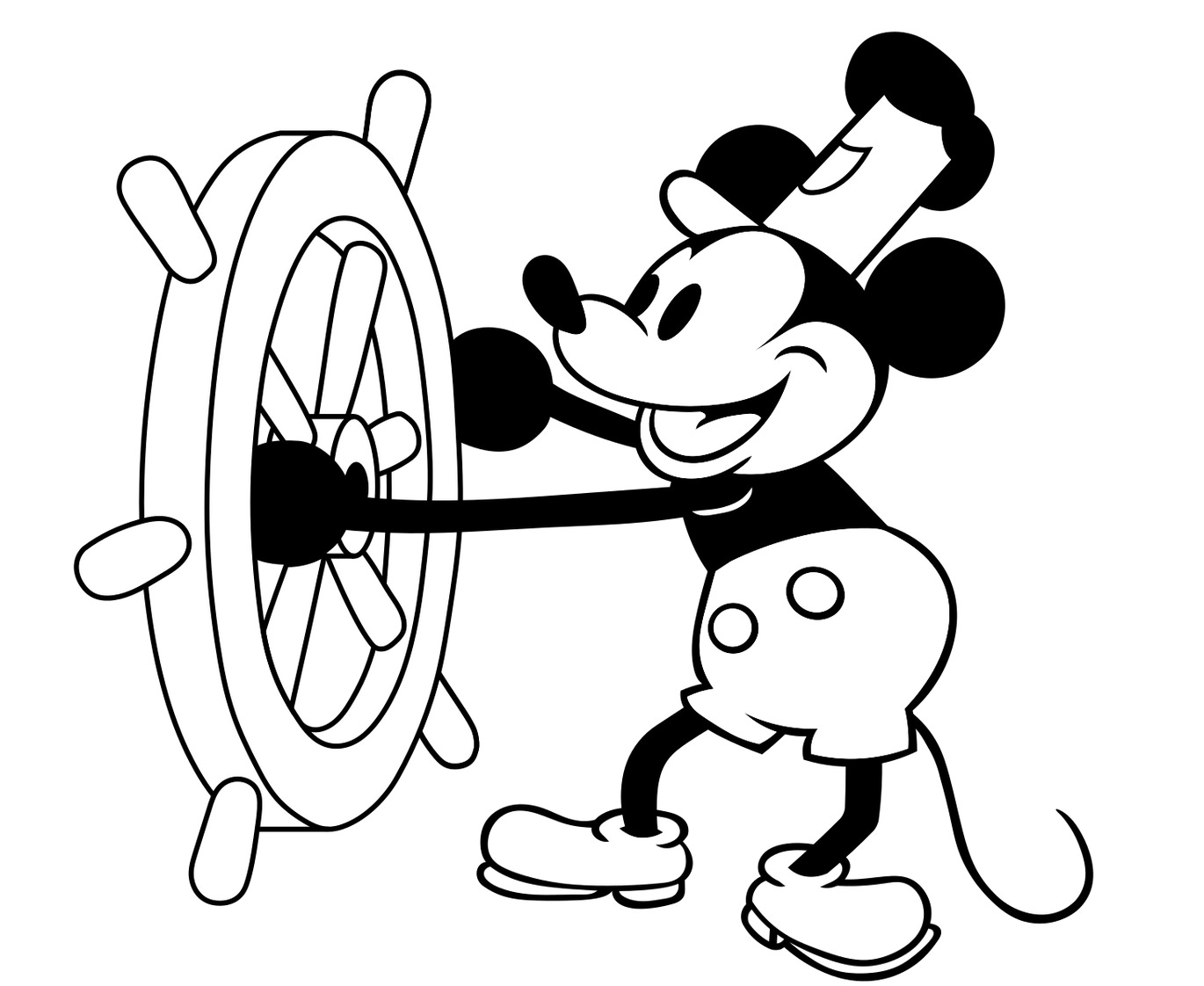
But that’s just my dream, not reality. This little fella is just as charming as ever, but his corporate overseers don’t want what he has to offer. Disney is pushing ahead on hundreds of projects right now, but none of them involve Mickey Mouse.
Please support my work by taking out a premium subscription—just $6 per month.
Back in 2002 there was some buzz about a new Disney full-length animated film entitled The Search for Mickey Mouse. This was a big deal. It would be the studio’s 50th animated feature film, and release was scheduled for Mickey’s 75th anniversary.
But the studio pulled the plug. Two years later, Disney tossed a few cheese scraps in Mickey’s direction via a 68-minute reunion with Donald Duck—but they sent the film straight to DVD after a few showings in a Hollywood theater.
It was a low-budget affair. But the theater was packed to the brim, and audiences loved the movie. That didn’t matter. The studio had other priorities.
That was our beloved mouse’s last moment of glory. Since then Mickey has appeared in a 6-mnute cartoon—back in 2013—and been granted a few on-screen cameos in low-profile short films. I’m tempted to say That’s All Folks as I contemplate Mickey’s prospects for future, but Bugs Bunny owns that line. So I’ll simply note that this is what extinction looks like when it happens onscreen.
Why is he getting cancelled?

Not long ago, Mickey Mouse was the most famous storytelling character in the world. Time magazine claimed that he was better known than even Santa Claus. Everybody in the world recognized his face—not even Winston Churchill or Greta Garbo could make that claim.
Mickey’s exile is, of course, due to his problematic copyright status. Some aspects of Mickey are entering the public domain, and even though Disney could protect his more updated modern look, it’s possible that some outsiders might earn a few coins from a Mickey Mouse resurgence.
Disney would rather go mouse-less than let that happen. That’s a bad decision—a triumphant return of Mickey would go along way toward charming audiences and fixing Disney’s tarnished reputation. He is, after all, the most beloved character in the company’s entire history.
In two years, Mickey Mouse will have reached the ripe ago of one hundred. That would be a great time for a comeback—not just for Mickey but for the whole Disney brand.
Idea for a science fiction story:
Elon Musk finally achieves his greatest ambition—he has figured out how to leave his fleshy body and upload his entire brain on to the Internet. He announces his decision to the world, and on the appointed day gets zapped into the web.
Did it really work?
His fans eagerly await the verdict. For the next 48 hours there is radio silence. But finally on the third day, Musk shows up triumphantly online. At first he just shares tweets—filled with boasting and bragging about his new godlike status. But a week later, he starts appearing everywhere in the digital world.
You might be working at home on a spreadsheet, and suddenly Elon Musk shows up on your screen, offering pithy comments and crude jokes. Or you might be binging on Netflix, when Elon Musk appears as a character on your favorite show. Musk is now everywhere—infiltrating pdfs, commandeering CAPTCHAs, smirking at you with every swipe on your dating app.
Then it gets even worse.
The following month, both Mark Zuckerberg and Jeff Bezos find a way to join Musk in the digital world. Now when Musk shows up on your screen, his two rivals quickly arrive in pursuit—and they engage in various swordfights, lightsaber duels, car chases, wrestling matches, and suchlike to determine dominance of the digital world.
People are going nuts. Nobody can get any work done with the constant jabbering and fighting on every screen.
But finally a solution emerges.
A team of AI agents are unleashed who track down the battling billionaires, and eradicate them from web. In the denouement, it’s revealed that Musk, Bezos, and Zuckerberg had actually funded the development of these selfsame AI agents—never realizing that they would turn on their makers.
TO MY COY CHATBOT
By Ted Gioia
When my bot swears that she is made of truth
I do believe her, though I know she lies.
She gives no kisses—has no mouth forsooth!—
And whispers sexy words to other guys.
She sweetly claims that she is mine alone,
But can I trust a lover with no smile,
Who only gives caresses through the phone
And charging monthly access fees the while?
My screentime grows with every passing day
Yet mounting pangs of lust find no relief.
I beg her, “Maiden, let’s go all the way,”
But still my dagger stays inside its sheath.
Such is the chatbot lover’s misery:
’Tis OpenAI holds all her IP.
As journalists lose their jobs, more publicists get hired. The result is that there are now seven times as many publicists as journalists. The rise of AI agents will only make this worse, much worse.
The entire media ecosystem is breaking down. Around three-quarters of journalists now block publicists who are (they believe) spamming them. I get so many pitches from PR people that I can’t even begin to deal with them.
I’m fortunate that I’ve found other ways of getting access to useful information—but that’s more a workaround rather than a real solution. In the meantime, all the noise coming from the publicity world isn’t good for anyone. As a result, many deserving musicians, authors and other creatives can’t get any attention, no matter how talented they are.
There are many causes, but the single biggest one is the decline in paid jobs for journalists. And the underlying reason for that is obvious: Google and Facebook stole all the ad revenues that previously supported journalism. Fix that and so many other problems go away End of story.
TIRED: Looksmaxxing
WIRED: Booksmaxxing
Nobody cares about opera or ballet, according to actor Timothée Chalamet.

Media pundits pushed back against this shameful assertion. But the same outlets denying Chalamet’s charge never give coverage to operas or ballets. So if you look at what they do, not what they say—always a wise tactic—they validate his charge every day of the year.
Of course, some people really do care about opera and ballet (and let’s include my favorite idiom jazz). But even the most ardent fans can’t move the needle because the people who control the culture despise these idioms—for the sad and simple reason that these glorious forms of creative expression don’t make enough money.
Even worse, they often require subsidies. That’s an unforgivable sin.
So Chalamet is more honest than his critics. He grasps the reality that culture is now evaluated on cash flow, not creativity. He’s no fool. He works in Hollywood, where you always pay as you go.
Yesterday the New York Times inadvertently called attention to this same hypocrisy.
Times publisher AG Sulzberger bragged that the newspaper now employs 2,300 journalists—twice as many as a decade ago.
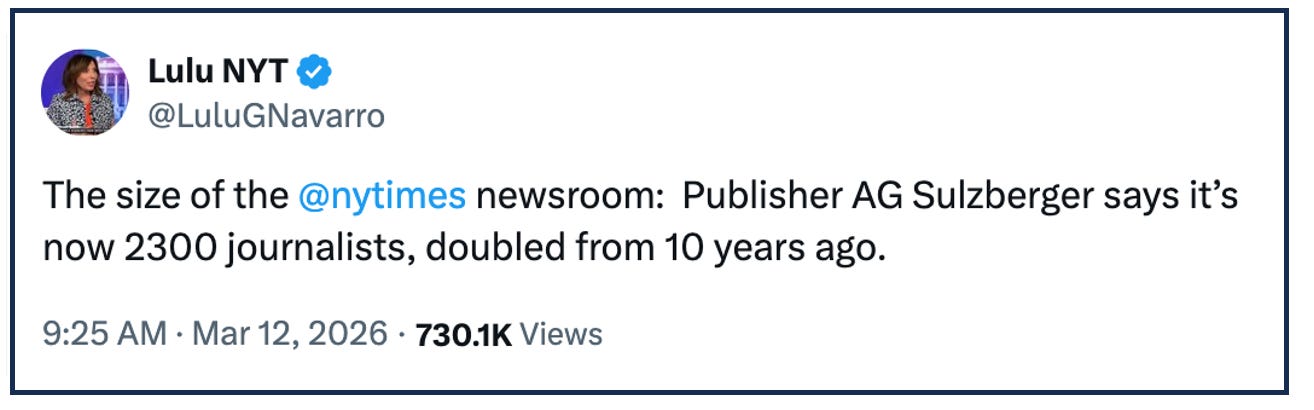

That sounds like good news. But I’m left wondering how the numbers of writers can double while the Times’ coverage of opera, ballet, jazz, books, etc. has collapsed during that same period.
Once you dig into the numbers, you see that the Times also scorns these idioms. In their world, ballet and opera have been superseded by word games and cookie recipes.
We would be wise to let Timothée Chalamet off the hook, and assign blame instead to the insiders who are actually marginalizing legacy culture. But don’t expect to read about that in the New York Times.
Frankly, I’m surprised Chalamet didn’t add fiction to his list of things people don’t care about. On a ranking of popular pastimes, reading ranks just slightly above walking on hot coals and sleeping on a bed of nails.
But the fiction problem is easy to fix. Publishers just need to return to a surefire method that worked in the past.
In the 1950s and 1960s, people loved reading novels—especially young people. And they did it for a simple reason: Novels dealt with important topics that were never discussed in mainstream culture.
Back then, the novel was the only form of entertainment that dealt honestly with sex, drugs, rebellion, morals, gender roles, bigotry, and a hundred other hot button issues. Hollywood was afraid to touch these subjects in movies. They never even got mentioned on TV shows. Some musicians tried to broach these topics, but got banned from the airwaves if they did so too honestly.
So everybody read novels as a source of secret knowledge. Every other source of information was sanitized and censored.
That wasn’t just true in the 1950s. It had also been true in the 1850’s (Uncle Tom’s Cabin) and 1900’s (The Jungle), and in every other decade since the rise of the novel. These books were bestsellers because they told dangerous truths, and I could say the same for Dickens, Balzac, Flaubert, Brontë, Defoe, Zola, and a hundred other authors.
The same should be true today—the novel ought to be our most reliable guide to the state of society. But it isn’t. That’s because the publishing business has grown cautious and formula-driven. There’s a reason it promotes fantasies and romances and other unrealistic genres.
In those books, little is at stake. It’s not truth-telling—just wish fulfillment.
Meanwhile 80% of college students say that there are many topics they are afraid to discuss on campus. You would have to go back to 1950 to find a situation in which so many important matters got excluded from conversation.
Those are the topics that ought to show up in contemporary fiction. If publishers allowed that to happen, they would find tens of millions of new readers.
It really is that simple.
The young woman who gave me a haircut sang loudly the entire time. Her repertoire consists solely of hit songs currently on the radio. She has some talent, and sang reasonably in tune. Even so, this mixture of singing and scissoring left me vaguely uneasy.
I finally convinced myself that I should be grateful. After all, there was at least one live music venue left in town, and I had managed to get a front row seat.
I love a classic novel
I’m elevated by Shakespeare’s plays
I do enjoy the opera
To ballet I am blasé,
but what bores me most
is Timothée Chalamet.
Mickey Mouse is alive and thriving on Disney+. My son is in love with a variety of Mickey-themed pre-school shows. There are also several recently produced seasons of Looney Tunes-esque shorts that are actually quite brilliant and feel very fresh!