


The summer after I graduated from Stanford Business School, I embarked on a completely different kind of education. That’s when I got to know Stan Getz. As it turned out, I would spend a lot of time with him during my twenties and early thirties.
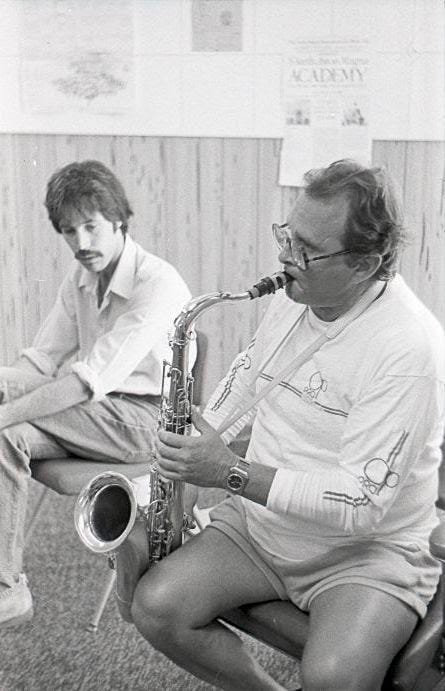
Even at that young age, I already knew his music. But that’s hardly surprising. Everybody had heard his music.
Unlike most other jazz stars, Getz had enjoyed widespread crossover fame with his bossa nova recordings, which were huge radio hits, especially the pervasive “Girl from Ipanema.” He even won a Grammy for Album of the Year with his Getz/Gilberto release—a rare occasion on which a jazz musician walked away with that coveted award.
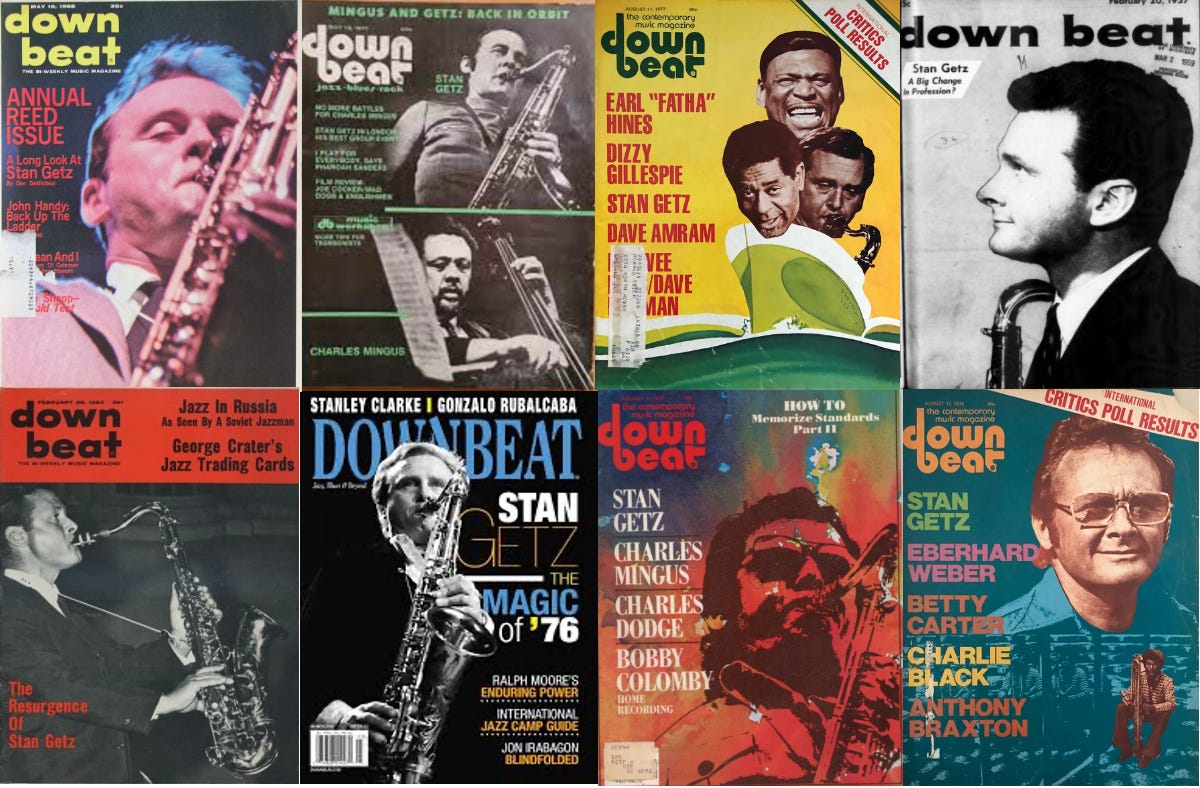
I love those Brazilian tracks, but most listeners have little idea of the riches hidden elsewhere in his discography.
Today I’m sharing ten tracks. I had to leave out so much. But at least these will give you a sense of the range of Getz’s artistry and the evolution of his career.
Happy listening!
If you want to support my work, please take out a premium subscription (just $6 per month).
Stan Getz: “Blood Count” from Pure Getz (1982)
I had the privilege of performing “Blood Count” with Getz in concert, and that will always be a very special memory for me.
It’s a deep dark composition that few jazz musicians have the maturity to play with real authority. “Blood Count” was composed by Billy Strayhorn, Duke Ellington’s longtime collaborator, when he was dying from cancer—and it’s a kind of autobiographical jazz requiem. Strayhorn actually worked on the song while in the hospital, when he was worried about the even more troubling blood count on his medical charts.
Getz probably learned “Blood Count” from his occasional collaborator Jimmy Rowles, who was the first jazz musician to record this composition after Ellington. And Getz came to love this piece. He played it almost every performance during those years, and it probably gained even more personal significance after his own cancer diagnosis.
It’s the song of a person facing their own mortality. You shouldn’t perform it unless you can handle the psychological demands of doing that on the bandstand. This is not a piece for loose jams.
Getz played “Blood Count” with such reverence that he never even took a solo—he just played the melody straight. Yet he infused such feeling into every phrase, that he staked an ownership claim on “Blood Count” that nobody has come close to displacing.
Stan Getz (with string orchestra and drummer Roy Haynes): “I’m Late, I’m Late” from Focus (1961)
The first time I visited Stan at his home, he insisted on playing this track for me on his record player. He felt that this project—the Focus album, with string arrangements by Eddie Sauter—showcased his work at its best.